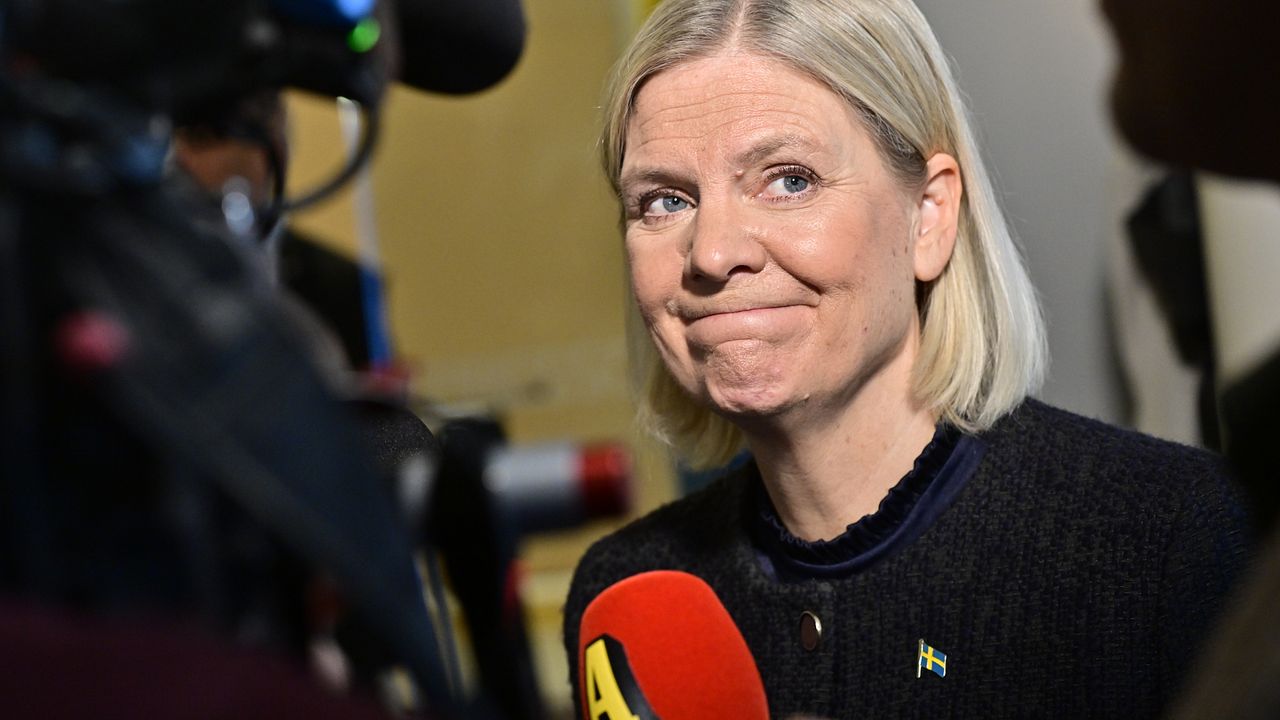
Nearly six in ten Swedish voters do not believe Magdalena Andersson, leader of the Social Democrats, will succeed in forming a government, according to an opinion survey carried out by Ipsos for Dagens Nyheter and reported by Omni – Alla nyheter. Alla perspektiv.
Nicklas Källebring, an opinion analyst, told the newspaper that voters who expect her to fail outnumber those who expect her to succeed by close to two to one.
The survey interviewed 1,494 voters between 13 and 25 October. Of those, 581 took part in digital interviews and 913 answered digital questionnaires. One of the questions put to respondents was whether they believed Andersson could gather enough support in the Riksdag to form a government.
Why it matters
The finding lands on the central question of Swedish coalition politics: whether the Social Democrat leader can assemble a majority in a fragmented parliament. A public that doubts her chances can shape the room she has to negotiate, and the poll gives her opponents a talking point before any formal talks begin.
The result also cuts along party lines. Among voters backing the Social Democrats, the Left Party or the Greens, roughly six in ten take the opposite view and expect Andersson to bring the negotiations to a successful end. That gap between the centre-left's own voters and the wider electorate is the striking feature of the survey.
A split between blocs
The headline figure describes the electorate as a whole, while the breakdown by party shows confidence concentrated inside the parties that would be expected to support a Social Democrat-led government. Outside that group, the mood is markedly more sceptical.
Källebring's comparison, given to Dagens Nyheter, frames the result as a clear imbalance rather than a narrow margin: those predicting failure are almost twice as numerous as those predicting success.
The survey does not establish why voters hold these views, and the reporting does not offer an explanation. What it records is a snapshots of expectations at a particular moment, taken over thirteen days in October.
Method and limits
The poll rests on a mixed design, combining interviews with web-based questionnaires, and the sample of 1,494 is large enough to describe broad patterns in voter sentiment. As with any single survey, it captures opinion at the time of fieldwork rather than a fixed verdict, and the reporting does not attach a margin of error to the figures.
Omni's summary of the coverage also points to related stories in other outlets, including Aftonbladet's report that Moderate leader Ulf Kristersson called a sudden press conference, Svenska Dagbladet's account of voters criticising politics from outside the Riksdag, and an Arbetet opinion piece arguing that Andersson could do what former prime minister Stefan Löfven declined to do. Those items are separate from the Ipsos findings and are noted here only as part of the wider coverage.
What to watch
The coming weeks will show whether the scepticism recorded by Ipsos holds as the parties move from positioning to actual bargaining over a government. Watch for any formal mandate talks in the Riksdag and for further polling that tracks whether voters' expectations shift once negotiations begin in earnest.