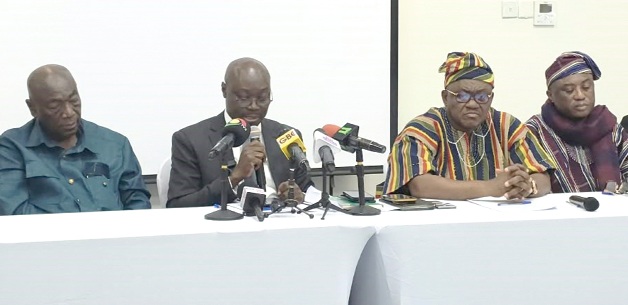
The Ghanaian government and Organised Labour have signed a two-year public service remuneration agreement that raises total pay by nine per cent in 2027 and base pay by 10 per cent in 2028, Graphic Online reports.
The deal was reached through the Public Services Joint Standing Negotiating Committee (PSJSNC), where the government was represented by the Fair Wages and Salaries Commission (FWSC) and the Ministry of Finance, and labour by its unions and public service institutions.
The framework runs from January 1, 2027 to December 31, 2028. According to Graphic Online, the 2027 increase takes effect at the start of that year and is split into eight percentage points of across-the-board base pay and one per cent for Conditions of Service. The 2028 rise is calculated on the base pay in force at December 31, 2027.
Why it matters
The agreement is the first time the two sides have settled on a pay framework spanning two years rather than one, a point the Finance Minister, Dr Cassiel Ato Forson, made in remarks reported by Graphic Online. He described it as a historic milestone in the country's public service remuneration negotiations.
Beyond the headline percentages, the arrangement is intended to give workers and the government a measure of certainty: households can plan around known pay levels, and the state can budget for wages over a longer horizon. It also creates a defined window for the planned handover of pay-setting duties from the FWSC to the Independent Public Emoluments Commission (IPEC).
How the numbers were set
The 2028 figure was agreed against a backdrop of inflation at 5.2 per cent, alongside the government's projection of eight per cent for the period, give or take two percentage points, according to Graphic Online.
The deal includes a trigger for reopening that calculation. Should year-on-year inflation for December 2027 exceed the midpoint of that eight per cent projection by more than a factor of two, the PSJSNC is to reconvene and review the 2028 base pay.
Organised Labour secured a second safeguard. The TUC Secretary-General, Joshua Ansah, said the parties agreed that if inflation in 2028 climbs above 10 per cent, or reaches a level that substantially erodes purchasing power, they will meet again to reopen negotiations. He noted that with inflation at 5.3 per cent, the 2027 adjustment sits above the prevailing rate, though he acknowledged it does not fully capture the cost pressures workers face. Ansah said the deal may not satisfy every expectation but represents progress in defending workers' purchasing power.
The agreement also commits the parties to use the transition period to examine allowances and correct distortions, and obliges the government to consult Organised Labour every quarter on reforms. The FWSC keeps its statutory functions until any transfer to IPEC takes legal effect.
Signatures and reactions
Dr George Smith-Graham, the FWSC's Chief Executive Officer, signed for the government, while Ansah signed for Organised Labour. The Finance Minister and the General Secretary of the Ghana National Association of Teachers, Thomas T. Musah, witnessed the agreement.
Smith-Graham said the talks mattered because they landed at a pivotal moment in the country's public sector compensation reforms, as the system moves from the FWSC to IPEC. He said the two-year approach reflected a shared commitment to industrial peace, predictable public spending, income security and stability during the institutional change, and he acknowledged both the sacrifices of public sector workers and the government's duty to keep spending in check.
Forson said the agreement goes beyond salaries, framing it as a way to shield workers' incomes, give families more certainty and help the state plan its spending. He argued the deal shows fair pay and disciplined public finance can coexist.
The reporting sits alongside separate coverage of the same negotiations. GBC Ghana Online reported a nine per cent rise for public sector workers in 2027, while Ghana Business News described an eight per cent base pay increase for 2027 and 10 per cent for 2028. CitiNewsroom reported that inflation could prompt a review of the 2028 deal. GhanaWeb, in related coverage, reported that a one per cent salary increase could add GH¢800 million to the wage bill.
What to watch is the December 2027 inflation print, which determines whether the 2028 base pay is reopened, and the progress of the legal transfer of pay-setting powers to IPEC.



