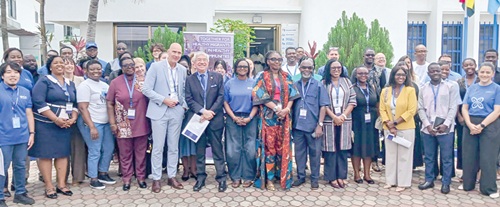
Ghana's Ministry of Labour, Jobs and Employment has restated its commitment to labour migration that is safe, fair and properly governed, saying overseas work should benefit the people who take it up, their families and the country as a whole. The pledge was made at the International Organisation for Migration (IOM) Ghana Migration Services Open Day in Accra, according to Graphic Online.
Gloria Bortele Noi, the Ministry's Director of Policy, Planning, Budgeting, Monitoring and Evaluation, spoke for the sector minister at the event. She stressed that sound migration policy depends on institutions working together, Graphic Online reports.
Why it matters
Labour migration is a major source of income for many Ghanaian households and a contributor to national development through remittances and skills brought home. But it also carries risks, from fraudulent recruiters to exploitation abroad and gaps in health care. The Accra event brought the labour, health and education ministries together with IOM Ghana, signalling that the government sees migration as a shared responsibility rather than a single department's brief.
Warning against irregular routes and fake offers
Noi advised people planning to travel for work to get their information from authorised institutions and verified service providers. She said prospective migrants should confirm destination-country requirements, employment documents and recruitment procedures before committing, so as to avoid irregular migration, fraudulent job offers and exploitation.
She also called on government agencies, diplomatic missions, recruitment firms, training institutions and the private sector to align their efforts. Better coordination, she said, would strengthen migration governance, improve referral systems and widen access to dependable migration services.
Overseas employment, in her view, should add to job creation at home rather than substitute for it. She noted that Ghanaians who return after working abroad can bring back skills, experience, remittances and knowledge that feed into national development, and she urged stakeholders to cooperate in protecting migrant workers' rights.
Health checks and continuity of care
Evelyn Amoako, Acting Chief Nursing Officer and Deputy Director of Nursing Services at the Ministry of Health's Directorate of Nursing and Midwifery, spoke for Health Minister Kwabena Mintah Akandoh. She emphasised closer cooperation between health authorities, migration agencies and other bodies so that migrants receive proper health assessments, referrals and continued care both before departure and after returning to Ghana.
Amoako said the Ministry of Health is addressing migrants' health needs through national planning instruments, including the National Health Policy and the Health Sector Medium-Term Plan.
She also raised the departure of Ghanaian health professionals. International postings can build skills, she said, but the country needs stronger workforce planning so that the loss of staff does not weaken its ability to deliver quality care.
Migrants can struggle to obtain health care and to keep up treatment when they move between countries, Amoako added, which makes cooperation between institutions essential. She called for tighter coordination among health authorities, diplomatic missions and recruitment agencies so that migrants know about medical requirements and available services before they travel.
Amoako credited IOM Ghana with supporting safe migration, providing health services and helping Ghanaian citizens return from India, South Africa and other countries.
Education and reintegration in focus
Rose Bentil Quaye, Principal Planning Officer at the Ministry of Education, underlined the value of collaboration between agencies in meeting the education and health needs of migrants and their families. She said the ministry is committed to helping migrant children settle into the national education system and to keeping their well-being a priority in national planning.
Cyril Odartey Lamptey, Data Monitoring and Evaluation Officer at IOM Ghana, said the open day was intended to deepen cooperation with government and other stakeholders and to raise awareness of safe, orderly and regular migration. He listed health assessments, cultural orientation, visa services and reintegration support among the areas covered.
Attendees were also introduced to IOM Ghana's services, which include health assessments, help with movement, document verification and orientation before departure. Under its Migration Health Assessment Programme, the organisation carries out medical evaluations at the request of destination-country governments so that prospective migrants can meet the health and immigration rules that apply to them.
The event was also designed to spread awareness of the migration services on offer, make referral routes clearer and build stronger relationships between institutions that support migrants at each stage of the journey.
What to watch: whether the coordination urged in Accra turns into practical changes, such as clearer referral channels between the health and labour ministries and better-verified recruitment channels for Ghanaians seeking work abroad.