
Let me tell you something—keeping up with the news right now feels less like reading a newspaper and more like trying to drink from a firehose. One minute you’re reading about a startling AI breakthrough, the next you’re plunged into analysis of a pivotal election halfway across the globe. It’s chaotic, but if you step back, a few dominant, interwoven narratives start to emerge.
These aren’t isolated stories. They’re massive, tectonic shifts colliding with each other, and they’re defining everything from your job security to the stability of your country. I’ve found that most headlines treat these trends as separate silos, but that’s a mistake. Here’s what most people miss: the real story is in the friction points where these trends meet.

The AI Acceleration: Beyond the Hype Cycle
Let’s be honest, we’re past asking “if” AI will change things. We’re now in the messy, uncomfortable “how” phase. This isn't just about ChatGPT writing your emails anymore. We're seeing generative AI move from a consumer toy to an industrial engine. It’s being baked into drug discovery, military logistics, financial modeling, and of course, the information ecosystem itself.
The hype has curdled into a more sober—and more significant—reality. The conversation has pivoted from amazement to accountability. Key questions are now dominating boardrooms and government committees: Who controls the underlying infrastructure? The staggering cost and compute power needed for frontier AI models means power is hyper-concentrated in a handful of tech giants. What happens to the workforce—really? The narrative is shifting from "AI will take all jobs" to a more nuanced, but perhaps more disruptive, reality of job transformation and task displacement. It’s not about replacing the whole lawyer, but automating 30% of a lawyer's tasks. What does that do to an industry? Can we govern what we don’t fully understand? Regulatory scrambles in the EU, US, and China are a race against a clock that’s ticking at AI-speed. The core tension? Balancing innovation with existential risk.
This leads us directly to the next trend, because one of the first and most profound places AI is clashing with society is in how we govern ourselves.

The Super Election Year: Democracy’s Stress Test
2024 isn’t just an election year; it’s a global democratic reckoning. With nearly half the world’s population heading to the polls, this is a live-fire stress test for the very systems of self-rule. And the environment has never been more hostile.
The playbook has evolved. It’s no longer just about door-knocking and TV ads. Now, it’s about:
- AI-powered disinformation: Deepfaked audio of candidates, hyper-personalized propaganda micro-targeted at vulnerable demographics, and bot networks that can shape a narrative overnight.
- The erosion of institutional trust: Decades of declining faith in media, academia, and government have created a fertile ground for conspiracy theories and strongman rhetoric.
- Geopolitical meddling as a standard tactic: Elections are now viewed as key battlegrounds in broader great-power competitions.
The New Cold Fronts: Geopolitics in a Multipolar World
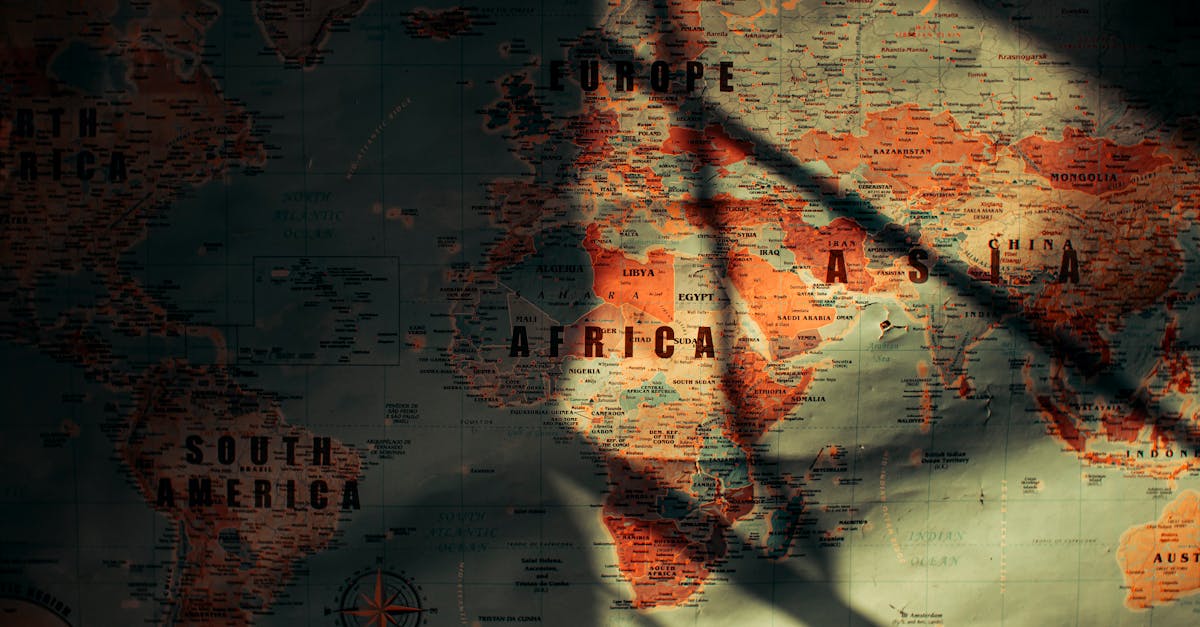
The post-Cold War “holiday from history” is unequivocally over. We’re not in a bipolar US vs. Russia world anymore. We’re navigating a fragmented, multipolar landscape where competition is the default. This trend is characterized by several key fronts:
The Tech Cold War: This is arguably the most decisive front. The battle over semiconductors, 5G/6G networks, and AI supremacy isn’t just about profit; it’s about which values and which governance models get hard-coded into the 21st century’s infrastructure. Export controls on chips are the new sanctions. The Weaponization of Interdependence: Globalization made us connected, but not necessarily secure. We’re now seeing critical dependencies—on energy, rare earth minerals, or medical supply chains—used as strategic leverage. It’s a move from “just-in-time” to “just-in-case,” and it’s rewiring the global economy. The Proxy Battleground: Major powers are increasingly avoiding direct military confrontation, instead fighting through proxies in regional conflicts. These conflicts, in turn, create refugee crises, spike energy and food prices, and pull the rest of the world into difficult moral and strategic choices.
Where It All Collides: The Convergence Zone
So, why look at these three trends together? Because their intersection is where the real headlines—and history—are being made.
Imagine an AI model, developed in a country with authoritarian values, used to identify and suppress political dissent within its borders. Now imagine that same technology, or the disinformation it can generate, being exported to sway an election in a fragile democracy. The winning candidate then aligns their country with a new geopolitical bloc, shifting trade routes and security alliances. This isn’t a futuristic scenario; it’s the logical convergence of these three trends happening in real-time.
The central challenge of our moment is that we are trying to solve 21st-century technological and information problems with 20th-century institutions and mindsets. Our laws, our diplomatic frameworks, and often our public discourse, are lagging dangerously behind.
The call-to-action isn't just for policymakers. It’s for all of us to become more discerning consumers of information, to understand the technological forces reshaping our world, and to engage in the democratic process with a clear-eyed view of the new threats it faces. The trends are set. The real question is what we build in the space between them.
Follow us YouTube. Follow for more great content!



