French authorities have renewed partial overnight curfews in several cities following the violence that marked the 17 October day of demonstrations, according to BFM. Prime Minister Sébastien Lecornu asked prefects to trigger a series of limited curfews, and some were extended for an additional night. Curfew measures were introduced in Paris, the central district of Lyon and Marseille, among other places.
Lecornu also told the National Assembly that a large-scale police operation would be in place for what he called the "act two" of the mobilisation, announced for the coming Saturday. Police prefect Laurent Nuñez sent instructions to prefects asking them to ban gatherings deemed likely to disturb public order, BFM reported.
Why it matters
The decisions signal that the executive is treating the unrest as unresolved rather than contained. Curfews and protest bans are exceptional tools in mainland France, and their renewal for another night suggests officials expect further trouble. The political fallout is already spreading across the spectrum, with the far right describing the situation as near civil war, the left warning that repression will not calm the anger, and the government itself conceding that the state fell short.
Bardella speaks of "civil war" scenes
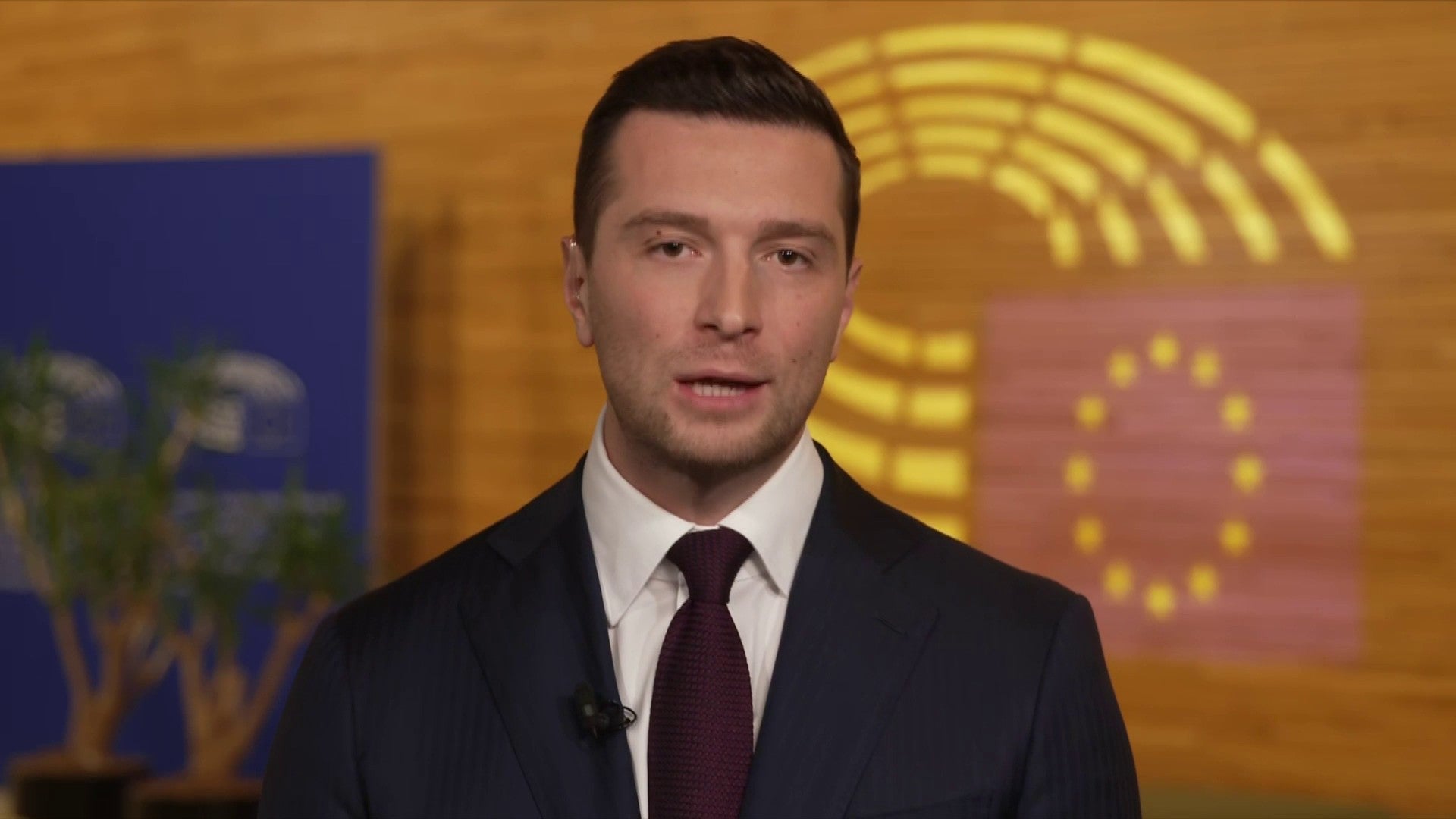
Jordan Bardella, president of the Rassemblement National, said the country's leadership was no longer capable of protecting its citizens, describing the events as increasingly resembling scenes of civil war. He argued that the people in the streets were not the France of work but the France of disorder, according to BFM.
Marine Tondelier, national secretary of the Écologistes, called the imposition of curfews an admission of failure. She said France had been unable to restore order and social peace, and added that curfews also make life harder for shopkeepers, speaking on BFMTV.
Government spokesperson Maud Bregeon said the state would begin to account for what happened, noting that several ministers had acknowledged the state had failed on 17 October. She said the priority was restoring public order and described curfews as proportionate and effective tools that would be maintained for as long as needed.
Mélenchon rejects violence and defends protest rights
Jean-Luc Mélenchon, leader of La France insoumise, said he refused to cast police officers as the enemy. He argued that a demonstrator exercising a constitutional right and an officer doing his job do not occupy the same position, and that the risks each carries are not equivalent. He criticised Lecornu for asking people to pick a side between rioters and police, saying the real question is whether the law is respected.
Mélenchon also defended non-violent methods as more effective for building broad support, saying that a strategy that leaves participants injured or worse cannot attract thousands of people and instead frightens them away. He described 17 October as a threshold that had been crossed, and traced the tension to underlying conditions including unemployment, deepening poverty and hardship linked to fuel prices, with young people bearing the heaviest burden.
Éric Coquerel, a La France insoumise deputy, said he was worried by the government's moves toward curfews and the idea of a state of emergency. He argued that such measures were not the right answer, saying the depth of anger and rejection of government policy cannot be contained by repressive steps alone without political responses.
Limoges arrest and a video appeal
In the Haute-Vienne department, one man was taken into custody three days after a fire on 17 October devastated Limoges town hall, according to BFM. Separately, the Paris police prefecture announced a platform open to the public for submitting footage of violence, looting and damage from recent days. It said it was interested in material from Paris and the three inner-ring departments of Hauts-de-Seine, Seine-Saint-Denis and Val-de-Marne, and urged people to send images promptly to help officers identify and arrest those responsible.
Attention now turns to Saturday's planned demonstrations and whether the reinforced policing and protest bans hold the line.



