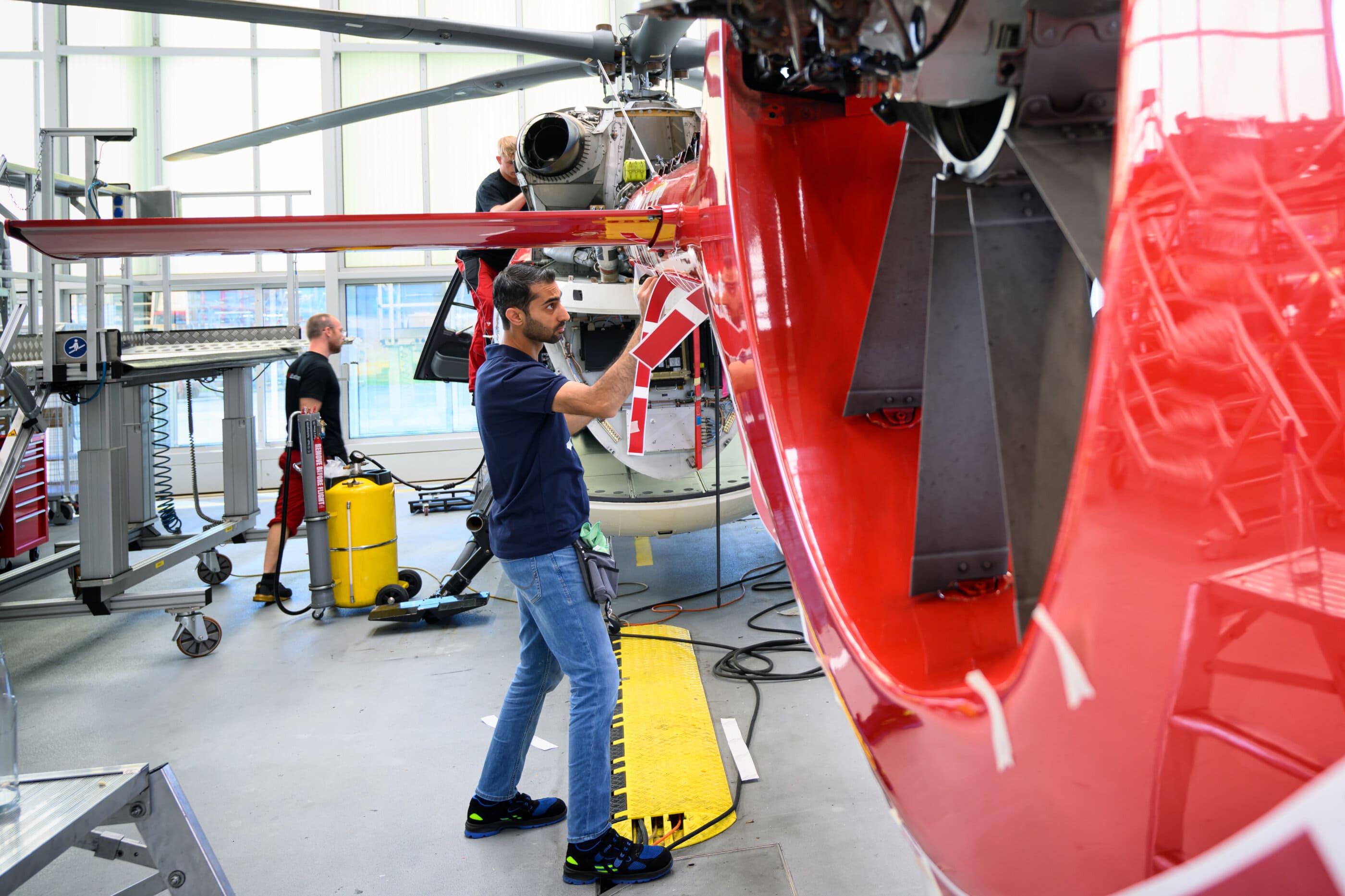
Two fatigue specialists told the Vertical MRO Conference in Kelowna, British Columbia, last month that maintenance technicians are often the last to know when fatigue is degrading their work. Meredith Hedwell, vice president of customer success at Pulsar Informatics, and Doug Downey, the company's lead program manager, used a center-stage session to explain what fatigue does to safety-sensitive work and how technicians and supervisors can bring it under control, according to Vertical Mag.
Why it matters
The pair argued that fatigue deserves the same structured attention helicopter operators already give their aircraft. Downey drew a direct comparison: aircraft pass through onboard diagnostics before, during and after maintenance, yet no equivalent check exists for the people performing the work. He said fatigue should be tracked and controlled with the same rigor applied to aircraft systems.
The stakes are practical rather than abstract. Hedwell described fatigue as a physiological condition in which mental or physical performance drops — something distinct from simply feeling worn out. A person can be extremely tired without being fatigued, she said, and can be fatigued without feeling tired at all. Because the state does not reliably announce itself, technicians cannot safely rely on their own sense of readiness when deciding whether to take on a demanding task.
What fatigue actually does to a technician
Hedwell compared the effects to those of alcohol. Fatigued workers respond more slowly, lose focus on detail, make rash decisions, misjudge risk and lose awareness of what is happening around them. They also struggle to switch approach when a job stops going to plan.
She said tired technicians produce more errors and remember less, and that their mood can shift in ways colleagues pick up on before the technician notices anything himself. Fatigue can also trigger microsleeps, brief moments when the brain's sleep-promoting region takes over. A lapse lasting half a second may pass without the person realizing it, yet half a second is enough to matter during work that demands unbroken concentration, such as engine tasks or a borescope inspection.
Downey went further, saying fatigue runs through the entire Dirty Dozen — the well-known list of human-factor risks in aviation safety. In his view, every one of those risks carries some element of fatigue.
Both speakers stressed that reducing fatigue requires examining underlying causes rather than assigning blame, even though fatigue is routinely cited in accident and incident findings. Hedwell named three concrete root causes that can be tackled directly: accumulated sleep loss, extended duty periods and the time of day a person works.
On sleep debt, she explained that missed rest builds up and can only be cleared by sleeping. Individual requirements differ widely — roughly 15 percent of people need about six hours, most need seven or more, and some need nine or ten. She suggested a wearable watch, band or ring that tracks sleep and other biometrics as a practical way to identify personal needs, or simply paying close attention to how different amounts of sleep leave you feeling.
Duty periods matter because the human body is built for about 16 waking hours a day, a span that must cover eating, errands, commuting, recovery and other obligations alongside work. Long shifts squeeze those activities and, in turn, cut into sleep.
Time of day exerts its own pull. Night work runs counter to the body's daylight-oriented circadian rhythm. Hedwell pointed to the window of circadian low, which falls roughly between 2 a.m. and 6 a.m. depending on the individual and shifts about an hour for early or late sleepers. Sleep taken during that window is the most restorative, she said. Night shifts are unavoidable at most maintenance operations, but she recommended building schedules that let technicians sleep for at least part of that period wherever possible.
Hedwell described the combined effect as more than the sum of its parts. "It's not like one plus one is two," she said. "It's like one plus one is five."
Countermeasures before work begins
The speakers offered a set of practical steps for night-shift crews. The first is allowing time to shake off sleep inertia, the grogginess that follows waking, which can be pronounced when a person rises during the circadian low. Bright light, physical activity, caffeine, a shower or cold water on the face can shorten that fog before safety-sensitive tasks start, Hedwell said.
Improving sleep quality also helps. She advised sleeping in a quiet, dark and comfortable room and avoiding screen light for an hour before bed, since blue light mimics daylight and signals the brain to stay alert.
Caffeine delays the consequences of sleep debt without erasing them, she added, while alcohol and sleep aids degrade sleep quality. Consistent routines support better rest: meals at regular times, fewer fluids before bed and no exercise within five hours of turning in. She also noted that blue-light-blocking glasses with orange or red lenses can be useful, while clear lenses marketed as blue-light blockers only address eye strain and do not actually filter the light.
Downey noted that supervisors and organizations contribute to the problem too. Pressure to rush can create stress and lead technicians to skip steps, and failing to preserve rest opportunities adds to the load. The source reporting ends at that point.
For operators, the takeaway is that fatigue management is a scheduling and culture question as much as an individual one. Watch for whether maintenance organizations begin formalizing fatigue monitoring the way they track aircraft diagnostics.