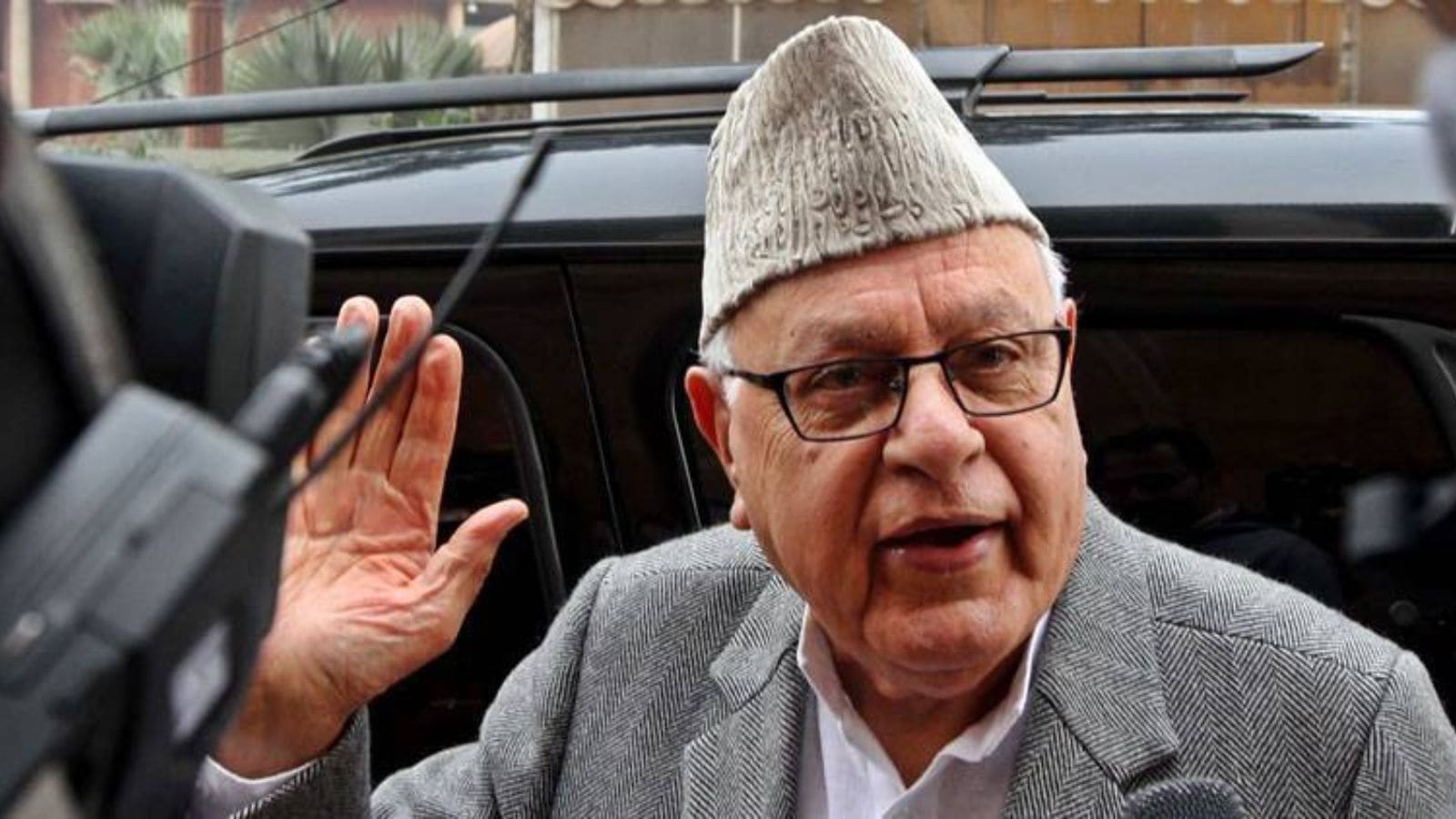
National Conference president Farooq Abdullah drew a sharp response from the Bharatiya Janata Party on Saturday after he said Pakistan had helped Kashmiris by keeping the Kashmir question alive on international platforms. Speaking at a party event in Baramulla, the former Jammu and Kashmir chief minister also asked whether the central government would secure justice for the region's residents and called on Kashmiris to safeguard their identity, according to The Indian Express.
The BJP rejected his comments outright. Party spokesperson Altaf Thakur described them as seditious and against the country's interests, and asked the police to act against the National Conference leader, The Indian Express reported.
Why it matters
The exchange puts the long-running dispute over Jammu and Kashmir back at the centre of national politics, this time as a direct clash between a regional party's most prominent figure and the ruling party at the Centre. Abdullah's remarks touch on a sensitive line of argument: crediting Pakistan for international attention to Kashmir runs against the official Indian position, which holds that Islamabad has sponsored militancy in the region.
For the BJP, the comments offered a chance to portray the opposition in Kashmir as soft on Pakistan. For the National Conference, the event in Baramulla was framed around the grievances of ordinary Kashmiris and the question of whether they will receive justice — themes the party has returned to repeatedly in recent years.
What Abdullah said, and how the BJP answered
At the Baramulla gathering, Abdullah argued that Pakistan's efforts had kept the Kashmir issue from fading at international forums, and he framed that as a benefit to the people of the region. He paired this with a challenge to the Centre over justice for Kashmiris and an appeal to residents to protect their identity.
Thakur's response was immediate and pointed. The BJP spokesperson called the remarks seditious and anti-national, according to The Indian Express, and said the police should take action against Abdullah. He further accused the National Conference leader of lending legitimacy to Pakistan's stance even though, in the BJP's telling, Pakistan has backed terrorism in Jammu and Kashmir.
The Indian Express reports that the BJP is demanding an apology as well as police action, a demand also carried by Hindustan Times in its coverage of the row.
A familiar fault line in Jammu and Kashmir politics
Abdullah, a former chief minister of the erstwhile state, has long been one of the most quoted voices from Kashmir, and his statements on Pakistan and on the region's political status have drawn controversy before. The Baramulla remarks fit a pattern in which regional leaders speak to local audiences about identity and grievance, while national parties read the same words through a security and sovereignty lens.
The BJP's demand for police action raises the stakes beyond a war of statements. It places the question of legal consequences before the authorities in Jammu and Kashmir, and it signals that the ruling party intends to keep the issue alive politically rather than let it pass as routine rhetoric.
Coverage of the episode varied in emphasis. NDTV led with the BJP's use of the word "sedition," The Times of India highlighted Abdullah's remark that the neighbour was "protecting us," and India Today framed the dispute around his claim that Pakistan protects Kashmiris while the Modi government stays silent. Each outlet reported the same core exchange: a National Conference event in Baramulla, a claim about Pakistan's role, and a swift BJP counterattack.
What happens next depends on whether the police in Jammu and Kashmir respond to the BJP's demand, and on whether Abdullah or the National Conference issues any clarification of his remarks.