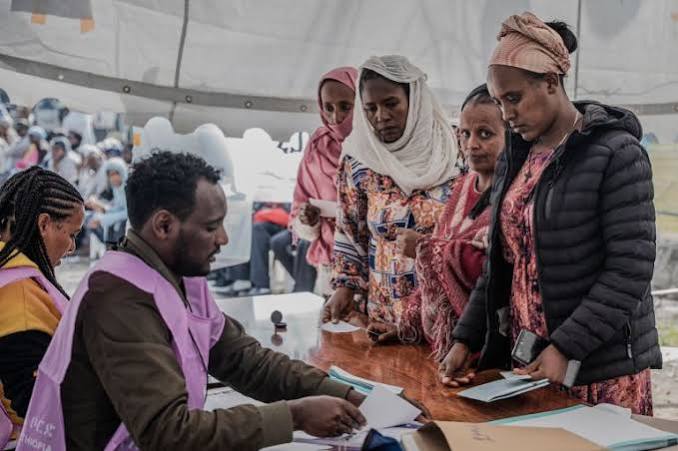
Ethiopia's ruling Prosperity Party, led by Prime Minister Abiy Ahmed, won the parliamentary elections held on 1 June 2026 by a wide margin, according to African Arguments. The outlet reports the party secured roughly 90% of parliamentary seats, an outcome it describes as drawing little commentary either internationally or inside Ethiopia. In August, results from the country's National Dialogue were announced, and the process's full recommendations were submitted to the federal government on 3 October, African Arguments reports.
Why it matters
African Arguments argues the National Dialogue may prove more consequential than the election itself. The consultation, launched in 2022, ran nationwide and closed with a conference held from 15 July to 22 August. Its unpublished full recommendations now go to the newly elected parliament, which will have to address them.
The outlet also notes that the election did not calm the country. Voting could not take place at no fewer than 143 polling stations across 46 constituencies because of the security situation, and violence has escalated since early September, particularly in the Tigray, Amhara and Oromia regions. According to African Arguments, the national political landscape appears to be fragmenting further.
An electoral system the incumbent cannot lose
African Arguments points to Ethiopia's electoral mechanics as a central reason the ruling party keeps returning to power. The country does not use proportional representation. It uses a district-based, first-past-the-post system inherited from the previous EPRDF administration. Under that arrangement, the more parties enter the race — 48 were registered — the greater the advantage for the largest and most influential party, which in practice is the one already governing. African Arguments notes that a party can take a district even with a small share of the vote there, citing a hypothetical 15%.
The outlet also flags what many analysts consider an unhealthy dominance of ethnic-based parties. It describes this as divisive in any electoral system, producing loyalty-driven bloc voting rather than debate over policies, coalitions, or the concrete results and human impact of government decisions. African Arguments concludes that the district system combined with the country's ethno-federal formula means the incumbent cannot lose, which it says undermines effective democratic representation. The outlet adds that discouraging ethnic parties under an alternative system would, given current elite politics, in practice perpetuate ethnic bloc voting anyway — and that such a change is unlikely soon, so political deadlock and conflict will persist.
A long history without deep democratic roots
African Arguments places the result in a longer pattern. It compares the 2026 outcome to the elections of 2021 and 2015, calling the result the kind seen in communist countries. The outlet describes the campaign as a well-organised effort of the kind known in Ethiopia since the Derg era of 1974 to 1991 as an "organisational operation," or dirigitawi sera in Amharic. Whether that is regretted or praised, African Arguments writes, it reflects political reality.
The outlet says Ethiopia still lacks a deeply rooted democratic political culture, especially at the national level. Competition for power has historically been violent and freedoms limited, and African Arguments says people largely go to the polls out of a mix of duty, pride and fear. It also cautions against idealising voters' democratic commitments, noting that Ethiopian politicians and administrators often describe the country as unusually difficult and fractious to govern and much of the population as unreliable — opportunistic, not always patriotic, and not deeply attached to accountability, neutrality and fairness, but focused instead on their own survival and access to resources and jobs.
That opportunism, the outlet says, has shown repeatedly in the eight years since Abiy Ahmed took over. He emerged from within the then-ruling EPRDF in April 2018 and opened political space by announcing an end to repression, declaring liberalisation, and inviting all opposition parties, including armed ones, back into politics. African Arguments says this did not turn out well, partly because of growing resistance from spoilers such as the TPLF, which attacked federal forces on 3 and 4 November 2020, and partly because of persistent economic inequality and scepticism among an ethnically and religiously divided public.
Dialogue, rights and unfinished business
The National Dialogue's discussions and recommendations showed what African Arguments calls growing ambivalence about ethnic politics — a shift the outlet considers notable given how central ethnicity remains to the country's political structure.
On rights and governance, African Arguments is blunt. It cites Ethiopia's ranking as "not free" in the 2025 Freedom House Index, a further decline from the year before, and says such scores confirm the impression that elections and civic and political rights are in poor shape, even if they do not capture everything.
The outlet lists the pressing national problems that remain: ongoing armed conflicts and their effects, a large internally displaced population, development policies that are unbalanced across regions, a weak justice system, and chronic economic difficulties. It acknowledges real achievements, including completion of the Blue Nile dam for hydroelectric power, new infrastructure expansion, digitalisation of the economy and services, agricultural expansion and agro-industry plans, and investment in tourism facilities. Political elites and those connected to them are doing well, African Arguments writes, while most of the population is not. Many citizens take pride in the achievements, the outlet says, but the poor state of human rights, everyday corruption, high poverty, hundreds of deaths from armed violence, and unequal access to justice — including for political detainees and for people displaced from cities or rural areas — leave the public gloomy and despondent.
African Arguments closes by reminding readers that elections are only one component of democracy, and that the 2026 vote should be read alongside the Dialogue's recommendations, the security breakdown and the structural features of the electoral system rather than in isolation.
What to watch next: how the newly elected parliament handles the National Dialogue's unpublished recommendations, and whether the violence in Tigray, Amhara and Oromia continues to escalate.