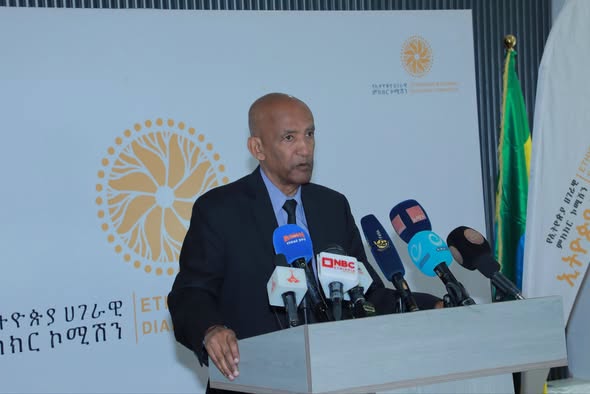
Ethiopia's National Dialogue Commission (ENDC) has finished the work it was set up to do, its chief commissioner said, submitting 394 recommendations produced by a conference of 4,000 participants. Professor Mesfin Araya, who leads the commission, said the process has created the conditions for a new relationship between the state and the public, according to ENA English, which reported his remarks from Addis Ababa on October 22, 2026.
Why it matters
The commission was tasked with drawing up a national conversation broad enough to carry credibility with the public, and its leadership now presents the outcome as the groundwork for a fresh political settlement. According to ENA English, Professor Mesfin described the dialogue as having met the principal goals behind the body's creation, and said it had been run on the basis of inclusive participation and credibility.
He framed the willingness to open discussion on points of disagreement as a significant advance in itself. The recommendations, he said, offer a basis for state-building and for developing democratic institutions, and the exercise has laid the ground for a new political order between the government and citizens.
What the commission says it delivered
Speaking at the close of the process, Professor Mesfin said the commission had carried out an extensive dialogue shaped by what the public wanted and was interested in. He thanked the various stakeholders whose contributions he said made the process succeed.
Deputy Chief Commissioner Hirut Gebreselassie said the dialogue had been conducted in a spirit of consensus. She called it a historic process in which participants put forward ideas useful to nation-building and offered constructive views aimed at strengthening peace and unity, ENA English reported.
Commissioner Mahmud Dirir said the recommendations have been passed to executive bodies as well as to regional states and city administrations. He added that they have been recorded in a range of formats and will be made available to researchers and to the wider public.
Documentation and handover still to come
The commission's work is not entirely finished in practical terms. Professor Mesfin said the digital documentation of the recommendations and their formal handover will take place over the next few months. Completing the archiving, properly recording the outcomes and the experience of the process, and transferring the information and documents are among the tasks still ahead, he said.
The closure of the commission's mandate has drawn attention beyond Addis Ababa. The Reporter Ethiopia published a report titled "Dialogue Commission Wraps Up Mandate Without Clear Implementation Roadmap," signalling scrutiny of how the recommendations will be carried forward. Fana Media Corporation, meanwhile, reported that Ethiopia's parliament has pledged to turn the dialogue's recommendations into action and into law. An analysis carried by iConnect Blog posed the question of whether Ethiopia can create an executive presidency without adopting a presidential system — a debate that sits alongside the dialogue's constitutional questions. The Institute of Foreign Affairs also published a piece describing the national dialogue as a resource for diplomacy.
What to watch
The immediate test is the handover: whether the documentation and transfer of the 394 recommendations proceed within the few months the chief commissioner indicated, and whether parliament follows through on its stated commitment to convert them into legislation.