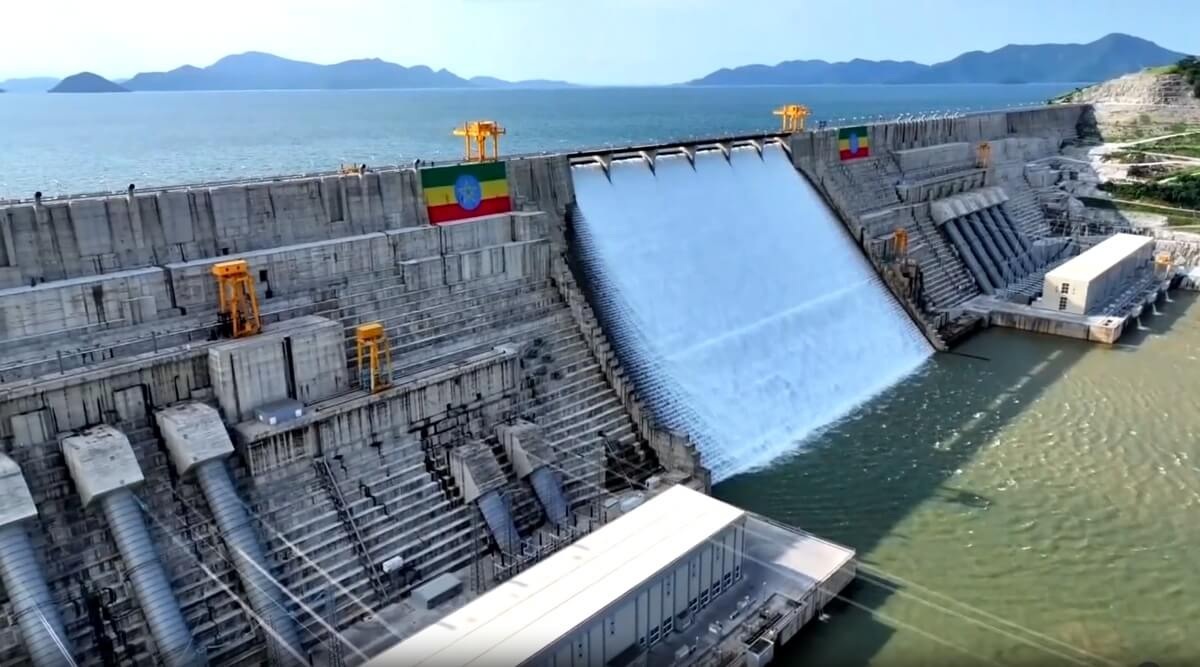
Ethiopia is promoting the development of the Blue Nile, known locally as Abay, as a route to regional integration rather than treating the river solely as a subject of dispute, according to ENA English. In a report published Saturday, the state outlet said Ethiopia sees the river as central to its development, sovereignty and its claim to convert natural resources into a better future for its people.
ENA English reports that the country's position is that such development would speed integration both within the region and beyond it.
Why it matters
Ethiopia faces persistent food insecurity, rising energy demand, rapid population growth, pressure to industrialize and the effects of a variable climate, according to the outlet. In that setting, ENA English argues that the capacity to store and use water is tied directly to the ability to generate electricity, irrigate farmland, produce food, create jobs and build a productive economy.
The outlet places the current debate in a longer history. It says the dispute over the Nile did not start with the Grand Ethiopian Renaissance Dam (GERD), but grew out of an older regional order shaped by colonial-era arrangements, unequal political influence and competing readings of rights over the river.
According to ENA English, Ethiopia was not a party to the 1929 Anglo-Egyptian Nile arrangement or the 1959 Egypt-Sudan agreement, yet the legacy of those deals continues to shape political arguments about how the Nile is used. The outlet frames the core question as whether historical arrangements can keep constraining the development choices of an upstream country whose economic and social needs have changed substantially — not simply how much water Ethiopia should use.
Financing as a constraint
ENA English also describes a financial dimension to the dispute. It says development can be held back not only by physical obstacles but by the political environment around finance, investment and international institutions.
The outlet says Ethiopia's experience with large water infrastructure has repeatedly shown how hard it is to turn technical potential into finished projects when financing becomes entangled with geopolitics. As a result, it says, the GERD took on meaning far beyond its engineering: it became a test of whether Ethiopia could rally its own people, institutions and financial resources behind a strategic national project when conventional external financing was politically complicated.
The report notes that academic and policy literature has documented claims that Egypt used diplomatic influence to discourage international financial institutions from backing upstream Nile projects. It adds that research during the GERD era has described lobbying involving institutions including the African Development Bank, the World Bank and the European Investment Bank. ENA English says such claims should be examined project by project and backed by documentary evidence, while describing the broader historical pattern — repeated geopolitical resistance to Ethiopian efforts to turn water into electricity and irrigation — as significant.
When conventional external financing proved difficult to secure, the outlet says, Ethiopia increasingly turned to domestic mobilization, with citizens purchasing bonds.
From one dam to a wider strategy
ENA English reports that completing the GERD has changed the equation but has not resolved the larger development challenge. It says Ethiopia still needs more water infrastructure to address electricity shortages, expand irrigation, strengthen food security, manage floods and droughts, support industrialization and create conditions for sustained economic growth.
The outlet says the question now is how Ethiopia moves from a single landmark project to a broader water development strategy that is financially sustainable and environmentally responsible while keeping cooperation with downstream states.
It also links the Nile issue to the wider geopolitics of the Horn of Africa. According to ENA English, Ethiopia's growing economic capacity, expanding electricity exports, pursuit of regional integration and efforts to secure reliable and mutually beneficial access to the Red Sea have changed how neighboring states and outside powers calculate their interests. The outlet says the Nile question must therefore be read within a wider contest over development, economic influence and regional order.
ENA English argues that confrontation is not inevitable. It says Ethiopia's strongest long-term position combines development with diplomacy, and that equitable and reasonable use of shared water can underpin cooperation if all basin countries accept that the Nile must serve both present needs and legitimate future development.
With investment, scientific cooperation, transparent information sharing and energy and agricultural systems that benefit all sides, the outlet says, the river can become an engine of regional economic integration rather than a source of permanent rivalry.
ENA English concludes that Ethiopia's Nile policy is not only the story of a dam. It describes it as the story of a country trying to overcome historical development constraints, strengthen its financial autonomy and turn natural resources into productive capacity. The GERD, in that telling, is one chapter, and the larger test is whether Ethiopia can build a new generation of water, energy and agricultural infrastructure that makes its rivers foundations for food security, industrialization, employment and regional prosperity.
What to watch is whether Ethiopia's next phase of water development draws the basin states into cooperative financing and information-sharing arrangements, or whether the geopolitical resistance the outlet describes continues to shape which projects get built.



