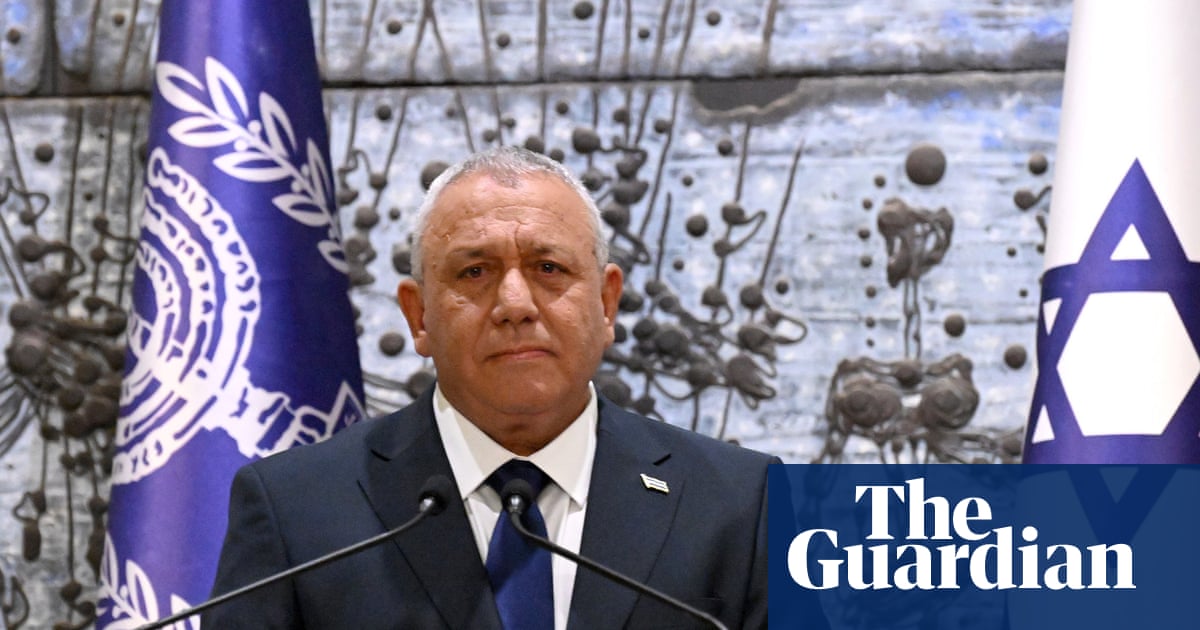
Gadi Eisenkot, the former chief of Israel's military and leader of the Yashar party, formally received a mandate from President Isaac Herzog on Sunday to assemble a governing coalition, according to The Guardian. The president handed him 28 days to complete the task even though Eisenkot's bloc does not hold a clear majority in the 120-seat parliament. Eisenkot used the occasion to reach out to allies of Prime Minister Benjamin Netanyahu, saying the country stands at a historic juncture.
Speaking at a ceremony at the presidential office, where he wore a suit and tie instead of his customary all-black attire, Eisenkot said Israel was nearing what he called a point of no return. He argued that a national emergency government is needed and that building one will demand inventive and unconventional political moves, The Guardian reported.
Why it matters
The mandate marks a rare opening for Netanyahu's opponents, but it does not guarantee a government. After the October elections, Eisenkot's broad opposition bloc took 48 seats while Netanyahu's camp won 53, leaving neither side with the 61 votes required for a majority. The deadlock echoes the repeated election cycles Israel went through between 2019 and 2022, when the country held five votes because coalitions could not be assembled.
Eisenkot, 66, has promised to heal the deep divisions that widened under Netanyahu's leadership. Both he and Herzog acknowledged that Israel's standing abroad has deteriorated during Netanyahu's tenure, and The Guardian notes that the prime minister is wanted by the International Criminal Court.
Eisenkot described the diplomatic situation in stark terms, saying even Israel's closest friends and strategic partners are now saying their relationship with the country needs to be reconsidered. He framed the moment as a devastating diplomatic crisis.
Three paths, each with obstacles
The Guardian reports that Eisenkot has three routes to becoming prime minister, and each carries complications.
The first is a power-sharing arrangement with Netanyahu. The prime minister publicly called for a national unity government with Eisenkot on Saturday night, but it remains unclear whether the two rivals could agree on how to divide power. The Guardian notes that such coalition governments are notoriously fragile and often collapse.
The second route relies on support from Arab-led parties, which made unprecedented gains in the vote and endorsed Eisenkot during consultations with Herzog. Several members of his own bloc oppose that option. Yisrael Beiteinu, a more conservative partner in his alliance, has already said it will not sit in a coalition with Arab-led parties. Eisenkot has set conditions for any Arab party joining him, including recognizing Israel as a Jewish state and designating Hamas as a terrorist organization.
The third path runs through the ultra-Orthodox parties, which are seeking continued military draft exemptions for their community. That demand clashes directly with a central plank of Eisenkot's campaign. He and his partners made equal military service a core issue and are calling for an end to the longstanding exemptions.
In his remarks, Eisenkot appealed to Netanyahu's Likud party and to the far-right party of finance minister Bezalel Smotrich to join him, but only under his own leadership. He said his door is open and his hand extended to anyone who grasps the seriousness of the moment, according to The Guardian.
Pressure from Netanyahu and a contested election
Netanyahu is expected to keep up his pressure campaign against Eisenkot, arguing that any alliance with Arab-led parties would amount to betrayal. He has repeatedly claimed the election was stolen by Arab parties that mobilized voters in large numbers, though The Guardian reports he has offered little to no evidence for the allegation.
Israel's Shin Bet security agency has opened an investigation into possible foreign interference in the vote. The Central Elections Committee and Herzog have both said the result is valid and that even if wrongdoing were found, it would not have significantly changed the outcome.
On policy, Eisenkot has promised to act against extremist West Bank settlers who have attacked Palestinians, describing recent incidents as Jewish terror that Netanyahu's government has enabled. He opposes the creation of a Palestinian state and has pledged to end Hamas's rule in Gaza and dismantle its military wing.
His military record includes commanding forces during the 2006 war with Hezbollah, when he devised what became known as the Dahiya doctrine, named after a Beirut suburb heavily damaged in that conflict. The approach calls for using massive force against civilian infrastructure in areas controlled by Hezbollah.
What to watch
Eisenkot now has 28 days to secure the 61 votes needed for a government. If he falls short, Herzog can grant a 14-day extension before offering the mandate to another candidate. Should no one succeed, Israel would return to the polls for fresh elections.