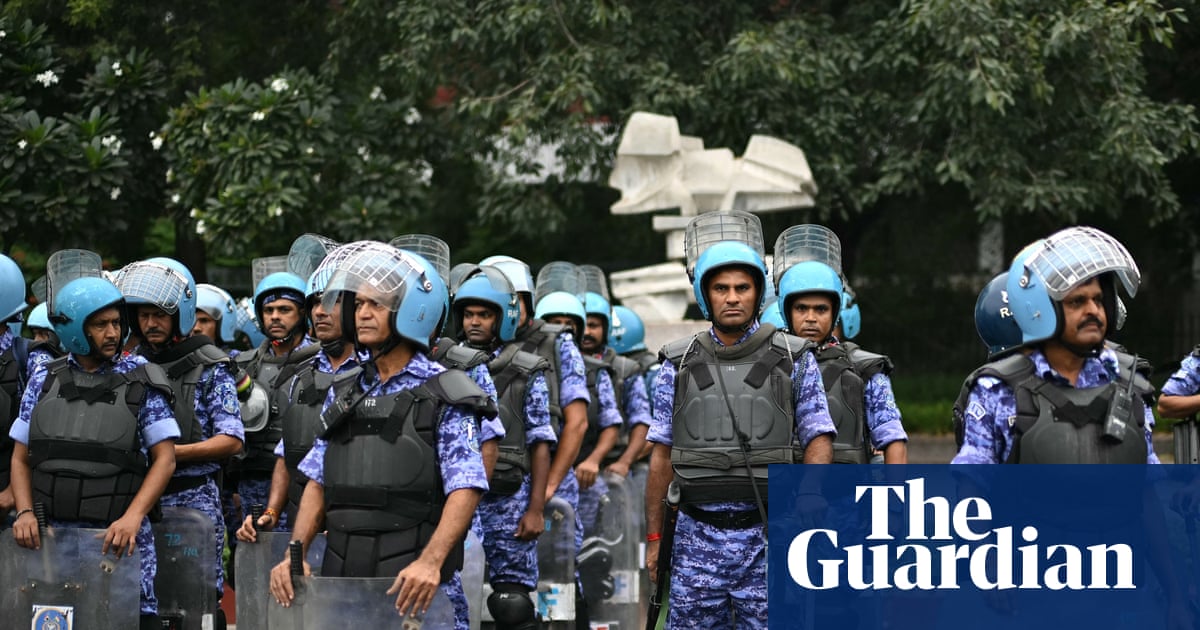
Indian police detained scores of demonstrators in New Delhi on Saturday as thousands of officers and paramilitary personnel patrolled the capital, metro stations were closed and mobile internet was suspended, according to The Guardian. The measures were put in place ahead of a youth-led protest calling for the resignation of India's chief election commissioner, Gyanesh Kumar.
The demonstration was organised by the Cockroach Janta Party, a movement that began as online satire and has since moved into street politics. Organisers said they intended to gather at Jantar Mantar, a site in central New Delhi that authorities designate for protests.
Television footage showed police in the city's central business district pursuing several dozen young protesters before they were placed in vehicles and driven away. A police source told Reuters that roughly 200 people were detained in that area. Among those held outside Delhi was Dhruv Rathee, a well-known YouTube figure who supports the protest, according to a police spokesperson.
The Cockroach Janta Party has claimed that at least 10,000 people, including demonstrators travelling to the capital by train, have been detained across the country. Police have not responded to those broader allegations of mass detentions.
Why it matters
The protest presents a fresh political challenge to Prime Minister Narendra Modi's government, arriving just months after similar demonstrations forced his education minister to step down over leaked exam papers. It also comes ahead of a series of significant state elections beginning in early 2027, including in Uttar Pradesh, the country's most populous state and one governed by Modi's Bharatiya Janata Party.
At the centre of the dispute is a revision of voter lists. Critics say the exercise favours the BJP, and opposition parties have for years argued that the government is attempting to alter electoral rolls to its own advantage. Kumar has not commented on the matter. Both the election commission and the BJP have rejected the allegations.
The BJP maintains that Modi's popularity and India's economic growth explain its electoral dominance, and that opposition parties are misleading the country because they cannot win at the ballot box.
A capital locked down
Delhi police said on Friday that they had refused permission for the rally because the application arrived late. They added that the Cockroach Janta Party had broken commitments made during earlier protests, and that authorities were obliged to enforce the law and preserve public order. Police warned that participants would face legal consequences if they defied the ban.
Despite the refusal, party leaders said they would proceed with the gathering. Tens of thousands of police and paramilitary personnel were deployed across the capital, and multiple rows of yellow metal barricades blocked the roads leading to Jantar Mantar.
Authorities ordered dozens of metro stations to close and cancelled several trains bound for New Delhi. On Friday, however, the supreme court ruled that some trains must continue to run and that metro stations should not be shut down across the board.
Abhijeet Dipke, who leads the Cockroach Janta Party, criticised the restrictions in a post on X. He said the government would rather close the entire national capital and disrupt the lives of millions of citizens than permit a peaceful protest at a location set aside for that purpose.
Citing a government order, the ANI news agency reported that mobile internet services were suspended within a 4km (2.5 mile) radius of the protest site from Friday night until Saturday night.
The Hindu newspaper reported that some of those detained in the central state of Madhya Pradesh were taken to hotels.
From online satire to street movement
The Cockroach Janta Party's shift from digital commentary to organised protest reflects a broader pattern of youth mobilisation in India, where online communities have increasingly translated into physical demonstrations. Saturday's events in Delhi follow near-daily protests by opposition groups across the country.
The detention of Rathee, a popular online commentator, drew particular attention. His arrest took place outside Delhi, according to the police spokesperson, placing him among demonstrators held beyond the capital's boundaries.
The combination of transport shutdowns, internet restrictions and heavy security deployment shaped the day's events as much as the protest itself. With metro stations closed and trains cancelled, ordinary residents of the capital faced disruption alongside the demonstrators, a point Dipke highlighted in his criticism of the restrictions.
The supreme court's intervention on Friday introduced a limit to the shutdown measures, requiring that some rail services continue and rejecting a blanket closure of the metro network. That ruling set the legal boundaries within which authorities and organisers operated on Saturday.
What happens next will depend on how the detentions are handled and whether the Cockroach Janta Party sustains its momentum as state elections approach in early 2027.



