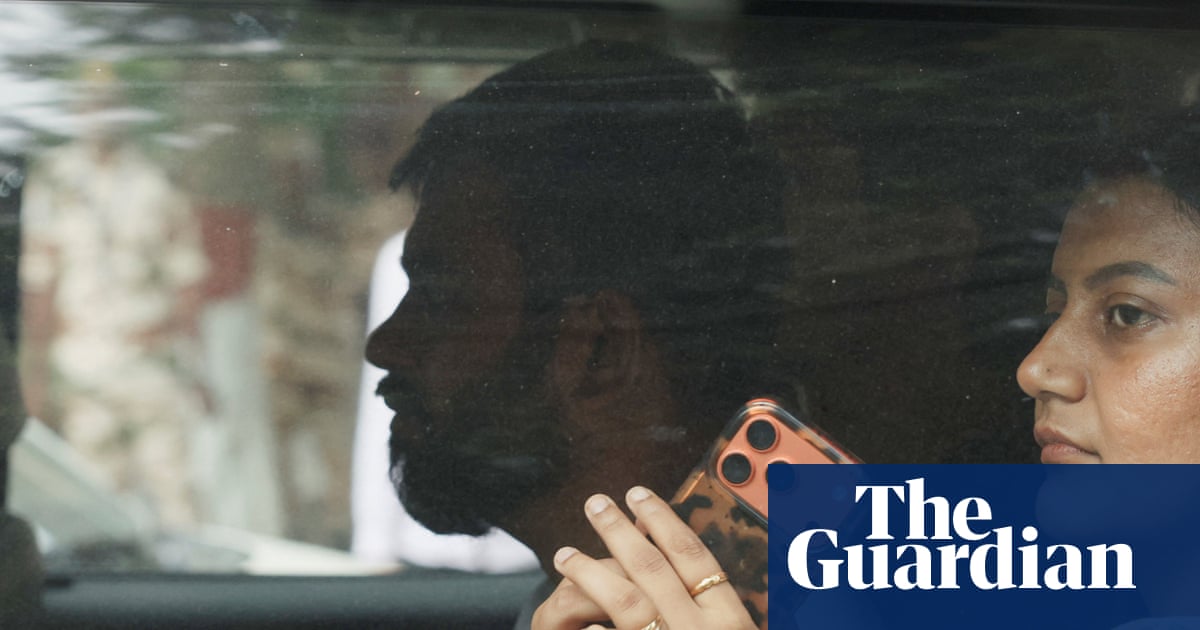
Delhi prepared for a second day of youth demonstrations on Sunday demanding the resignation of India's chief election commissioner, after a court ordered the release of Abhijeet Dipke, founder of the "Cockroach Janta Party" (CJP), along with two other senior figures in the movement, according to The Guardian.
Dipke and the other leaders were taken into custody on Saturday when their flight landed in Delhi, as the group had planned to assemble thousands of supporters at Jantar Mantar in the center of the capital.
Reuters reported that police detained more than 2,000 people in an effort to prevent Saturday's gathering. The Guardian reports that most of those held on the first day of protests were released on Saturday night, according to police.
Heavy deployments of police and paramilitary forces remained in place across Delhi on Sunday, though metro stations had reopened and mobile internet services were restored.
Why it matters
The confrontation places India's election machinery at the center of a widening public dispute. The protests target Chief Election Commissioner Gyanesh Kumar over a revision of voter lists that critics argue disproportionately benefits Prime Minister Narendra Modi's Bharatiya Janata Party (BJP), which has governed for more than 12 years.
The scale of the detentions has drawn international attention. The United Nations human rights office voiced concerns about the mass detentions carried out before and during the protests.
UN human rights spokesperson Thameen Al-Kheetan said, "We call on the authorities to ensure that the right to peaceful assembly is fully respected and fulfilled." He also urged authorities to pursue "meaningful dialogue" to address the concerns he described as broadly held.
India's foreign ministry pushed back, calling the UN's approach "selective" and describing its statement as "an unwarranted interference in the internal affairs of India."
Opposition parties and critics of Modi's government also criticized what they characterized as an excessive use of force against demonstrators.
How the movement grew
The CJP began as online satire before transforming into an advocacy group. Its earlier street protests over leaked exam papers ended with the resignation of Modi's education minister.
On its social media accounts, the group has labeled its campaign against Kumar "Season 2," and it has said it will not relent until India's election system is reformed.
The current wave of demonstrations follows a late-September report in the Indian Express newspaper that Kumar's two deputies had raised internal concerns about voter list revisions, registration procedures and digital systems. The Election Commission has said that differing views are normal during internal deliberations and has denied favoring any party.
Modi's BJP has accused groups opposed to it of trying to weaken the country's democracy by questioning legitimate electoral processes without cause.
Election Commission data cited by the BJP shows that roughly 130 million names — a figure larger than the population of Japan — were removed from electoral rolls during the verification exercise. That total includes 63 million people who had relocated and 30 million who could not be traced.
Sporadic protests have continued in various parts of India since the Indian Express report was published.
What to watch
Sunday's turnout and whether the detentions resume will indicate whether the movement can sustain pressure on the election commissioner, or whether the crackdown has blunted its momentum.



