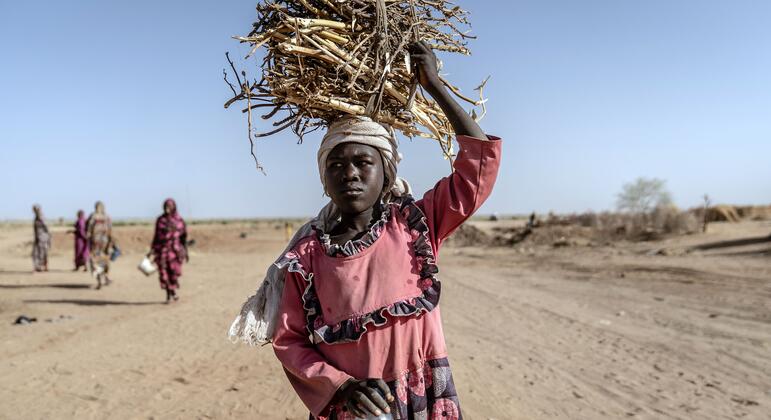
The World Health Organization warned on Thursday that more than 700,000 displaced people sheltering in Tawila, in Sudan's Darfur region, are short of healthcare, food, water and protection, and it called for a rapid increase in resources, according to UN News.
The same day, the UN Security Council voted unanimously to keep its Sudan sanctions regime in place for another two months, until 11 December, UN News reported.
Dr. Abdinasir Abubakar, the WHO's senior official in Sudan, spent ten days in September touring hospitals, health centres and laboratories across Darfur's states, visiting all of them except East Darfur. He described the scale of need he encountered in Tawila and elsewhere in the region as immense, and credited health workers with continuing to serve their communities despite insecurity and shortfalls in funding and supplies.
Why it matters
Darfur holds 65 per cent of Sudan's 8.6 million displaced people, a figure the International Organization for Migration provided to UN News. That concentration makes the region a test of whether aid agencies can reach people at all as the war between the Sudanese army and the paramilitary Rapid Support Forces grinds on.
The health picture described by the WHO is not a single emergency but several overlapping ones. Malnutrition stood out in the facilities Dr. Abubakar visited, and the agency expects it to get worse as weak rainfall, failed crops and a strong El Niño push food insecurity deeper. Mental health services are extremely thin. Stocks of medicines for HIV, tuberculosis and neglected tropical diseases are at dangerously low levels.
Funding is the immediate constraint. The WHO says it is prepared to expand its work in Darfur, Kordofan and other conflict-affected areas, but only 23 per cent of its $97.7 million humanitarian appeal for 2026 has been covered. The agency also stressed that aid teams need safe, sustained and unimpeded access — a condition that in practice depends on the warring parties.
A short renewal that leaves the mandate untouched
The sanctions regime the Security Council renewed traces back to the Darfur conflict of 2004, when the council acted to slow the flow of weapons into the region. It combines targeted sanctions with an arms embargo, and a panel of experts monitors compliance. Under Thursday's decision, that panel's mandate now runs to 11 January 2027.
The resolution, drafted by the United States, is what diplomats call a technical rollover: a brief extension that changes nothing in the mandate itself. It follows a one-month rollover adopted on 11 September, according to UN News.
Washington had pushed to widen the embargo to cover all of Sudan and every party to the current war, and to address drones and dual-use technology, news reports said. That push did not achieve consensus. Roughly half the council's members were reported to favour a one-year renewal limited to Darfur instead.
The gap between those positions leaves the council's tool aimed at the region where the 2004 crisis began, not at the nationwide conflict now driving displacement.
Civilians and aid operations under fire
The war continues to cost civilians and humanitarian workers dearly. On 3 October, an aerial attack on two trucks contracted by the World Food Programme in South Kordofan killed a driver, UN News reported.
Diplomacy has stalled. A US-backed proposal for a 90-day ceasefire has met resistance from the army, according to news reports. Investigators appointed by the independent Human Rights Council have warned that outside support is keeping both sides' military capabilities going.
Against that backdrop, the WHO's appeal figures and the council's two-month extension point in the same direction: the response is being sized and timed well short of the need.
What to watch next is whether the council revisits the mandate before 11 December, and whether donors close the WHO's funding gap before malnutrition and drug shortages in Darfur worsen further.



