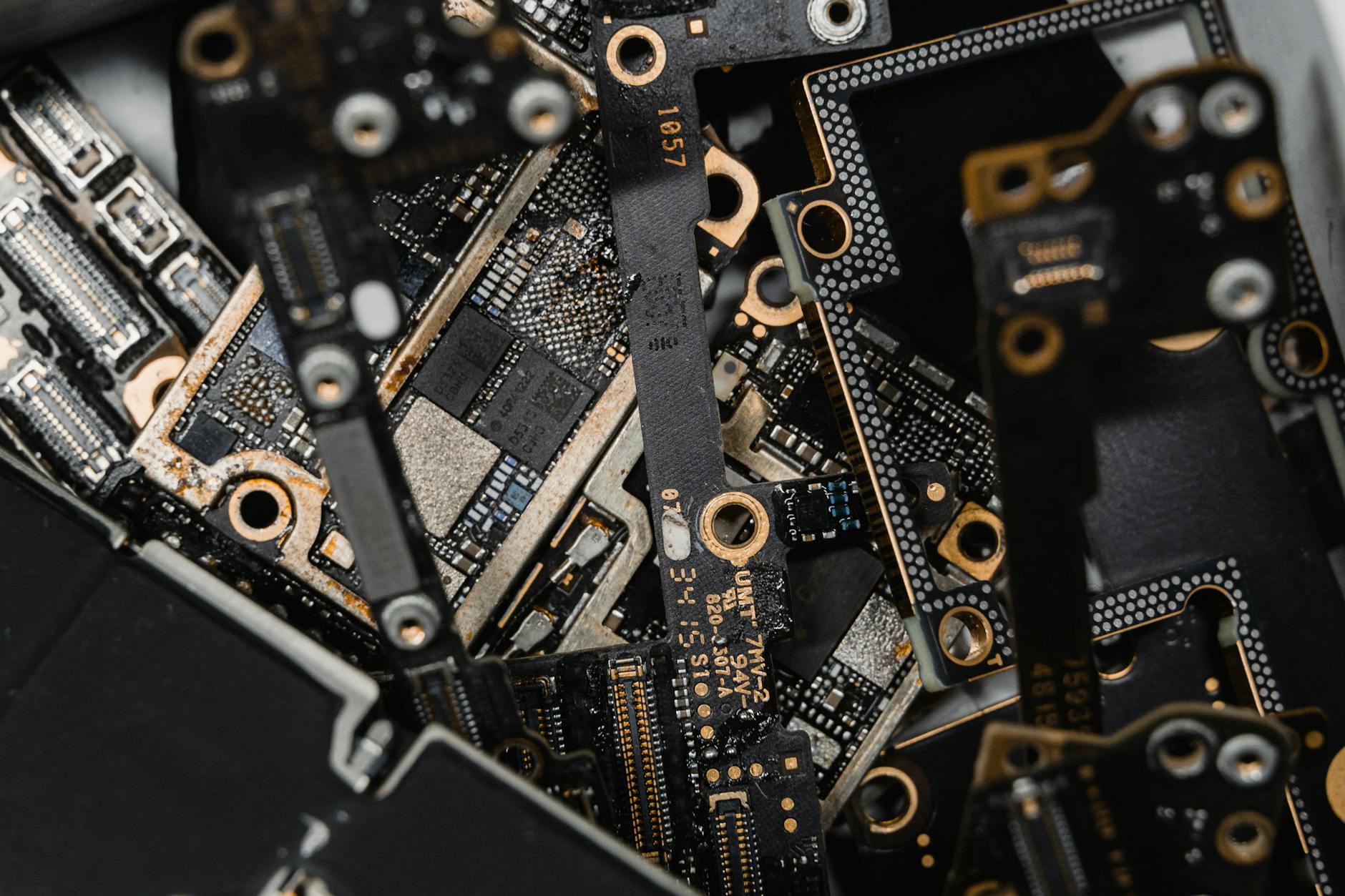
Business and technology today are colliding in ways that would have seemed implausible a decade ago. The most valuable companies in the world are no longer oil majors or banks but chip designers and cloud providers, and the decisions executives make about AI infrastructure now ripple through every sector, from healthcare to logistics.
In this article, we dissect the AI chip boom that has become the defining business and technology story of the year, examine how companies from startups to Fortune 500s are adapting, and offer practical guidance on what leaders should do next. You will learn where the real value is accruing, what risks lurk beneath the hype, and how to build an AI strategy that survives the next cycle.
- Nvidia's data center segment generated $47.5 billion in Q1 2025, up 73% year-over-year, underscoring insatiable demand for AI compute.
- Hyperscalers like Microsoft, Amazon, and Google are committing tens of billions annually to AI infrastructure, reshaping corporate budgeting priorities.
- Companies that treat AI compute as a strategic asset rather than a cost center are seeing measurable productivity gains and faster time-to-market.
- Supply chain concentration in advanced semiconductors remains a critical vulnerability that businesses must plan around.
- The AI chip race is creating new winners and losers across industries, with energy, real estate, and utilities emerging as unexpected beneficiaries.
Why Is the AI Chip Boom the Defining Business Story of 2025?
The numbers are staggering. In its first-quarter fiscal 2026 earnings report, Nvidia revealed that its data center revenue reached $47.5 billion, a 73% increase from the same period a year earlier. That single segment now dwarfs the entire revenue of most S&P 500 companies. The demand is being driven by a simple reality: every major enterprise is racing to build or rent AI capacity, and the chips that power that capacity are in short supply.
This is not just a Silicon Valley phenomenon. Banks are using AI to detect fraud in real time, retailers are deploying it to optimize inventory, and manufacturers are applying it to predictive maintenance. According to McKinsey's State of AI survey, 65% of organizations now regularly use generative AI in at least one business function, up from 33% just a year earlier. That adoption curve is fueling the infrastructure boom.
From Cost Center to Strategic Asset
The most important shift is conceptual. Forward-thinking executives no longer view AI compute as an IT expense to be minimized. Instead, they treat it as a strategic asset that enables new products, faster decision-making, and competitive differentiation. This reframing is driving multi-year investment commitments that would have been unthinkable before 2023.
- Microsoft has committed over $80 billion to AI data centers in fiscal 2025 alone.
- Amazon plans to invest roughly $100 billion in AI infrastructure over the next decade.
- Meta raised its 2025 capital expenditure guidance to $60–65 billion, largely for AI.
These are not speculative bets. They are responses to real customer demand and a recognition that AI capability will soon be table stakes for every industry.

How Are Companies Adapting Their Business Models to AI Infrastructure?
The AI infrastructure boom is forcing a fundamental rethink of business models across the economy. Companies that once competed on brand or distribution are now competing on data and compute. This shift is creating new winners and exposing vulnerabilities in organizations that move too slowly.
Consider the example of ServiceNow, the enterprise software firm. By embedding generative AI into its workflow automation platform, the company has seen its AI-related products become its fastest-growing segment, contributing to a 22% year-over-year revenue increase in Q1 2025. ServiceNow's approach—integrating AI into existing products rather than building standalone AI tools—has resonated with customers who want practical productivity gains, not science projects.
The Rise of the AI-First Operating Model
Leading companies are reorganizing around AI. They are creating dedicated AI councils, appointing chief AI officers, and reallocating budgets from traditional IT to AI infrastructure. According to Gartner, worldwide AI spending is projected to reach $1.5 trillion in 2025, driven by infrastructure investments.
- Budget reallocation: Shifting 10–20% of IT budgets to AI initiatives.
- Talent acquisition: Hiring machine learning engineers and data scientists at scale.
- Partnership ecosystems: Collaborating with cloud providers and chipmakers rather than building everything in-house.
The companies that succeed are those that treat AI as a core capability, not a bolt-on. They are also careful to measure ROI rigorously, avoiding the trap of investing in AI for its own sake.
What Are the Hidden Risks in the AI Chip Supply Chain?
Beneath the optimism, significant risks are brewing. The AI chip supply chain is extraordinarily concentrated. The most advanced semiconductors are manufactured by TSMC in Taiwan, a single geographic location that sits in one of the world's most geopolitically sensitive regions. Any disruption—whether from natural disaster, trade restrictions, or conflict—would send shockwaves through the global economy.
This concentration is prompting governments and companies to act. The U.S. CHIPS and Science Act, the European Chips Act, and Japan's semiconductor strategy all aim to diversify production. But building new fabs takes years and billions of dollars. In the meantime, companies must plan for supply chain resilience.
Strategies for Mitigating Supply Chain Risk
- Diversify suppliers: Qualify multiple chip vendors, even if it means accepting slightly lower performance.
- Build buffer inventory: Hold strategic reserves of critical components.
- Invest in domestic capacity: Support and partner with local semiconductor initiatives.
- Design for flexibility: Architect systems that can run on a mix of hardware platforms.
Another risk is energy. AI data centers are power-hungry. The International Energy Agency estimates that data centers consumed about 460 terawatt-hours in 2022, and that figure could double by 2026. Utilities and energy companies are now key players in the AI value chain, and companies that ignore energy constraints do so at their peril.
How Can Leaders Build a Resilient AI Strategy Today?
For business leaders, the AI chip boom presents both opportunity and obligation. The opportunity is to harness AI to transform operations, products, and customer experiences. The obligation is to do so responsibly, with a clear-eyed view of the risks and a plan for long-term resilience.
The first step is to move from experimentation to execution. Too many companies are stuck in pilot purgatory, running small AI experiments without scaling them. According to Harvard Business Review, the most successful AI adopters are those that embed AI into core processes and measure outcomes rigorously.
A Practical Framework for AI Strategy
- Assess your data readiness. AI is only as good as the data it learns from. Invest in data quality and governance.
- Prioritize high-impact use cases. Focus on areas where AI can deliver measurable value, such as customer service, supply chain optimization, or predictive maintenance.
- Build vs. buy. Decide which capabilities to develop in-house and which to source from partners. Most companies will need a hybrid approach.
- Invest in talent and culture. AI success requires more than technology; it requires people who understand both the business and the technology.
- Plan for scale. Design your AI infrastructure to grow with demand, and negotiate flexible contracts with cloud providers.
Finally, leaders must keep an eye on the regulatory landscape. The EU AI Act, which came into force in 2024, imposes strict requirements on high-risk AI systems. Companies operating in Europe must ensure compliance or risk significant penalties.

Frequently Asked Questions
What is driving the current AI chip boom?
The boom is driven by surging demand for AI compute from enterprises building generative AI applications, hyperscalers expanding data centers, and governments investing in sovereign AI capabilities. Nvidia's data center revenue reached $47.5 billion in Q1 2025, up 73% year-over-year, reflecting this demand.
How can businesses mitigate AI supply chain risks?
Businesses can diversify chip suppliers, hold strategic inventory buffers, invest in domestic semiconductor capacity, and design systems for hardware flexibility. They should also monitor geopolitical developments and energy constraints that could disrupt AI infrastructure.
Which industries are benefiting most from the AI infrastructure boom?
Beyond chipmakers and cloud providers, energy companies, utilities, real estate firms (data center landlords), and construction companies are seeing significant benefits. Industries that adopt AI early, such as financial services, healthcare, and retail, are also gaining competitive advantages.
What should be in an AI strategy for a mid-sized company?
A mid-sized company's AI strategy should include a data readiness assessment, prioritization of high-impact use cases, a build-vs-buy decision framework, investment in talent and culture, and a plan for scaling infrastructure. It should also address regulatory compliance and risk management.

Is the AI chip boom sustainable?
While demand is strong, sustainability depends on continued enterprise adoption and monetization of AI applications. Risks include supply chain disruptions, energy constraints, and potential overinvestment. Companies should plan for cyclicality and focus on ROI rather than chasing hype.
Conclusion
The business and technology story of 2025 is unmistakably the AI infrastructure boom. Nvidia's meteoric rise, the massive capital commitments from hyperscalers, and the rapid adoption of AI across industries all point to a fundamental shift in how businesses operate. But the boom also brings risks—supply chain concentration, energy constraints, and regulatory uncertainty—that leaders must navigate carefully.
The companies that will thrive are those that treat AI as a strategic asset, invest in resilience, and focus relentlessly on delivering measurable value. The AI chip race is not a sprint; it is a marathon, and the winners will be those who pace themselves wisely.
Sources & Further Reading
- McKinsey's State of AI survey
- Gartner AI spending forecast
- Harvard Business Review on AI-first companies