
⚡ Quick Answer Loveworld Kingdom, a faith-based organisation, headed by Pastor Chris Oyakhilome Phd D. D. has secured $1m for an investment fund supporting small and medium-sized enterprises across Africa. Unveiled at its Accra trade forum, the fund connects entrepreneurs with investors, capital and expertise to address the continent's severe SME financing gap.
African small and medium-sized enterprises create most of the continent's jobs, yet a stubborn financing gap keeps many of them from growing. Loveworld Kingdom, is now moving to close part of that gap after securing $1m for an investment fund aimed at businesses within its network.
The funding was announced following the Loveworld Trade and Investment Forum held in Accra, Ghana, in October. Below, we break down how the fund works, why African SMEs struggle to access credit, and whether a faith-based investment model can deliver real commercial results.
🔑 Key Takeaways
- Loveworld Kingdom has secured $1m for an investment fund targeting SMEs within its network across Africa.
- The fund was unveiled at the Loveworld Trade and Investment Forum in Accra, Ghana, in October.
- Fewer than 5% of Nigeria's MSMEs have access to bank credit, according to the World Bank.
- Africa's annual trade finance deficit is estimated at roughly $100bn by Afreximbank.
- Access to funding will be based on business credibility and commercial viability, not religious affiliation.
- The organisation's next priority is scaling businesses from local success to regional and global markets.
📑 Table of Contents
- What Is the Loveworld Kingdom $1m SME Fund?
- Why African SMEs Struggle to Access Finance
- How the Loveworld Investment Model Works
- Who Is Behind the Initiative?
- Can Faith-Based Networks Solve an Economic Problem?
- What This Means for African Entrepreneurs
- The Bigger Picture: Private Capital and African Growth
- Frequently Asked Questions
What Is the Loveworld Kingdom $1m SME Fund?
 Accra Ghana Business Forum
The Loveworld Kingdom investment fund is a $1m capital pool designed to support small and medium-sized enterprises operating within the organisation's business network. According to a statement issued by the group, the fund is intended to mobilise private capital toward African entrepreneurs who want to increase production, expand operations and enter new markets.
The initiative sits under Loveworld Kingdom's Ministry of Commerce, which plans to connect business owners with potential investors, professionals and other resources available across its network. Rather than acting as a conventional bank, the organisation is positioning itself as a matchmaker between entrepreneurs and the capital, expertise and market access they need.
Why a Faith-Based Group Is Entering Business Financing
Loveworld Kingdom argues that organisations and individuals should direct more of their capital toward the businesses they want to see succeed. Stephanie Oforka, Executive Minister of Commerce and Convener of the forum, framed the fund as a matter of alignment between values and money.
"We cannot continually speak about the businesses we want to see while directing our capital elsewhere," she said. That logic is increasingly common among large membership organisations, which often have dense networks of professionals, investors and customers that can be mobilised more efficiently than traditional lenders can reach individual borrowers.
Why African SMEs Struggle to Access Finance
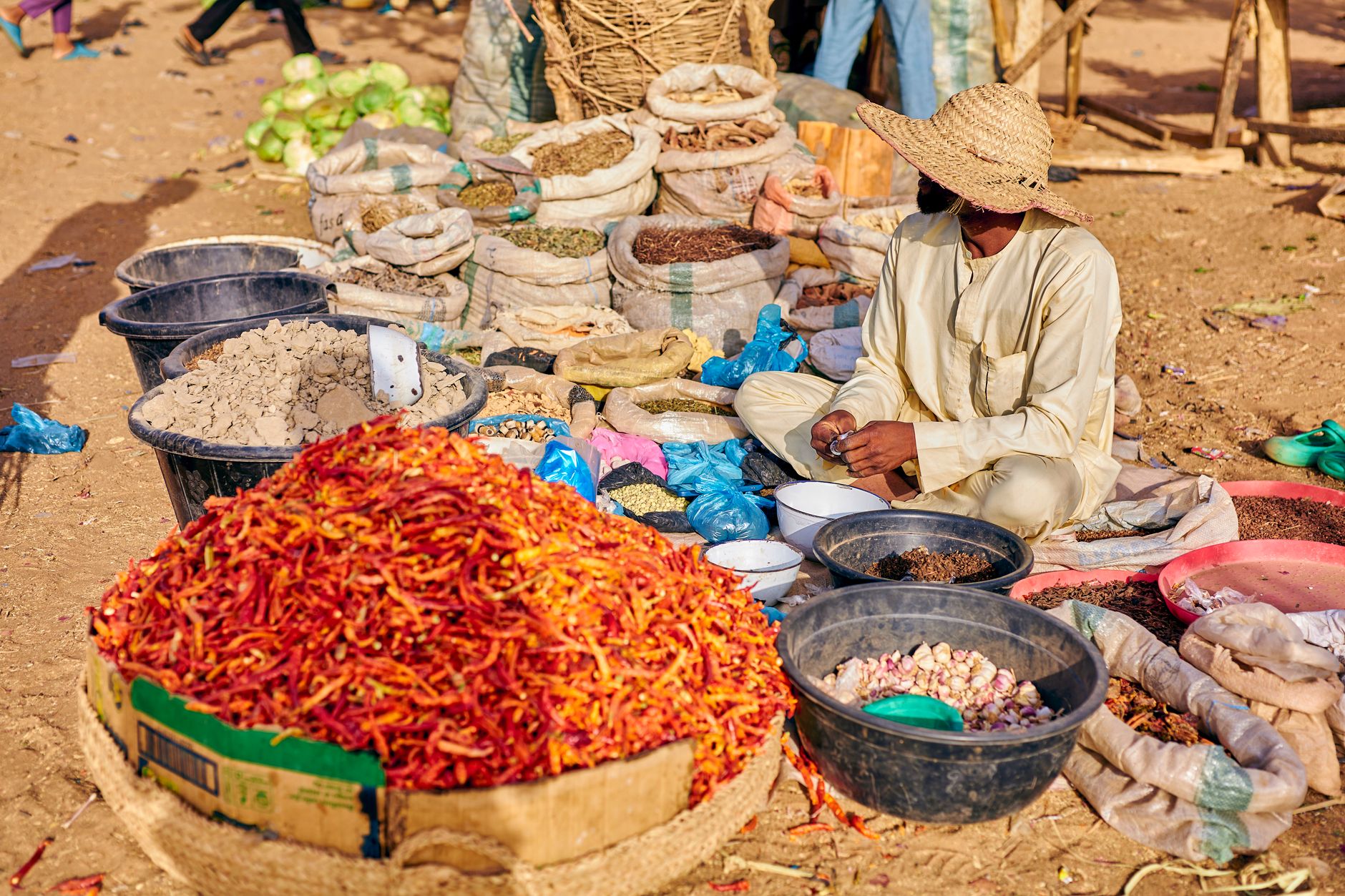 African Market Trader Stall
The fund arrives against a backdrop of chronic credit scarcity. According to the World Bank, fewer than five per cent of Nigeria's micro, small and medium-sized enterprises have access to bank credit, leaving the vast majority of entrepreneurs dependent on personal savings and informal financing.
The problem is not unique to Nigeria. The African Export-Import Bank estimates the continent's annual trade finance deficit at approximately $100bn, with smaller businesses particularly exposed to the shortfall. Lenders typically cite collateral requirements, incomplete financial records and perceived risk as reasons for declining SME loan applications.
The Collateral Trap
Most African SMEs operate in the informal or semi-formal economy, meaning they may lack audited accounts, registered property titles or the credit history banks demand. This creates a circular problem:
- No loan without collateral or records.
- No records or assets without growth capital.
- No growth capital without a loan.
Alternative models, including network-based investing, cooperative funds and diaspora capital pools, are increasingly seen as ways to break that cycle.
How the Loveworld Investment Model Works
 Business Meeting Handshake Office
Loveworld Kingdom's approach is closer to an investment facilitation network than a lending institution. The Ministry of Commerce plans to bring entrepreneurs into closer contact with individuals and institutions capable of providing capital, business advice and market opportunities.
That means a business seeking support could gain access not only to money but also to mentors, suppliers, professional services and potential customers within the organisation's network — an advantage that standalone loans rarely provide.
Credibility Over Connections
Crucially, the organisation insists that access to financing will not be determined solely by membership or religious affiliation. Chidi Ezimako, Executive Minister of Hinterlands Ministries, emphasised business credibility, product quality and the ability of entrepreneurs to honour their obligations.
In practice, that suggests applicants will be assessed on commercial viability rather than relationships. It is a sensible safeguard: funds allocated on affiliation rather than performance tend to produce poor returns and discourage the discipline that sustainable investment requires.
Who Is Behind the Initiative?
 Loveworld Kingdom Initiative Feature Poster
The fund draws on experience from both the ministry and the private sector. Bolaji Akinboro, Special Adviser on the Economy to Loveworld Kingdom and co-founder of the fintech company Cellulant, has stressed the importance of improving productive capacity so African businesses can compete in regional and international markets.
That emphasis on production capacity rather than consumption reflects a broader shift in African entrepreneurship discourse. Access to capital alone rarely transforms a business; the ability to manufacture, standardise and distribute at scale is what turns a local success into a regional competitor.
The Scale Question
Oforka outlined the organisation's next priority as helping participating businesses move beyond their existing markets. Her questions were pointed and practical:
- How do we take businesses from local success to global success?
- How do we achieve regional relevance?
- How do we improve standards and increase production capacity?
- How do we connect businesses to new markets?
These are the questions that determine whether a $1m fund becomes a catalyst or a one-off gesture.
Can Faith-Based Networks Solve an Economic Problem?
 Faith, Networks, and Economic Growth
Organised religious communities hold significant untapped potential as financing intermediaries. They typically have large, engaged memberships, established trust and dense professional networks — assets that formal lenders lack when assessing small borrowers.
By connecting entrepreneurs with investors, suppliers, professional expertise and customers, groups like Loveworld Kingdom can reduce the information gaps that make SME lending expensive. A lender who cannot verify a business owner's track record may still act on the recommendation of a trusted community network.
The Risks to Watch
The model is not without challenges. Its sustainability depends on effective investment management, transparent governance and genuine commercial performance. Key risks include:
- Governance: Clear rules on how funds are allocated and monitored.
- Concentration: Avoiding over-exposure to a handful of businesses or sectors.
- Accountability: Independent reporting on returns and repayment.
- Expectation management: Ensuring members understand that investment carries risk.
If handled well, the approach could offer a replicable template for other membership organisations across the continent.
What This Means for African Entrepreneurs
 African Entrepreneurs: Growth and Impact
For entrepreneurs, the fund represents another potential source of early-stage and growth capital in a market where options remain limited. Its value will depend on how quickly capital reaches viable businesses and whether recipients receive the operational support needed to use it well.
The $1m figure is modest relative to Africa's $100bn trade finance gap, but it matters as a proof of concept. If network-based investing demonstrates measurable business growth, it could attract larger pools of private capital into similar structures.
Practical Steps for Business Owners
Entrepreneurs interested in this or similar initiatives should focus on the fundamentals that investors consistently demand:
- Maintain clean, verifiable financial records.
- Demonstrate a clear plan for production and market expansion.
- Build a track record of honouring obligations.
- Improve product quality and standards compliance.
These are the same criteria Ezimako highlighted, and they apply well beyond any single fund.
The Bigger Picture: Private Capital and African Growth
Loveworld Kingdom's move reflects a wider trend: private capital, organised through communities and networks, is increasingly filling gaps that traditional banks have left open. Across Africa, cooperatives, diaspora groups and professional associations are experimenting with similar models.
The World Bank has long argued that expanding access to finance for MSMEs is essential for job creation and poverty reduction. With fewer than 5% of Nigerian MSMEs accessing bank credit, the scale of the opportunity — and the need — is enormous.
What Success Would Look Like
A successful outcome would not simply be capital disbursed. It would mean businesses that increased output, hired workers, met higher standards and entered new markets. Those results, not the size of the announcement, will determine whether the model earns wider confidence.
Frequently Asked Questions
How much funding has Loveworld Kingdom secured for African businesses?
Loveworld Kingdom has secured $1m for an investment fund targeting small and medium-sized enterprises within its network, aimed at helping entrepreneurs expand production, grow operations and enter new markets.
Where was the Loveworld investment fund announced?
The fund was unveiled at the Loveworld Trade and Investment Forum held in Accra, Ghana, in October, with the organisation subsequently issuing a statement confirming the $1m boost.
Do you need to be a member of Loveworld Kingdom to access the fund?
The organisation says access to financing will not be determined solely by membership or religious affiliation. Business credibility, product quality and the ability to honour obligations are cited as key criteria.
Why do African SMEs struggle to get bank loans?
Many small businesses lack the collateral, audited financial records and credit history that commercial banks require. The World Bank notes that fewer than 5% of Nigeria's MSMEs have access to bank credit.
How large is Africa's trade finance gap?
The African Export-Import Bank estimates the continent's annual trade finance deficit at approximately $100bn, with smaller businesses particularly vulnerable to the shortage of funding.
What is the next priority for the Loveworld fund?
According to Executive Minister of Commerce Stephanie Oforka, the focus is scaling businesses from local to global success by improving standards, raising production capacity and connecting them to new markets.
Conclusion
Loveworld Kingdom's $1m investment fund is a small but symbolically significant step toward addressing one of Africa's most persistent economic barriers: the shortage of affordable finance for small businesses. By combining capital with networks, expertise and market access, the faith-based organisation is testing whether community trust can do what conventional lending often cannot.
Whether the model succeeds will depend on disciplined investment management, transparent governance and real commercial results. If it delivers, it could encourage other large networks to mobilise private capital for African enterprise.
Sources & Further Reading
- World Bank data on SME finance
- African Export-Import Bank trade finance
- International Finance Corporation SME support
Stay informed on the latest business and finance developments shaping Africa — follow our coverage for expert analysis you can act on.