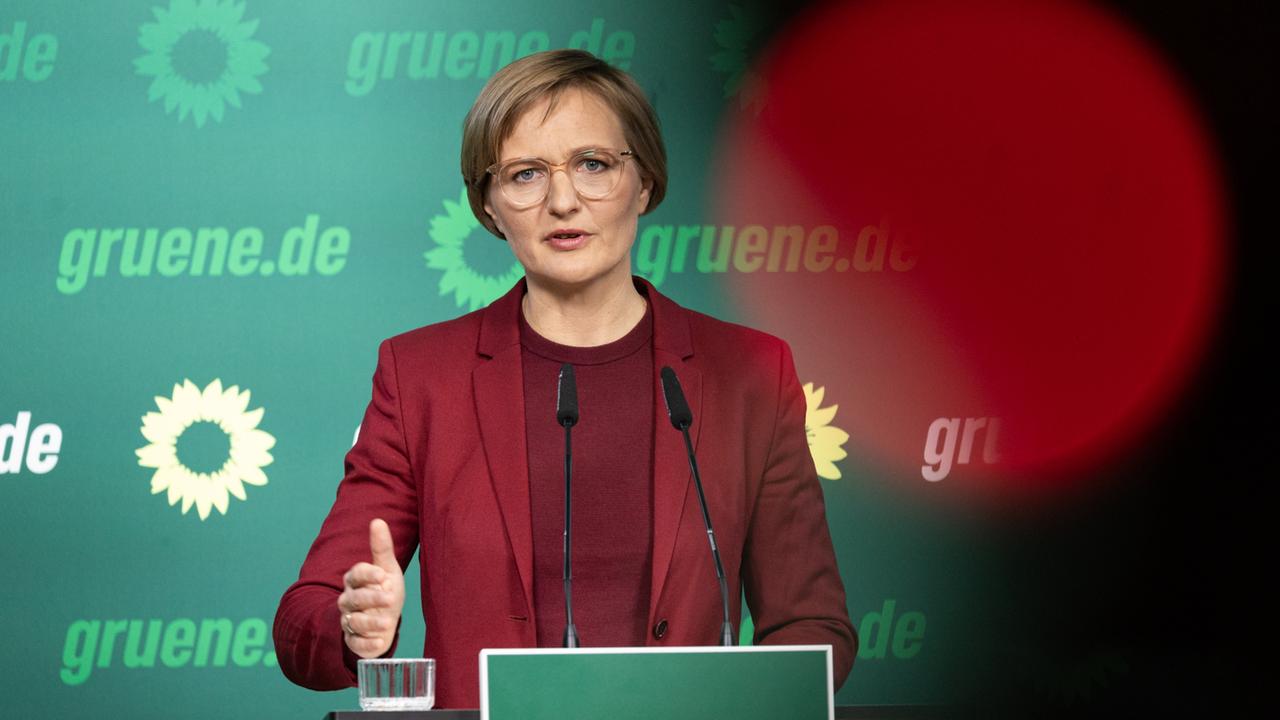
Exploratory talks on forming a red-green-red coalition in Berlin have been put on hold after the Left party (Die Linke) signed its own declaration on handling antisemitism, separate from an agreement reached with the Greens and Social Democrats (SPD) last week. According to tagesschau.de, the suspension has drawn reactions from party leaders at the national level, with Greens co-leader Franziska Brantner saying she supports the pause.
Speaking on the ARD programme Maischberger, Brantner said the Left party had not stuck to the arrangement, calling that regrettable, tagesschau.de reports. She said the Left in Berlin has a problem with antisemitism and organised crime, and that this issue must be settled before discussions can move on to other subjects.
Why it matters
The interruption leaves the German capital without a clear path to a governing coalition after the election on 22 September, in which the Left emerged as the strongest force with 25.7 percent, according to tagesschau.de. The CDU followed with 18.8 percent, the AfD with 16.3 percent, the Greens with 14.3 percent and the SPD with 12.2 percent.
Because no party holds a majority, the shape of Berlin's next government depends on whether the three prospective partners can rebuild enough trust to resume talks — or whether an alternative arrangement becomes viable. The dispute has now reached the federal leadership of the parties involved, elevating a city-level negotiation into a national political question.
What triggered the suspension
The three parties had agreed last week, before the exploratory talks began, on how they would handle antisemitic incidents within Left party ranks if they formed a coalition, tagesschau.de reports. Parts of the Berlin Left have faced criticism over their positions on Israel and Palestine and on antisemitism.
On Tuesday, members of the Left's parliamentary group in the Berlin House of Representatives signed a declaration of their own on the same subject. According to tagesschau.de, the content was similar but not identical to the earlier agreement. The Greens and SPD responded by saying the new text needed to be assessed first, and the talks have been suspended since then.
Brantner framed the issue in terms of reliability. She said dependability and trust are necessary, and that a deal reached the previous week had unfortunately not been honoured by the Left. She added that the Greens hope the Left will return to the table, but that until that happens, further discussion of policy content is not possible, according to tagesschau.de.
The Left's response
Left party co-leader Ines Schwerdtner expressed regret over the halt during the joint ARD and ZDF morning programme, tagesschau.de reports. She defended the declaration that all Left MPs signed at their group's constitutive meeting on Tuesday in the Berlin House of Representatives, describing it as effectively identical to the agreement between the Left, SPD and Greens. She said there had been no dilution of its content.
Co-parliamentary group leader Tobias Schulze took a similar line, telling RBB that from the Left's perspective the agreement from the previous week still stands, according to tagesschau.de. He said the task now is to build trust and to make clear that the Left shares the Greens' and SPD's interest in ensuring Jewish people can live safely in Berlin, and that all three are working toward a common goal.
Schulze also made clear that the Left retains authority over its own personnel decisions, saying the party must decide who it sends into parliament, tagesschau.de reports.
That point touches on a sensitive background issue: the Berlin Left had taken the controversial Neukölln MP Vanessa Emde into its new parliamentary group. Like the other MPs present, Emde signed the declaration affirming Israel's right to exist and committing to the fight against antisemitism, according to tagesschau.de. Schulze said he assumes Emde will abide by that declaration.
Emde was heavily criticised during the election campaign. She has repeatedly drawn attention in the past for statements that critics interpreted as antisemitic, an accusation she has vigorously denied, tagesschau.de reports. Against that backdrop, there had been speculation that she might not become part of the Left's parliamentary group — an outcome that the Greens and SPD may also have expected.
Where the talks stood — and the CDU's offer
According to sources in the negotiation circles cited by tagesschau.de, the exploratory talks had been progressing well before the interruption, though difficult points remained. Co-parliamentary group leader Elif Eralp, who aims to become the first Left politician to move into Berlin's city hall as governing mayor, said there had been intensive but good discussions with the Greens and SPD in recent days.
Meanwhile, the CDU has positioned itself as a possible alternative for a coalition it would lead in the capital. CDU top candidate Stefan Evers told Welt TV that his party's hand is outstretched and its door is open, and that as soon as he receives a signal that others are prepared to consider forming such an alliance, the CDU will enter talks, according to tagesschau.de.
Evers also stressed that he takes the election result seriously, noting that the Left is clearly the strongest force. He said he would not push himself forward if the Greens continue to want a coalition with the Left, and that he would not conduct parallel discussions about something that leads to no result, tagesschau.de reports.
The standoff now rests on whether the Greens and SPD accept the Left's own declaration as equivalent to the earlier agreement. Until that question is answered, the talks remain frozen and Berlin's next governing configuration stays open.