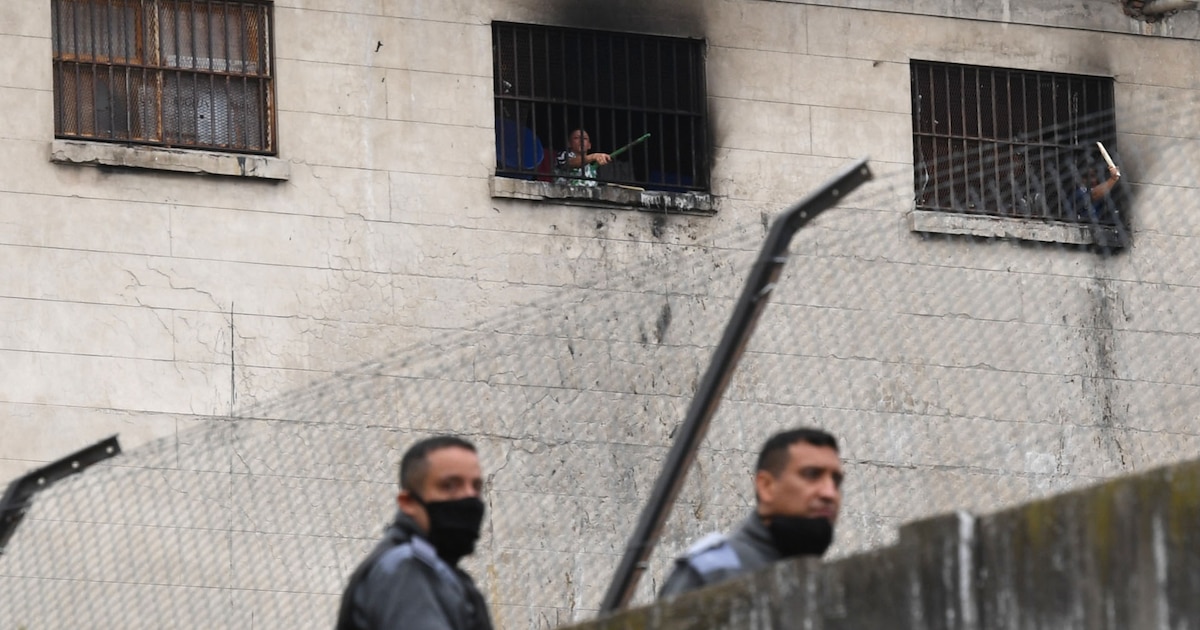
Argentina's national security minister, Alejandra Monteoliva, announced that the country will begin relocating inmates from the Villa Devoto prison in Buenos Aires to a newly completed federal facility in Marcos Paz, with the first transfers scheduled to start this month. According to Infobae, Monteoliva said the operation will move roughly 100 prisoners per day once technical checks are finished, and she expects the Devoto site to be empty by the end of the year. "With everything we are doing, I believe we finish the year with Devoto unoccupied," she said.
The move covers about 1,500 detainees currently held at the Federal Penitentiary Complex of Devoto. The new Marcos Paz complex, part of Federal Penitentiary Complex VII, spans 80 hectares and can hold 2,240 people. Beyond the 1,500 arriving from Devoto, the remaining 700 places will go to inmates now housed in city jails and police stations, a step aimed at easing overcrowding in those facilities.
Why it matters
Villa Devoto has stood in the middle of a residential Buenos Aires neighborhood for decades, and its closure has been discussed by successive governments. Clearing the site would free up a large parcel of urban land and end the daily presence of a prison in the middle of the city. The transfer also marks the first major use of the Marcos Paz complex, whose construction stalled for years.
Monteoliva described the completion of the Marcos Paz facility as "a milestone in Argentina" and said it responds to demands from the city and from residents of the surrounding neighborhood. Infobae reports that the project dates back to a 2018 agreement between the national government and the City of Buenos Aires, though building work stopped in 2020 and sat idle for five years before restarting in December 2024 under the current city administration.
How the transfers will work
Planning for the operation began months before the formal agreement was signed, according to the minister. She said officials held meetings with inmates, their families, judicial bodies and the Catholic Church. Inmates have been sorted by dangerousness level and the offenses they are accused of, which will determine the order and manner of their movement.
Each prisoner will wear an identifying wristband carrying a QR code, which Monteoliva said will allow authorities to track every person throughout the transfer. A chatbot will handle automated responses to organize family visits. The Marcos Paz site will have immediate medical attention ready, including what the minister described as a shock-room-style clinic operating at the moment prisoners arrive. "There is impressive logistics," she said during an interview with radio Mitre and journalist Eduardo Feinmann.
Each transport vehicle will carry 12 detainees, with police officers and prison service agents traveling alongside them. The convoys will include transfer vans, escort vehicles, motorcycles and helicopters, and each trip from Devoto to Marcos Paz is expected to take about an hour and a half. Personnel from the National Gendarmerie, the Argentine Federal Police, the Airport Security Police, the Argentine Naval Prefecture and the Federal Penitentiary Service will take part.
The schedule will pause ahead of a visit by Pope Leo XIV, Infobae reports. The Marcos Paz facility will be prepared so that inmates staying there can join the religious event, which is set for the morning of Wednesday, November 11. Around 300 prisoners are expected to take part, and the Prison Pastoral ministry is preparing gifts. Monteoliva said the relocation will resume once the pontiff departs.
A new city prison service takes shape
In parallel, the Buenos Aires city government is moving forward with its own penitentiary service, created under Law 6923, passed in November 2025. Official sources told Infobae that the Alcaldía General de la Ciudad, the first detention facility under city control, is expected to be ready by the end of the year. Its purpose is to relieve pressure on police stations holding detainees.
Leandro Halperín, the undersecretary for criminal policy and penitentiary affairs, is overseeing the rollout under Justice Minister Gabino Tapia. Jorge Macri has nominated Halperín to serve as director general of the city's penitentiary and social reintegration service.
The new center will hold 400 inmates and include areas for study, work and court hearings, allowing judicial proceedings to take place without moving prisoners. Staff will be split into two branches: one focused on security and custody, the other on reintegration. The Higher Institute of Public Safety, which trains police officers and firefighters, will instruct the future agents. After the alcaldía is built, the next phase calls for a larger prison unit.
What happens to the Devoto site
Once the transfers are complete, the Villa Devoto grounds will be redeveloped. Under the plans, the site must include green space and a memorial section commemorating the 1978 Pavilion 7 fire, in which 65 inmates died. Carlos "El Indio" Solari, the late leader of the band Los Redondos, wrote two songs about the fire: "Pabellón séptimo (relato de Horacio)" and "Toxi Taxi."
The agreement enabling the demolition was signed by Karina Milei, secretary general of the presidency, and Buenos Aires mayor Jorge Macri. Monteoliva said the organizational work had been underway for months before that signature.
The wider push also includes additional modules at Ezeiza, which officials say will improve federal prison infrastructure amid rising inmate populations.
What to watch: whether the daily transfer pace holds at 100 prisoners, whether the November papal visit causes a longer-than-planned interruption, and whether the city's new 400-bed alcaldía opens by year's end as officials expect.



