
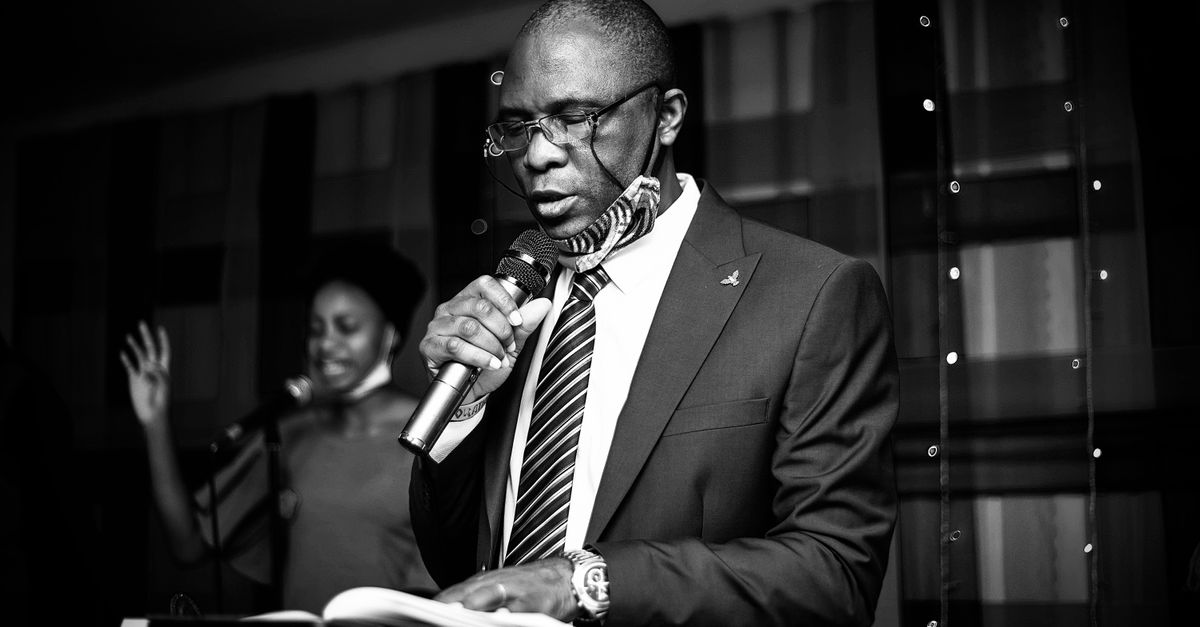
Okay, let's be honest. When you think of the name "Prince D," your brain probably goes straight to a certain type of athlete. Maybe a flashy basketball star, a lightning-fast soccer player, or a boxer with a killer jab. You think of grace under pressure, explosive athleticism, and the roar of a stadium. You do not think of a man in a suit, standing behind a pulpit, talking about grace.
But here’s the controversial opinion that most people in the sports world are too afraid to say out loud: Pastor Prince D has had a more profound impact on modern sports psychology and peak performance than 90% of the actual sports gurus out there.
I know. I know. That sounds like the kind of clickbait that makes you want to close the tab immediately. But hear me out. I’ve spent years observing the intersection of faith, mindset, and athleticism. And while everyone is chasing the next "bio-hack" or "mental toughness" protocol, they’re ignoring the one guy who has been quietly dismantling the anxiety that kills careers.
Let’s dive into the most shocking secret weapon in the locker room: the theology of Prince D.
The Undefeated Mindset: Why "Rest" Beats "Hustle"
Here’s what most people miss about elite athletes. We look at LeBron James spending a million dollars a year on his body. We watch Cristiano Ronaldo’s insane discipline. We think the secret is more effort. More reps. More grit. More grind.
But what happens when the effort isn't enough? What happens when you miss the game-winning shot? What happens when your body fails you? The "hustle" mentality has a dark side. It leads to paralysis by performance anxiety. The athlete becomes terrified of making a mistake because that mistake defines their worth.
This is where Prince D’s message flips the script entirely. He talks about a concept that sounds completely counter-intuitive to a competitor: Rest.
Not physical rest. Not a nap. A mental rest. A state of being where your identity is not tied to your last game. Prince D’s core teaching, based on the idea of "righteousness by faith," essentially tells an athlete: You are already accepted. You have already won. The game is just the expression of that victory.
I’ve found that this is the single most powerful psychological tool for a clutch player. Think about it. The best free-throw shooters in the NBA aren't the ones who think "I must make this shot or I will let my team down." They are the ones who are so relaxed, so secure in their identity, that the shot is just a formality. They are playing from a place of victory, not for a place of victory.
Pastor Prince D didn't invent this concept, but he packaged it for a generation that is drowning in the pressure to perform. He gave them a permission slip to breathe. And in a high-stakes world, that permission is gold.
The "Grace Effect" on the Field of Play
Let’s get specific. How does a sermon about grace translate to a fourth-down conversion in the NFL or a match point in tennis?
I’ve broken this down into three distinct psychological advantages that Prince D’s followers bring to the field:
- The Elimination of the "Choke": Choking happens when your conscious brain overrides your muscle memory. It happens when you try too hard. The "Grace" mindset says, "The work is done. The result is secure. Just play." This frees the subconscious to do what it does best—execute the thousands of hours of training without interference.
- Rapid Recovery from Failure: A normal athlete misses a shot and spirals. "I suck. I let everyone down. I’m a fraud." A Prince D-influenced athlete misses a shot and thinks, "That was a mistake. It doesn't change who I am. Next play." This is the ultimate competitive edge. The ability to reset in 0.5 seconds.
- Immunity to Criticism: Social media has destroyed athletes. The noise is deafening. Prince D teaches that your validation comes from a source that doesn't tweet, doesn't post hot takes, and doesn't change its mind. An athlete who genuinely believes this is un-trollable. They are immune to the narrative.

Why the "Prosperity Gospel" Critics Are Wrong About Sports
Let’s address the elephant in the room. Pastor Prince D gets a lot of flak for being a "prosperity gospel" preacher. Critics say he focuses too much on health, wealth, and success. They say it’s a watered-down, consumer-friendly version of Christianity.
And in the context of sports? They are missing the point entirely.
Here’s the reality: An athlete is a business. Their body is their asset. Their performance is their revenue stream. If a quarterback is constantly worried about getting injured, he plays timid. If a boxer is worried about the financial ruin of a loss, he fights scared.
Prince D’s message of "God wants you to succeed" gives these athletes a psychological permission slip to be wealthy and dominant.
It’s not about greed. It’s about removing the guilt of ambition. A lot of athletes come from humble backgrounds. They feel guilty for wanting the Lamborghini or the big contract. That guilt creates a subconscious self-sabotage. They play not to lose, rather than playing to win.
Pastor Prince D tells them it’s okay to be the best. It’s okay to win. It’s okay to be blessed. He removes the "scarcity mindset" from their spirit. And when you remove the fear of having too much, you unlock the ability to go get it.
Is it a complete theology? That’s for the seminarians to debate. Does it work for sports performance? Absolutely.
The Secret Training Regimen of the "Prince D" Athlete
Most people think an athlete’s training is just lifting weights and running drills. But there is an invisible training regimen that the most successful "Prince D" athletes use. It’s not in the weight room. It’s in the quiet.
Here’s the routine I’ve observed:
- Morning Identity Affirmation: Before looking at game film, they spend time affirming who they are not as an athlete, but as a person. "I am loved. I am accepted. I am righteous."
- Visualization of Success (Without the Anxiety): They visualize the win, but not with a clenched fist. They visualize it with a relaxed smile. They see the ball going in the hoop, not because they need it to, but because it’s a natural outcome of their identity.
- The "No-Condemnation" Rule: After a bad practice or a bad game, they refuse to engage in self-flagellation. No negative self-talk. They literally say, "I am not condemned for that mistake." This breaks the cycle of shame.
That is the ultimate competitive advantage. You cannot buy that in a supplement. You cannot lift that into existence.
The Final Score: Is This a Cheat Code?
So, is Pastor Prince D a sports coach? No. Does he know the X’s and O’s of a pick-and-roll? Probably not. But has he accidentally created the most effective mental health and performance system for the 21st-century athlete? I’d argue yes.
The sports world is obsessed with the external. The new shoe. The new diet. The new training machine. They are ignoring the internal engine.
The "Prince D" model offers something that sports psychology, with all its acronyms and clinical terms, often fails to deliver: a genuine, unshakable sense of peace.
It’s the peace that says, "I am enough, even if I lose." And paradoxically, that’s the only mindset that allows you to truly win.
So the next time you see an athlete who seems unnaturally calm in the pocket, or a tennis player who doesn’t smash her racket after a double fault, don’t just ask about their trainer. Ask about their pastor. You might be surprised by the answer.
The game is played on the field, but it is won in the mind. And Prince D has the keys to that locker room.
**




