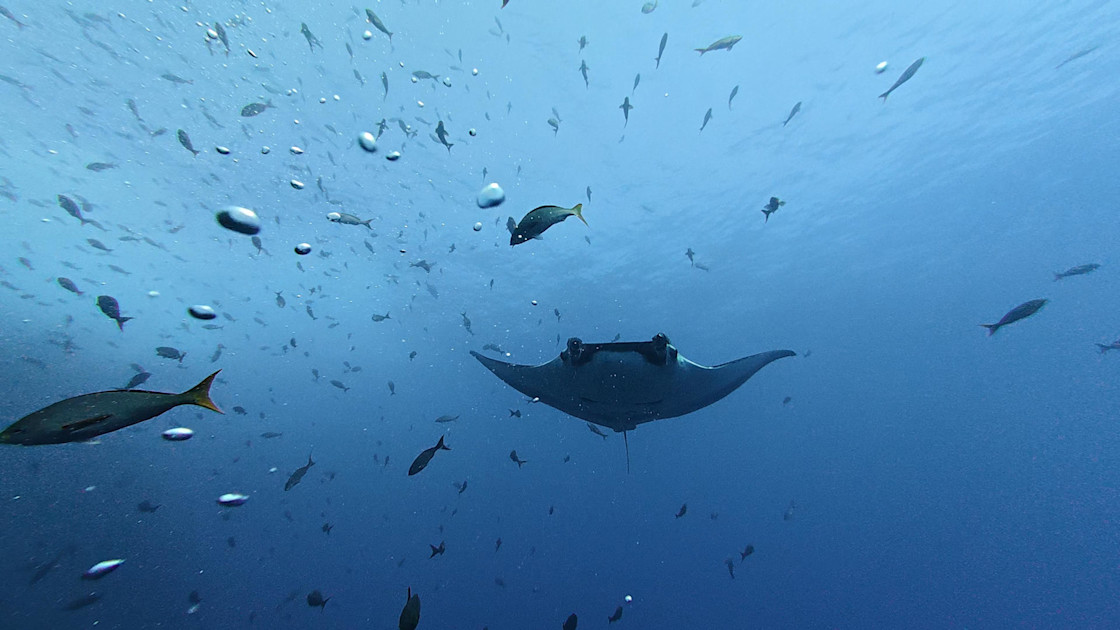
Frontiers has reported that young manta rays spend their early lives in waters near the coast, staying close to shore before they later move out into the open ocean. The finding was published by the research publisher on Thursday, 22 October 2026.
According to Frontiers, the coastal period comes before the juveniles face the hazards that come with open-water life. The publisher's summary frames the shift as a move from sheltered nearshore waters toward a more exposed environment.
The available summary does not give details on the species studied, the locations involved, or the methods used, so the full scope of the research is not yet clear from the headline and summary alone. What Frontiers does make plain is the pattern: juveniles are found close to coasts, and the open ocean comes later.
The report also points to danger as a factor in that later stage. Frontiers describes the open ocean as holding risks for the young rays once they leave the relative safety of coastal waters. The summary does not specify what those dangers are.
Manta rays are large marine animals, and where their young spend their early months matters for how the species is understood and monitored. The Frontiers report places the juvenile phase in nearshore habitat rather than the open sea, a distinction that could shape how researchers think about the animals' early life stage.
Readers should watch for the full Frontiers study, which is expected to detail the species, study sites and the specific threats the young rays encounter as they move offshore.