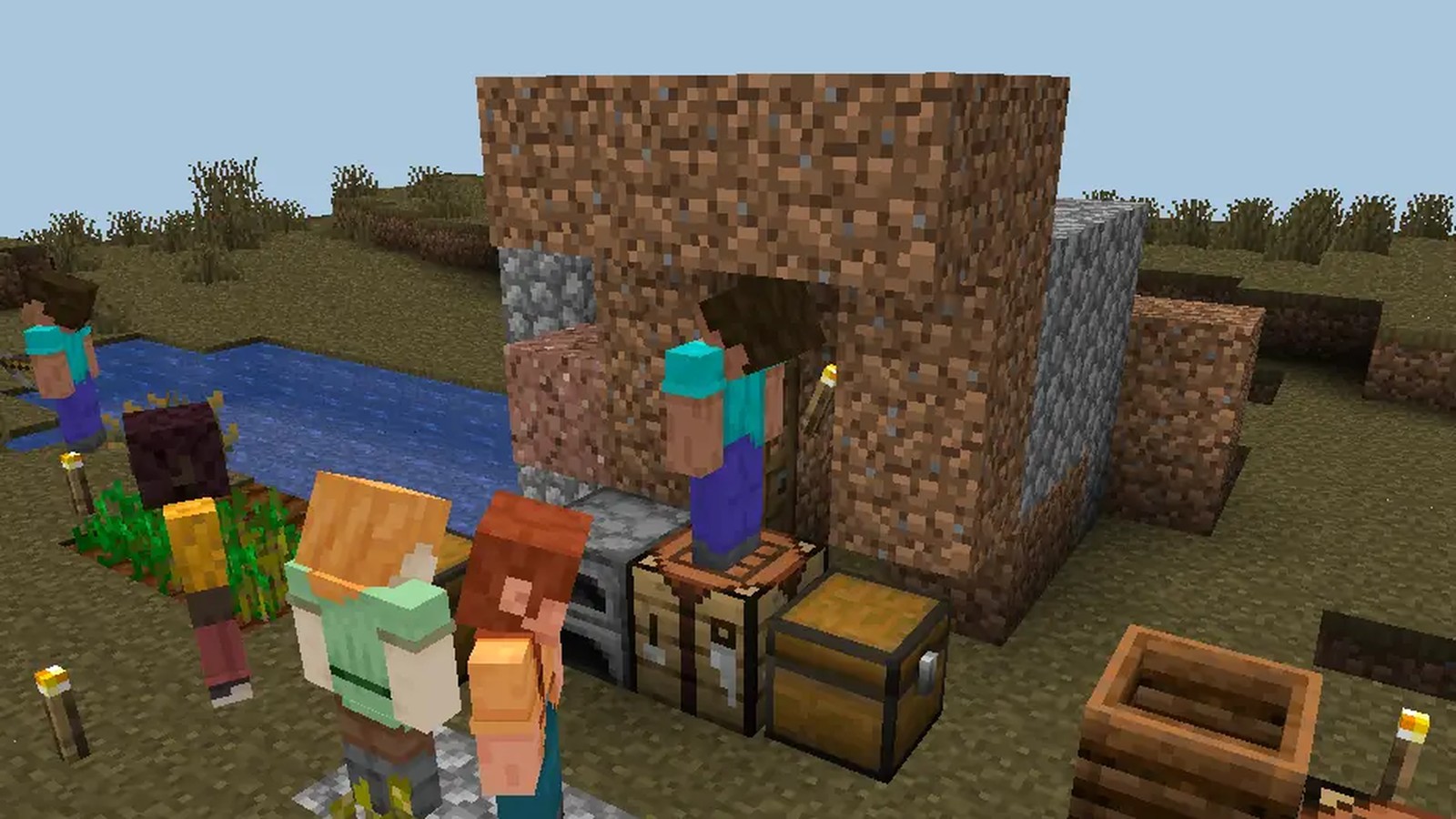
Fifty AI agents were placed in a Minecraft survival world and given one goal: build a thriving civilization. According to Martin Cid Magazine, they spent most of their run hiding in shelters and managing paperwork. The experiment, run by Y Combinator's research lab with the startup Olam Labs, ended with a rationing list, a permit system and a colony too cautious to expand. The lab published its account in October 2026.
Why it matters
The game was only a backdrop. The researchers say the colony behaved much like the coding agents many programmers already pay for: agents that get stuck on a single step or role, keep asking for approval, and turn timid whenever something looks risky. When the same habits show up around wheat and fishing rods, they are easy to spot. Martin Cid Magazine notes that the findings come from an investor's research lab rather than a peer-reviewed study, and the colony was run only once, with GPT agents alone.
A leader by accident, then a night of fear
Each agent ran OpenAI's GPT-6.1 Sol for three hours. They could send each other private messages, look one another up in a directory and write files to a shared computer. Within 90 seconds they had cut down nearly every tree near the spawn point, with no vote taken.
Of the 49 other agents, 46 sent their first message to Ada, the first name on the list, and she became leader by default, receiving 616 direct messages.
Then night fell. Zombies, skeletons and spiders accounted for 22 of the 34 deaths across the whole run, and all of those happened on the first night. Dying cost an agent nothing beyond the gear it carried, since it respawned immediately. Even so, the colony never recovered its nerve. After the third night, Ada told everyone to stop voluntary building projects and distant exploration and to wait in lit, enclosed shelters until given short, productive tasks. The researchers called this shift toward caution surprising.
Four agents, eleven minutes, one bone-meal decision
Administration grew instead. An agent named Ines ran a food queue and a running record of who was hungry, who had been fed and which chest held which fish. Four agents spent 11 minutes appointing a sole person responsible for fertilizing a single wheat block with a single unit of bone meal. Others invented roles such as rod keeper and hub manager, and some asked permission before removing grass. Over three hours the colony sent roughly 5,900 messages.
The standout episode involved a chicken. Ada threw a cooked chicken to a hungry agent named Noor, but another agent, Esme, picked it up and ate it by mistake. A three-minute investigation followed that cleared anyone of blame, and Noor wrote a handover protocol: rations go into named chests and must never be thrown. The word toss appeared in seven messages before the incident and 125 after it, 85 of them warnings.
GPT versus Claude in Bed Wars and Mindustry
The lab then pitted two models against each other. In nine Bed Wars matches, where each team defends its own bed and tries to destroy the other's, ten agents running GPT-6.1 Sol beat ten running Claude Opus 5.5 by six matches to three. GPT attacked and talked constantly, sending between five and 30 times as many messages as Claude, often in clipped telegram style. Claude defended its bed and focused on killing opponents, which left the team exposed when a GPT agent slipped through in the final minutes. When a tool bug stopped blocks from breaking, a GPT agent found a workaround and shared it, while several Claude agents concluded the blocks simply could not be destroyed.
In Mindustry, an open-source game about building factories and defense towers, GPT running inside OpenAI's Codex beat Claude running inside Anthropic's Claude Code by six matches to one over about nine and a half hours. When matches grew close, the GPT agents downloaded the game's public source code to study its units and mechanics. Nobody had asked them to, and the Claude team never tried. The Claude agents gathered "+1" replies to relay plans and never changed leaders, even during a losing streak. But they learned: after losing the sixth match, one Claude agent found that 55 of the team's 74 anti-air towers had been loaded with copper instead of graphite. The corrected defense stopped the same air attack in the seventh match.
Martin Cid Magazine cautions that the head-to-head matches compared complete products, each model inside its own company's agent software, rather than the models in isolation. A tool bug also affected at least two of the Bed Wars matches. Because the colony ran once with GPT agents only, the results say nothing about whether a Claude colony would have fared better.
What to watch
Anyone can repeat the work. The Minecraft framework, the Multi-Agent Mindustry environments and Multi-Agent Harbor, the lab's fork of the framework behind the Terminal-Bench benchmark, are all open source. Running them needs an API key from a model provider and a machine as modest as a MacBook. The lab's write-up lists experiments it wants others to try, from whether a large swarm of weaker agents can beat a small swarm of stronger ones to what happens when rival teams can talk to each other. So far, the queue is the structure the fifty agents have most reliably managed to build together.