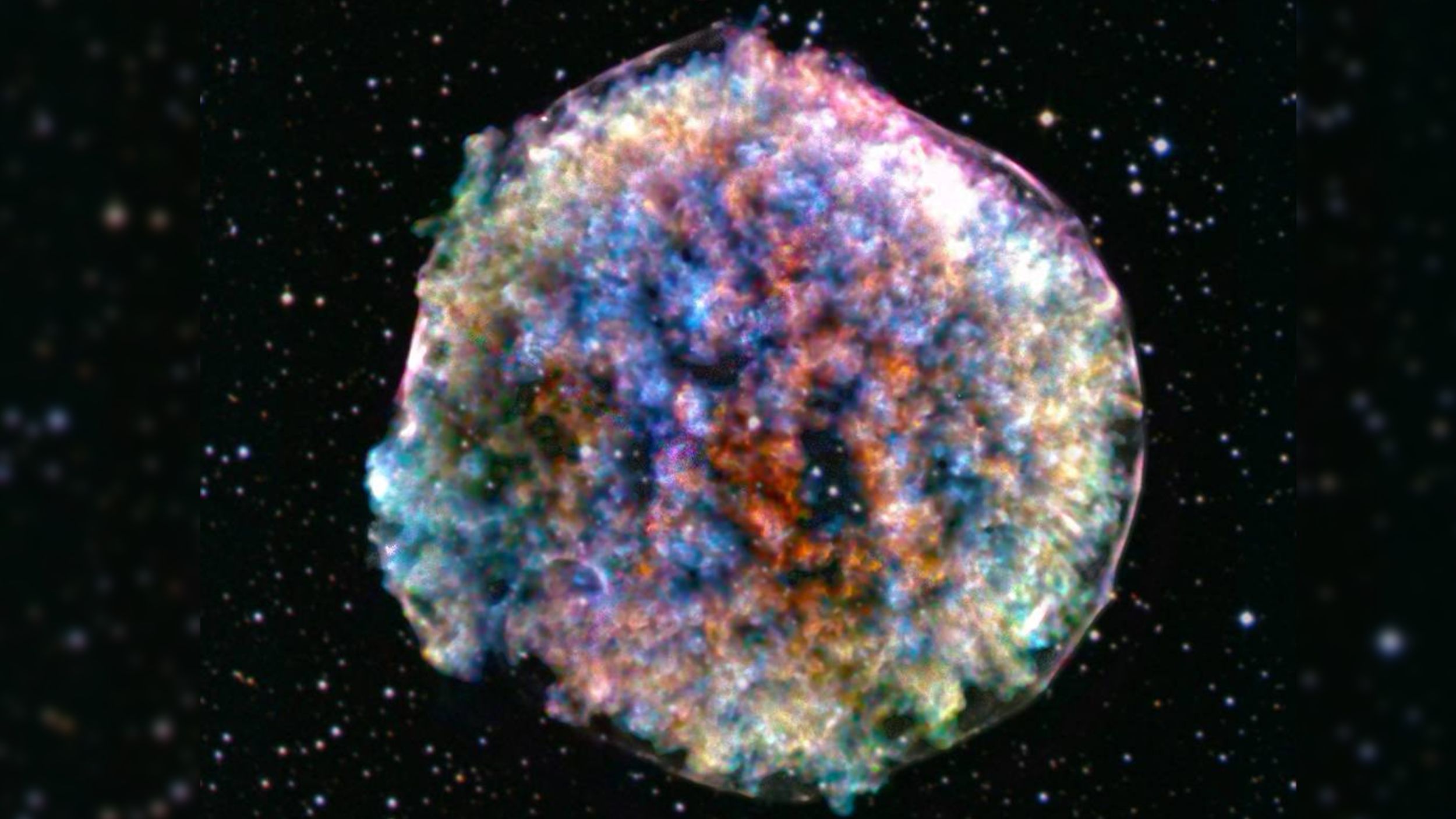
On Nov. 6, 1572, the German astronomer Wolfgang Schulër looked up at the constellation Cassiopeia and saw a star that had not been there before, according to Space. It shone as brightly as Venus and remained visible even in daylight. Astronomers of the era had no framework for what they were seeing, and the object was widely described as a "new star."
Schulër may have been the first to notice it, but the Danish astronomer Tycho Brahe is the figure most often tied to the discovery. Brahe tracked the object closely and produced a book devoted to it, "De Stella Nova," Latin for "On the New Star." The object took his name and became known as Tycho's Star.
Why it matters
The sighting landed at a moment when European scientists largely held that the stars were fixed and unchanging. A star that appeared from nowhere and then slowly faded contradicted that assumption, and Space reports that the observations became an important piece of evidence that the heavens were not immutable.
The object also carried a second significance that no one in the 16th century could have recognized. Tycho's Star was not classified as a supernova until the 1940s, and modern astronomers now identify it as a Type Ia supernova, known technically as SN 1572. Space reports that Brahe's careful records of how the object brightened and dimmed let later researchers match its light signature to that class of explosion.
A star that lingered for months
The object did not flash and vanish. According to the University of California, Berkeley, as cited by Space, the exploding star was visible in daylight for roughly two weeks and stayed within naked-eye view for 16 months. That long, slow decline is part of what made it so well documented.
Astronomers now believe the event began with a small star called a white dwarf that exploded thousands of years earlier. Tycho's Star sits about 13,000 light-years from Earth, so the light from the blast took a very long time to arrive. A Type Ia supernova, Space reports, occurs in a binary star system where a white dwarf pulls material off its companion star and then detonates.
Alex Filippenko, the astronomer who led a 2004 study on the origins of the Tycho supernova, described the historical setting in comments reported by Space. He noted that the observations came at the close of the Dark Ages in Europe and served as evidence that the sky could change.
Schulër was not alone in watching the object. Other astronomers of the period also recorded the unfamiliar light in Cassiopeia, though Brahe's account is the best known, in part because he committed it to a full book.
What to watch
Space notes that astronomers are now monitoring another star that may be close to erupting. Called T Corona Borealis, or the Blaze Star, it is expected to produce a nova — an explosion smaller than a supernova that may leave the star intact. It is one of 11 known stars observed to have recurring nova explosions separated by gaps of roughly a century.





