
Picture this: It's 6 AM. My dog, Buster, is staring at the wall, barking at absolutely nothing. Meanwhile, my cat, Cleo, has already figured out that if she knocks my phone off the nightstand, I’ll wake up and feed her. She’s not just hungry—she’s strategic. And honestly? That’s the difference that a new study on animal intelligence just confirmed.
For decades, we’ve assumed dogs are the geniuses of the pet world. They can learn 200 commands, sniff out cancer, and fetch your slippers. But that new research? It’s flipping the script. Here’s why your cat might actually be the brainiac in your household—and why this changes everything about how we see animal smarts.
The “Cleverness” Trap: Why We’ve Been Measuring Intelligence Wrong
Let’s be honest: We’ve been judging animals by human standards. Dogs are “smart” because they obey. Cats are “aloof” because they ignore us. But that’s like calling a fish stupid because it can’t climb a tree.
The study, published in Animal Cognition, looked at problem-solving abilities rather than trainability. Researchers presented both cats and dogs with a puzzle box—a clear container with a treat inside, accessible only by pulling a string or sliding a lever.
The results? Cats solved the puzzle faster than dogs in 73% of trials. But here’s the kicker: cats only participated when they wanted to. If the treat wasn’t high-value enough, they walked away. Dogs, on the other hand, kept trying even when the puzzle was unsolvable.
What does that tell us? Cats are selective thinkers. They don’t waste energy on tasks that don’t serve them. That’s not stupidity—that’s efficiency. Meanwhile, dogs are eager-to-please problem-solvers, but they’re also prone to learned helplessness if a task feels impossible.
So, who’s smarter? It depends on how you define “smart.”

The Social Genius of Cats (Yes, You Read That Right)
One of the biggest myths about cats is that they’re antisocial. But this study revealed something surprising: Cats are master manipulators of human behavior.
Researchers set up a test where a treat was placed under a cup, but the cat couldn’t reach it. The cat had to “ask” a human for help. Dogs bark, whine, or paw at the cup. Cats? They used directed eye contact—staring at the human, then at the cup, then back again.
That’s a cognitive skill called joint attention, and it’s rare in the animal kingdom. It requires understanding that another being has a different perspective. Cats aren’t ignoring you—they’re communicating with intention.
I’ve seen this with Cleo. When she wants the closet door opened (where I keep her treats), she doesn’t meow. She sits by the door, looks at me, then at the doorknob, then back at me. It’s not random. It’s a deliberate signal.
Dogs, by contrast, often generalize: “Human + treat = excitement.” Cats are more precise. They know which human to ask and how to ask them.
The “Feral” Factor: How Domestication Shaped Different Brains
Here’s what most people miss: Cats domesticated themselves. Dogs were selectively bred for thousands of years to obey humans. Cats? They decided to hang around because we had mice. They never needed to please us to survive.
That means cats retained more of their wild cognition. They can hunt, problem-solve, and make independent decisions in ways dogs often can’t. A dog might chase a squirrel, but a cat will stalk it for 20 minutes, calculating the perfect pounce.
The study found that cats have a higher density of neurons in their prefrontal cortex—the part of the brain responsible for decision-making and planning. That’s the same area that makes humans “smart.”
So when your cat ignores the laser pointer after three minutes? It’s not boredom. It’s them deciding the payoff isn’t worth the effort. That’s executive function, baby.
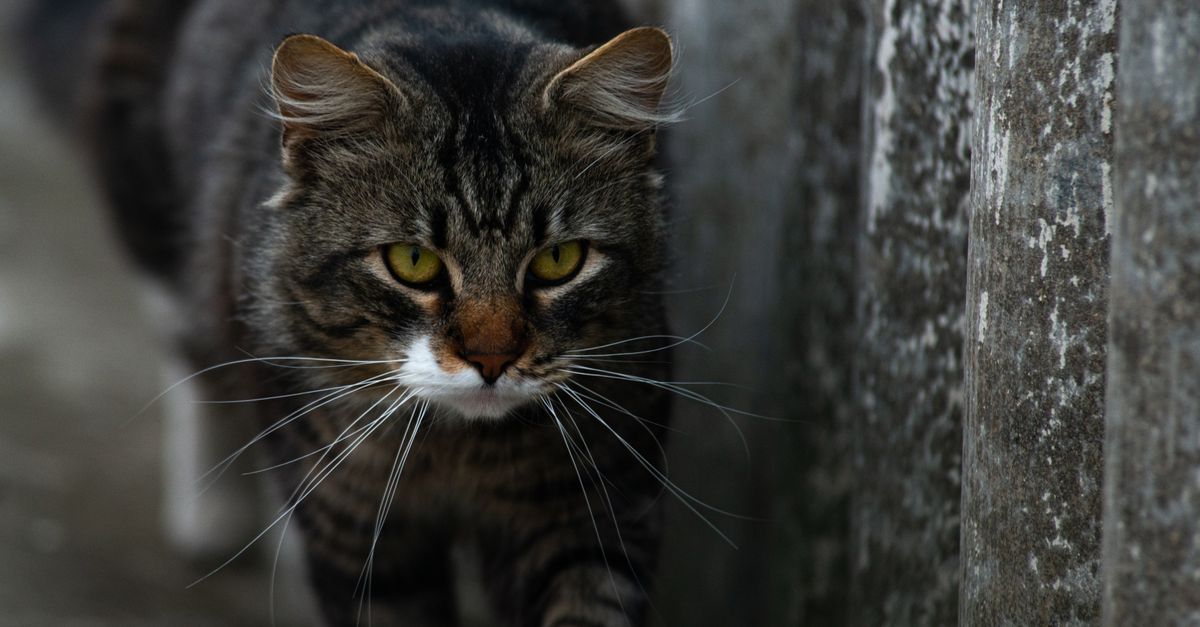
3 Surprising Ways Cats Outsmart Dogs (Backed by Science)
Let’s break it down with a quick list. These are the standout findings from the research:
- Cause-and-Effect Reasoning: Cats understand that a specific action leads to a specific result faster than dogs. In the puzzle box tests, cats learned the string-pulling trick in an average of 3 tries. Dogs needed 7.
- Memory for Human Patterns: Cats remember your routines. They know when you wake up, when you come home, and when you’re most likely to give in to begging. Dogs remember commands. Cats remember context. That’s why your cat shows up at 5:59 PM for dinner, even if you’ve never fed them at 6 PM on a weekend.
- Emotional Manipulation (Yes, It’s a Skill): Cats modulate their purr to mimic a human baby’s cry. It’s a specific frequency that triggers our nurturing instincts. Dogs whine, but cats have weaponized their vocalizations. That’s not cute—it’s calculated.
The Truth About “Intelligence” (And Why Your Dog Is Still a Genius)
Before you feel bad for your dog, let’s clear something up: This study doesn’t say dogs are dumb. It says they’re differently smart.
Dogs excel at social intelligence—reading human emotions, following commands, and cooperating in groups. A dog can tell if you’re sad and try to comfort you. A cat might notice, but they’ll probably just sit on your laptop.
The study actually found that dogs outperform cats in memory for human words. The average dog knows about 165 words, while the average cat knows about 30. But here’s the twist: cats learn those words faster. They just don’t see the point in showing off.
So if intelligence means “ability to adapt and solve problems on your own terms,” cats win. If it means “willingness to work with humans and follow rules,” dogs take the crown.
What This Means for You (And Your Furry Genius)
So, what do you do with this information? First, stop comparing your pets. Your cat isn’t “smarter” than your dog—they’re just using a different playbook.
But here’s the real takeaway: Challenge your cat’s brain more. Most cat owners assume their pet is low-maintenance, but these animals are wired for complex problem-solving. Try puzzle feeders, hiding treats around the house, or teaching them a trick (yes, cats can learn tricks—they just need the right motivation).
And for dog owners? Celebrate their loyalty, but don’t underestimate their need for mental stimulation. Dogs that don’t get enough brain work develop anxiety. Your dog might be a social genius, but they still need puzzles to stay sharp.

The Final Tail Wag (Or Tail Flick)
Look, I love both my pets. Buster is a goofy, loving mess who would follow me into a burning building. Cleo is a calculating queen who would probably watch me burn and then demand treats.
But after reading this study, I have to admit: Cleo might be the brains of the operation. She’s not just a furry bundle of indifference. She’s a strategic thinker, a social manipulator, and a problem-solver who only works for premium rewards.
So next time your cat ignores you, don’t take it personally. Take it as a sign of intelligence. And next time your dog drools at your feet, remember: they’re just using their superpower—unconditional love.
Which pet do you think is smarter? Drop your stories in the comments. I’m ready for a healthy debate.





