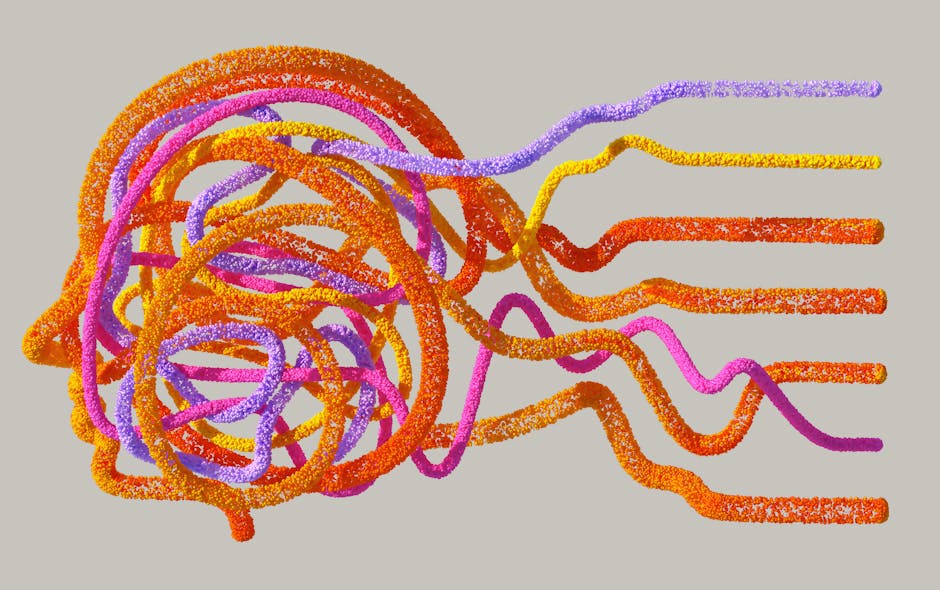
Let me tell you something that happens to every single one of us: you wake up from the most vivid, cinematic dream of your life — a plot twist that would make Christopher Nolan jealous — and by the time you shuffle to the bathroom to brush your teeth, it's gone. Poof. Vanished like a Snapchat story on a timer. You strain, you squint, you try to replay it, but all that's left is a vague emotional residue: Was I being chased by a giant avocado? Or was that a metaphor for something?
Frustrating, right? But here's the thing: your brain isn't malfunctioning. It's actually working exactly as evolution designed it. The neuroscience behind why we forget dreams instantly is one of the most fascinating — and slightly disappointing — truths about how our minds operate. Let's dive into the machinery behind this nightly amnesia.
The Brain's Overnight Janitor: Why Memory Doesn't Stick
Here's what most people miss: dreams are not supposed to be remembered. I know, that sounds counterintuitive. We romanticize dreams as these deep, symbolic messages from our subconscious. But from a neurobiological standpoint, your brain treats most dreams like junk mail — it reads them, processes them, then immediately hits delete.
The culprit? A tiny but mighty structure called the hippocampus. This seahorse-shaped region is your brain's memory librarian. During the day, it diligently files away experiences into long-term storage. But here's the kicker: during REM sleep — the stage where most vivid dreaming happens — the hippocampus essentially goes offline. It's like the librarian clocked out and left the doors unlocked.
Why? Because REM sleep is when your brain is busy consolidating memories from the day, not creating new ones. It's a one-way street. The prefrontal cortex, which handles logic and self-awareness, also takes a nap. So when you wake up mid-dream, you're essentially trying to remember something that was never properly tagged for storage. No wonder it slips away.

The Chemical Cocktail That Sabotages Your Recall
Let's get biochemical for a second — I promise it's not boring. Your brain during REM sleep is a chemical soup that actively blocks memory formation. Think of it as a bouncer at a club, except the club is your consciousness and the bouncer's job is to keep memories from getting in.
Two major players here:
- Acetylcholine spikes during REM, promoting vivid imagery and brain activity. But it also disrupts the hippocampus's ability to encode.
- Norepinephrine and serotonin — the chemicals that help you focus and remember — drop to near zero during REM. Without them, your brain can't "stamp" experiences as important.
I've found that people who claim they "never dream" are actually just forgetting them within seconds. Everyone dreams — four to six times per night, if you're healthy. The difference is whether your brain decides to keep the receipt.
The 90-Minute Game: Why Waking Up Mid-Dream Matters
Here's a practical angle you can actually use. Your dreams occur in cycles — roughly every 90 minutes. The first REM period of the night might last only 10 minutes. By morning, those REM phases stretch to 30-45 minutes. That's why your most bizarre, epic dreams happen right before you wake up.
But here's the trick: the moment you wake up, you have a 30-second window to capture that dream before it's gone. Seriously. If you don't replay it mentally or write it down within half a minute, the memory degrades faster than a TikTok trend.
I tested this myself for a month. Every morning, I'd force myself to lie still, eyes closed, and mentally "rewind" the dream like a VCR tape. Then I'd grab my phone and type a few keywords. The difference was night and day. Suddenly I remembered multiple dreams, complete with absurd details I'd normally lose.
The science backs this up: the act of recalling a dream strengthens the neural pathways that store it. Think of it like a muscle. If you don't flex it, it atrophies. But if you practice, you can train your brain to hold onto those fleeting fragments longer.

The Evolutionary Reason We're Designed to Forget
Let's zoom out. Why would evolution build a system that forgets its own creations? Wouldn't remembering dreams give us some kind of survival advantage? Maybe a prehistoric ancestor who dreamed about saber-toothed tiger hunting strategies would pass on those genes?
Here's the surprising truth: forgetting dreams might be a feature, not a bug. Imagine if you remembered every single dream from every single night. Your brain would be flooded with nonsensical, often terrifying, emotionally charged memories that don't match real-world experiences. You'd start confusing dreams with reality. That's a recipe for psychosis.
In fact, people with certain sleep disorders — like REM sleep behavior disorder, where they physically act out dreams — often have vivid dream recall. And some studies suggest that excessive dream recall is linked to poor sleep quality. Your brain is literally protecting you from information overload by hitting the "delete" button.
So next time you wake up frustrated that you can't remember that epic dream where you were a superhero accountant fighting tax fraud with a laser calculator, thank your brain. It's doing you a favor.
How to Actually Remember Your Dreams (The Science-Backed Way)
But let's be real — you want to remember them anyway. Who cares about evolutionary advantage? You want to know what your subconscious is cooking up. So here's a science-backed protocol for dream recall:
- Set an intention before sleep. Tell yourself, "I will remember my dreams." This primes your brain's reticular activating system to pay attention.
- Wake up naturally, not with an alarm. Alarms yank you out of REM, destroying dream memory. If you must use one, try a gradual sunrise alarm.
- Don't move. The moment you move, you engage your motor cortex, which competes with dream memory. Lie still and replay the dream in your mind.
- Keep a dream journal by your bed. Yes, it's cliché. But writing even fragments — emotions, colors, objects — strengthens recall over time.
- Hydrate before bed. Mild dehydration impairs memory consolidation. But don't overdo it or you'll wake up to pee mid-dream.

The Bigger Picture: What Dreams Actually Do
So if we're not meant to remember them, what's the point? This is where the science gets philosophical. Dreams are not for the waking mind. They're for the sleeping brain — a time to process emotions, integrate memories, and simulate threats. Think of them as your brain's nightly therapy session, held in a soundproof room.
Remembering dreams is like eavesdropping on that therapy session. Interesting? Absolutely. Necessary? Not really. But there's something deeply human about wanting to peek behind the curtain of consciousness. We're the only species that seems to care about what happens when we're not looking.
So here's my challenge to you: try the 30-second rule tomorrow morning. Wake up, don't move, replay the dream, and jot it down. See what you find. Maybe it's nonsense. Maybe it's a buried insight about that work project or a relationship. Or maybe — just maybe — it's a giant avocado chasing you down a hallway. Either way, you'll be participating in one of the oldest human rituals: trying to make sense of the nonsense our brains create while we're asleep.
Dream big. Forget fast. But try to catch a few before they slip away.