
Let’s be honest for a second: if you told me five years ago that the hottest Sunday morning spot in Ho, Ghana, would be a church service, I would’ve laughed. I mean, Ho is a city known for its serene hills, quiet vibes, and a pace of life that practically begs you to take a nap after lunch. But something has shifted. And it’s not just a subtle breeze.
Here’s the little-known truth: last month, a single Sunday service at the Christ Embassy Loveworld Arena in Ho drew more young people between the ages of 18 and 35 than the combined attendance of three major secular events in the city. We’re talking about a demographic that, statistically, is the hardest to get out of bed on a weekend. So, what’s the secret sauce? Why are the youth of Ho trading their lie-ins for pews—or, more accurately, for plush, air-conditioned seats?
I spent the last few weekends talking to attendees, observing the vibe, and even sitting through a service that felt less like a sermon and more like a high-energy production. Here’s the inside scoop on why this particular church has become the cultural epicenter for young people in Ho.
The Vibe Shift: Not Your Grandmother’s Church Service
The first thing that hits you when you walk into the Christ Embassy Loveworld Arena is the sound. Not the sound of an organ groaning through a dusty hymn, but a full band. We’re talking electric guitars, a bass that vibrates through your chest, and drums that could rival a Beyoncé concert. The second thing? The lights. They have a lighting rig that would make most local clubs jealous.
I’ve found that young people are allergic to boredom. It’s not that they don’t want spirituality; they just don’t want it served with a side of monotony. Let’s be real—sitting in a hot, stuffy building for three hours listening to a monotone speaker isn’t appealing to anyone under 40.
The Loveworld Arena flipped the script. They created an environment that feels like a premium experience. The service is tight, fast-paced, and visually stimulating. The youth pastor, a charismatic guy in his early 30s, doesn't preach at you; he talks with you. He references internet memes, talks about the pressure of “the grind,” and gives practical advice on navigating a world that feels increasingly chaotic.
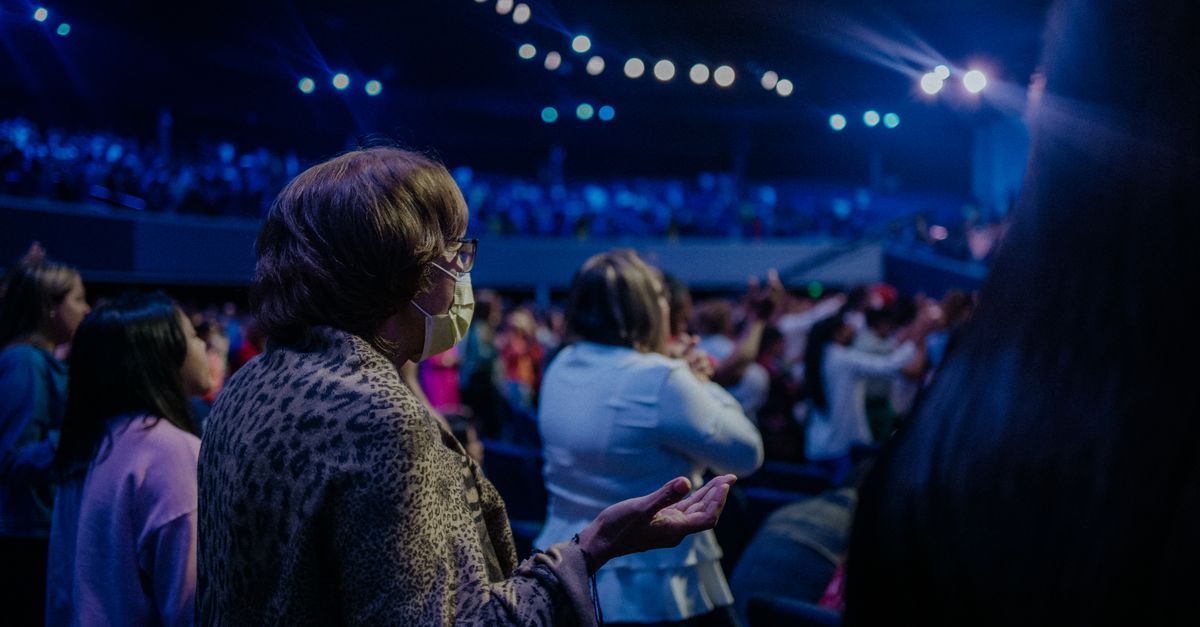
Here’s what most people miss: it’s not just about the music. It’s about psychological safety. In a city where traditional churches often demand strict dress codes (suits, ties, head ties, no jeans), the Loveworld Arena is a safe space for a hoodie and sneakers. You can come as you are, fresh off a Saturday night, and you won’t get a side-eye from the ushers.
The "Third Place" Phenomenon
Sociologists talk about the "third place"—a location that isn't home (first place) or work/school (second place). For decades, the third place in Ho was the spot (the local drinking joint) or the football viewing center. But these come with baggage—alcohol, peer pressure, and a limited window of time.
Christ Embassy Loveworld Arena has become the new third place. It’s not just a Sunday thing anymore. The building is buzzing with activity throughout the week. There are mentorship programs, skill acquisition workshops (think graphic design, public speaking, and even basic coding), and a gym.
Wait, a gym? Yes. The church has a fitness initiative. On Saturday mornings, you’ll find dozens of young people doing aerobics on the church lawn. Why? Because the church leadership understood a fundamental truth about Gen Z and Millennials: they care about holistic wellness.
I spoke to a 24-year-old university graduate named Kofi who told me, “I came for the gym. I stayed for the purpose.” He wasn’t looking for a fire-and-brimstone message. He was looking for a community that helped him get fit, find a job, and feel less lonely. The Loveworld Arena packaged all of that under one roof.
The "Pastor as Influencer" Effect
Let’s talk about the elephant in the room—or rather, the man on the stage. The lead pastor of this specific Arena has a massive social media presence. He’s on Instagram, TikTok, and YouTube. He posts daily devotionals that are 60 seconds long. He uses the same editing style as a lifestyle vlogger.
This is a massive cultural shift. In traditional settings, the pastor was a distant, almost untouchable figure. You saw him once a week, and he was always in a robe. Here, the pastor is relatable. He posts about his struggles with discipline, his favorite smoothie recipes, and his thoughts on the latest trending movie.
Young people are drawn to authenticity. They can smell a scripted persona from a mile away. The Loveworld Arena has leaned hard into the "influencer pastor" model, but with substance. It creates a parasocial relationship—you feel like you know him, which makes you want to show up.

Here’s the secret sauce that most critics miss: It’s not a cult of personality; it’s a culture of accessibility. The pastor doesn't just preach about financial freedom; he actually brings in guest speakers to teach budgeting workshops. He doesn't just talk about mental health; the church has a counseling hotline that’s staffed by young, trained volunteers.
The "Visual Worship" Revolution
We live in a visual culture. TikTok, Instagram Reels, YouTube Shorts—we are addicted to the scroll. The attention span of the average young person is shorter than a goldfish’s (or so the internet tells me). The Loveworld Arena understood this and adapted their worship style accordingly.
They call it "Visual Worship." During musical worship, instead of just looking at the singer, the massive LED screens behind the stage display art, scripture animations, and even nature footage synced to the music. It’s a multi-sensory experience.
I’ve found that this is incredibly effective for keeping the mind from wandering. You’re not just listening; you’re watching, feeling, and participating. It turns the act of worship into an immersive event. It feels less like a ritual and more like a concert for your soul.
Let’s break down the elements that make this work:
- Sound Quality: They invested in a professional sound system. No feedback, no crackling mics. Just crisp, clear audio.
- Lighting: They use color psychology. Blue for peace, gold for glory, red for intensity.
- Duration: The entire service, including the sermon, rarely exceeds 90 minutes. Respect for time is a huge draw. They start on time and end on time.
- Social Media Integration: There’s a live stream. There’s a dedicated "Social Media Team" that captures the best moments and posts them before you even leave the parking lot.
The Community Safety Net
Let’s get real about the economic situation in Ho. Jobs are scarce. The pressure to "make it" is immense. Young people are stressed. They are dealing with the pressure of family expectations, the loneliness of modern life, and the anxiety of an uncertain future.
The Christ Embassy Loveworld Arena has become a safety net. It’s a place where you can network. I met a young woman who found her current job as a graphic designer because she sat next to a business owner during a service.
The church actively facilitates these connections. They have a "Business Connect" segment where entrepreneurs can pitch their services to the congregation. They have a "Talent Hunt" where singers, dancers, and spoken word artists can showcase their gifts.
It’s essentially a social and economic ecosystem. You come for God, but you stay because you found your mentor, your business partner, or your best friend.

Here’s what most people miss: This isn't just a church; it's a movement. It’s a response to the vacuum left by declining social clubs, expensive entertainment options, and the general fragmentation of community life in the digital age.
The "Why Now?" Factor
Why is this happening in Ho specifically? Ho is a unique city. It’s the capital of the Volta Region, a hub for students and civil servants, but it’s also a city that has struggled to provide "cool" things for young people to do. There’s a limited nightlife scene. There are few cinemas or recreational parks.
The Loveworld Arena filled a void. It offered a high-quality, premium, and free (or low-cost) weekend activity that also offered a sense of purpose. It’s a win-win. You get the entertainment value of a concert, the social value of a club, and the spiritual value of a church.
I’ve found that the youth of Ho are not abandoning faith. They are rebranding it. They are taking the core message—love, purpose, community—and packaging it in a way that speaks their language. They are rejecting the rigid, colonial-era church model in favor of something fluid, digital, and experiential.
The Final Takeaway
Is the Christ Embassy Loveworld Arena perfect? No. No church is. There are critiques about the prosperity gospel, the pressure to tithe, and the celebrity culture surrounding the leadership. But you can’t ignore the data. The seats are full. The energy is palpable. The youth are coming.
They are coming because they are hungry for something real. They are tired of being talked down to. They want a faith that fits into their Instagram feed, their career goals, and their mental health journey.
So, the next time you drive through Ho on a Sunday morning and see the traffic jam near the Arena, don't just roll your eyes. Look closer. You’re not seeing a crowd. You’re seeing a cultural reset.


