
Picture this: you're sitting in a lecture hall, staring at a diagram of the human body that hasn't changed much since high school biology. Heart, lungs, liver, kidneys — the usual suspects. Now imagine a researcher walks in and says, "Oh, by the way, there's a fourth salivary gland we just officially found. It's been there the whole time." That's not a hypothetical. That's exactly what happened in 2020, and the scientific community is still processing the aftershocks.
Let me tell you something — the human body is not a finished map. We talk about anatomy like it's a solved puzzle, but every few years, someone points a better microscope at a familiar neighborhood and finds a whole new resident.
The Accidental Discovery That Broke Anatomy's Biggest Rule
Here's the setup. A team of researchers at the Netherlands Cancer Institute was studying prostate cancer using a sophisticated imaging technique called PSMA PET-CT. This scan lights up salivary tissue because those cells happen to express a particular protein. Standard textbooks say humans have three major salivary glands: the parotid, the submandibular, and the sublingual. Three. That's the number everyone learns.
Except the scans kept lighting up a fourth spot — tucked deep behind the jaw, near a piece of cartilage called the torus tubarius. The researchers, led by Dr. Matthijs Valstar and Dr. Wouter Vogel, did what good scientists do: they got suspicious. They checked 100 patients. Then they checked another 100. Then they dissected two human cadavers to confirm it with their own eyes — and there it was.
A pair of previously undocumented salivary glands, sitting quietly behind the nasal cavity, hiding in plain sight. They named them the tubarial glands.
I've found that the best discoveries often sound almost embarrassing in hindsight. How do you miss a gland for centuries? But that's the thing about "plain sight" — it only looks obvious once you know what you're looking for.
Why Doctors Missed a Gland for Over 300 Years
Let's be honest: this isn't a story about lazy anatomists. It's a story about the limits of tools.
The tubarial glands sit at the intersection of the nasal cavity and the throat — a cramped, hard-to-reach zone. Classic dissection tends to flatten and tear this area. And the glands are tiny and flat themselves, so they don't exactly announce their presence. The old methods weren't wrong; they just couldn't see this clearly.
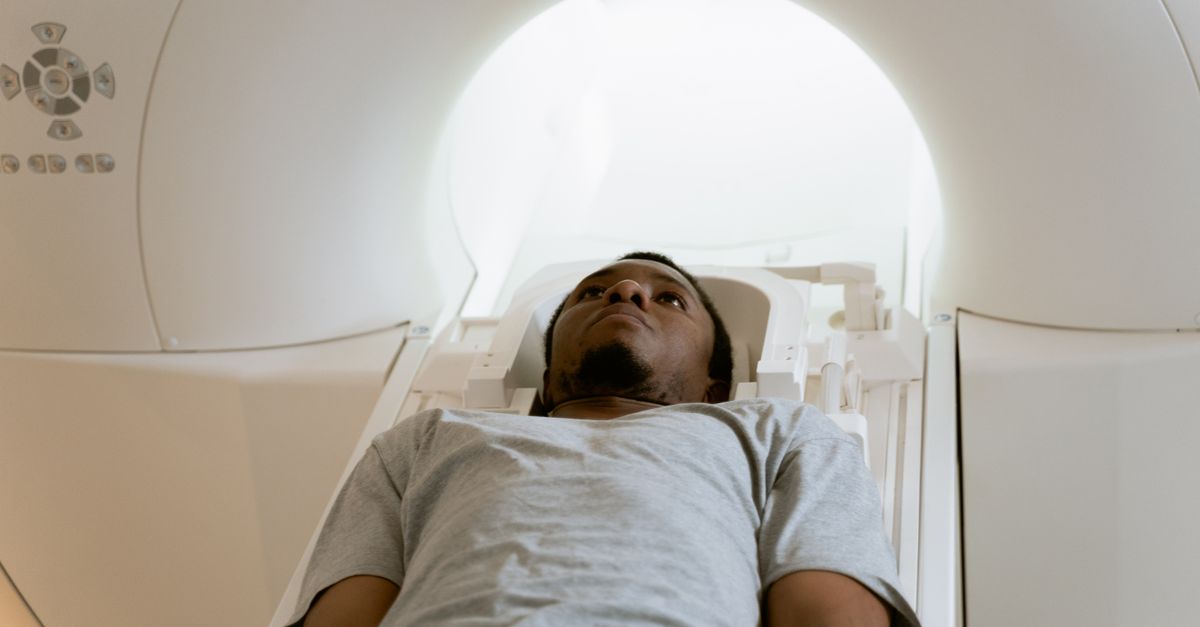
Then along came PSMA PET-CT, which doesn't just show structure — it shows function. It reveals tissue by what it does, not just how it looks. That functional lens is what cracked the case. It's a beautiful reminder that discovery often isn't about finding something new — it's about finally having the right instrument to notice what was always there.
Here's what most people miss: this pattern repeats across science. We didn't confirm exoplanets until our telescopes got good enough. We didn't map the deep ocean floor until sonar matured. Anatomy isn't immune. The map of the human body is still being redrawn, and the pencil is a new imaging technology.
The Organs We've "Found" in the Last Decade
The tubarial glands aren't a fluke. The last ten years have been weirdly productive for body-part discoveries. A quick tour:
- The interstitium — a fluid-filled network of connective tissue that some researchers argue should count as its own organ, reported in 2018.
- The mesentery — long dismissed as a random fold of tissue, officially reclassified as a continuous organ in 2017.
- The tubarial glands — the 2020 salivary discovery we just talked about.
Why This "New Organ" Could Actually Save Lives
Here's the practical punchline. When doctors treat head and neck cancer with radiation, they try to spare healthy tissue to reduce side effects. One notorious side effect is dry mouth and swallowing trouble — caused by damage to salivary tissue. If the tubarial glands are real and functional, they're likely being zapped in some patients without anyone realizing it.
That single insight could change radiation therapy planning for thousands of cancer patients. The researchers behind the discovery specifically flagged this: if these glands contribute to saliva production, sparing them might reduce treatment side effects. That's the kind of boring-sounding, life-improving science that rarely makes headlines but genuinely matters.
I'll be honest — I love this stuff. It's not flashy. There's no Nobel bait. It's just careful observation turning into better medicine.

The Uncomfortable Truth About "Settled" Science
Let's zoom out for a second, because there's a bigger lesson here. We treat textbooks like scripture. High school biology presents the body as a finished diagram. But anatomy is a living field, and the tubarial glands prove that even the most-studied object on Earth — us — still has surprises.
There's a healthy dose of humility in that. Science doesn't advance by declaring the map complete; it advances by keeping the map open. The Dutch team didn't set out to find a gland. They were studying cancer. Curiosity did the rest.
And yes, there's a debate to have. Some anatomists want more evidence before the tubarial glands get "official organ" status. That's fine — that's how science works. Skepticism is a feature, not a bug. But the finding has held up under scrutiny, published in a peer-reviewed journal and confirmed across hundreds of scans and cadaver dissections.
So here's my challenge to you. Next time someone tells you "the science is settled" about something in the natural world, ask yourself: settled by whom, and with what tools? The human body just handed us a reminder that the answer is often "not as settled as you think."
We spent centuries confident there were three salivary glands. There are four. What else is waiting behind the jaw, under the skin, or deep in the tissue — unseen not because it's hidden, but because we haven't built the right lens yet?
That question is worth more than any single discovery. Keep it in your pocket.





