I remember sitting in my high school physics class, half-dazed, when my teacher dropped the line that’s been drilled into every student for over a century: “Nothing can travel faster than the speed of light.” It felt like a universal law, as unshakable as gravity. But here’s the thing that keeps me up at night — what if that “universal truth” is actually just a speed limit we don’t fully understand? What if the universe is way weirder than we’ve been told?
You’re not crazy for wondering this. In the last few years, physicists have started poking holes in the idea that the speed of light is a fixed, unchangeable constant. And the implications? They’re nothing short of mind-bending. Let’s get into it.
The Cosmic Speed Limit That Might Be a Suggestion
For most of modern science, the speed of light in a vacuum — roughly 299,792,458 meters per second — has been treated like the final boss of physics. Einstein built his theory of relativity on it. Time dilation, black holes, the whole shebang. But here’s what most people miss: *the speed of light is only constant in a vacuum. And the universe? It’s not a vacuum.
Space isn’t empty. It’s filled with quantum foam, dark energy, and who-knows-what-else. Some researchers, like those at the Perimeter Institute for Theoretical Physics, have proposed that light might actually slow down slightly as it travels through this cosmic soup. Others, like a team at Imperial College London, have suggested that light could have been faster in the early universe — right after the Big Bang.
Let’s be honest: if light can change speed over time, then our entire understanding of the universe’s age, size, and expansion rate might be off by a few billion years. That’s not a small oopsie. That’s a “rewrite the textbooks” kind of revelation.
The Quantum Weirdness That Breaks the Rules
If you’ve dabbled in quantum mechanics — and let’s be real, who hasn’t after watching Oppenheimer? — you know that particles do insane things. They can be in two places at once. They can “teleport” information across galaxies. And here’s the kicker: some quantum experiments have shown that information can travel faster than light.
In 2022, a team from the University of Cambridge published a paper on “superluminal” tunneling. They fired photons through a barrier, and guess what? The photons seemed to exit before they even entered. I know, I know — it sounds like a bad sci-fi plot. But the data is real. The question is whether this is a loophole in relativity or a sign that our definition of “speed” is just too narrow.
I’ve found that most people get stuck on the word “faster.” But here’s the truth: the speed of light isn’t just about light. It’s about causality — the order of cause and effect. If you can travel faster than light, you could theoretically see an event before it happens. That’s a philosophical nightmare for anyone who believes in free will.
What Would Happen If We Broke the Speed Limit?
Let’s play a game. Imagine we discover that the speed of light can be exceeded — not by a particle, but by a technology. What changes?
- Interstellar travel becomes plausible. Right now, a trip to Alpha Centauri takes 4.37 years at light speed. If we can go 10x faster, it’s months.
- Time travel becomes a real engineering problem. If you can go faster than light, you can technically go backward in time. Good luck with the paradoxes.
- Communication with distant civilizations becomes instant. No more waiting decades for a reply from Mars.
- Our understanding of the universe’s age flips. The observable universe might be smaller — or larger — than we think.

The Hidden Assumption in Every Physics Equation
Here’s something I’ve never heard anyone say in a YouTube video:
the speed of light is a measurement, not a law. We’ve measured it to incredible precision, sure. But measurements can be wrong. Or more accurately, our interpretation of what we’re measuring can be incomplete.Think about it: when we measure the speed of light, we’re using clocks and rulers that are made of atoms. And those atoms are governed by the same physics we’re trying to test. It’s like trying to measure the size of your own shadow while standing in the dark.
There’s an inherent circularity in our methods.Some physicists, like
João Magueijo at Imperial College, have proposed that the speed of light might have been different in the early universe. His “varying speed of light” theory (VSL) could explain why the universe appears so uniform without needing inflation — the current favorite explanation. It’s controversial, but it’s gaining traction.Why This Matters for Your Life (Yes, Right Now)
You might be thinking, “Jessica, I’m not a physicist. Why should I care about something that might change in a billion years?” Fair point. But here’s the thing:
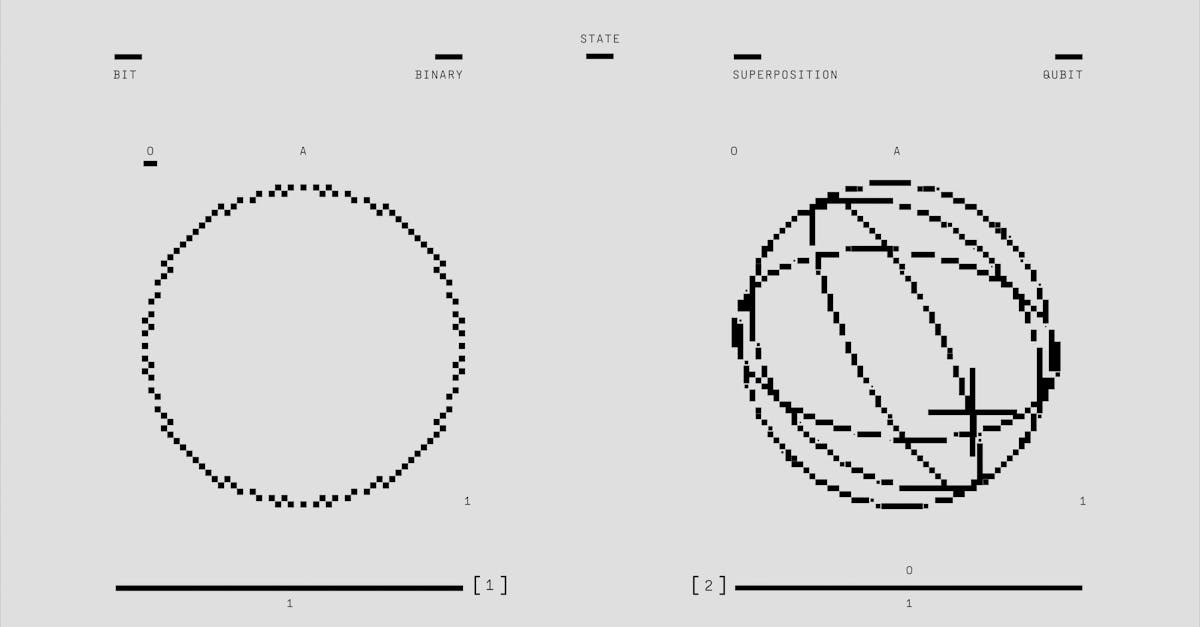
every time we rethink a fundamental constant, we unlock new technologies. GPS satellites already have to account for time dilation — a direct consequence of relativity. If light speed isn’t constant, GPS might need a recalibration. And that’s just the beginning.Think about quantum computing. If information can travel faster than light, we could build computers that solve problems in seconds that would take classical computers millennia.
The future of AI, cryptography, and even medicine depends on our understanding of these rules.And let’s not forget the existential angle. If the speed of light isn’t a hard limit, then the universe is suddenly
much* more accessible. We’re not trapped in our solar system. We’re not isolated by the vast distances of space. The idea that we’re alone in the universe starts to feel a lot less certain.The Bottom Line: Science Is Never Settled
I’ll leave you with this: the speed of light is one of the most tested constants in science. But “tested” doesn’t mean “proven.” Every time we think we’ve nailed it, the universe throws a curveball. Quantum entanglement. Dark energy. The James Webb Space Telescope finding galaxies that shouldn’t exist.
The truth is, we don’t know if the speed of light is truly constant. And that uncertainty is what makes science exciting. If we had all the answers, we’d be bored. So next time someone tells you “nothing can go faster than light,” smile and say, “Not yet.”
What do you think? Is the speed of light a law or a suggestion? Drop your wildest theories in the comments — I’m genuinely curious.