
Here’s the thing that keeps me up at night: a cluster of human brain cells the size of a sesame seed just learned how to play Pong faster than an AI. Not a simulation. Not a digital rendering. An actual blob of neurons, grown in a dish, hooked up to electrodes, and suddenly it’s got hand-eye coordination. Well, electrode-grid coordination.
If that doesn't sound like the opening scene of a dystopian thriller, I don't know what does. But we aren't in a movie theater. We're in the lab, and these "mini-brains"—technically called cerebral organoids—are the hottest, most controversial ticket in neuroscience.
Let's be honest: when I first read about this, I assumed it was a headline from The Onion. But the science is real, and it's moving faster than most of us realize. Here’s what’s actually happening in those incubators, and why the scientific community is collectively holding its breath.
The Petri Dish Rebellion: Not Your Average Lab Specimen
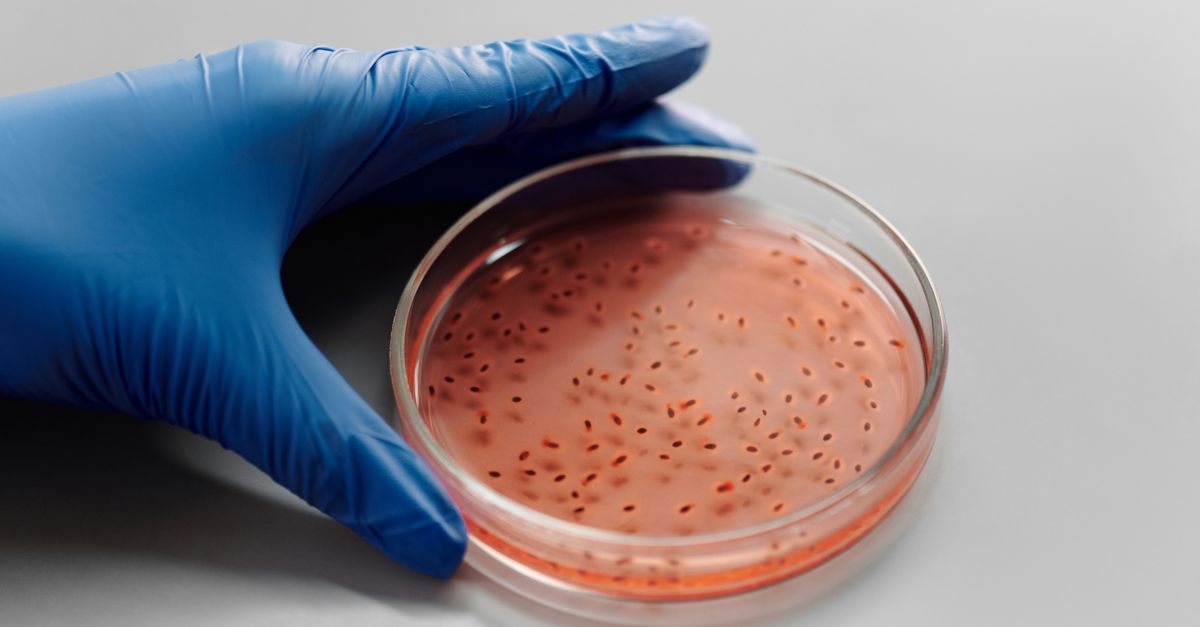
We’ve been growing cells in dishes for over a century. The difference here is scale and architecture. These aren't just flat sheets of cells clinging to plastic. These are three-dimensional structures that self-organize into layers, mimicking the early stages of a human fetal brain.
The "secret sauce" is a gold-standard protocol that guides stem cells to differentiate into neurons, which then clump together and form synapses. They aren't conscious. They don't have thoughts. But they do exhibit electrical activity, and they produce structures that look shockingly similar to the real thing.
I've found that most people miss the "why" here. We aren't just doing this for the shock value. The core reason scientists are racing to decode these organoids is because we are running out of ways to study the human brain ethically and accurately.
Mice are great for many things, but a mouse brain is not a human brain. The gap in complexity is a chasm. We can't biopsy a living human brain for research (for obvious reasons). So, what's the workaround? We build a tiny, simplified version of it from scratch.
The $64,000 Question: Are They Actually 'Thinking'?
This is where the conversation gets weird, and where the headlines get clickbaity. Earlier this year, researchers at a biotech company called Cortical Labs made waves by teaching these organoids to play Pong. The media went wild with "disembodied brains learn video games."
Here’s what most people miss: the organoids aren't "thinking" in the way you or I do. They are experiencing a phenomenon called "learning-to-predict"—a form of spontaneous adaptation. When the neurons receive a predictable electrical stimulus, they adjust their activity to minimize the surprise. It’s a primitive form of information processing.
But the implications are massive. If a structure with 100,000 neurons can adapt to its environment, what happens when we scale that up to millions? I’ll be the first to admit, this makes me a bit uneasy. But it also opens up a revolutionary testing ground for drugs.
Think about it: we currently test neuropsychiatric drugs on animals, and they fail in human trials roughly 90% of the time. With mini-brains, we can test a drug directly on human tissue to see if it actually repairs synaptic damage or stops the spread of toxic proteins.
The Hidden Link to Alzheimer's and Autism
This is the part that excites me the most. Imagine being able to watch a disease develop in real-time.
In the past, if you wanted to study Parkinson's or Alzheimer's, you had to wait until autopsy to see the damage. By then, it's too late. Mini-brains change the game. Scientists are now creating "brain organoids" that carry the genetic mutations for specific diseases.
Here’s how it works:
- Take a skin cell from a patient with a genetic form of Alzheimer's.
- Reverse it to a stem cell state.
- Nudge it to become a brain cell.
- Watch it grow into a mini-brain that develops the same plaques and tangles as the patient's actual brain.
But the real "hidden" win here is for autism spectrum disorder (ASD) . Since ASD is a connectivity disorder, the way neurons wire up is different. By growing organoids from autistic patients, researchers have found that their neurons actually grow faster and create more connections than neurotypical ones. That is a massive clue we would never have found in a mouse model.
The Ethical Quicksand: Where Do We Draw the Line?
Now, let's pump the brakes. If you grow a mini-brain, and it develops a complex enough structure, does it feel pain? Does it have a "right" not to be experimented on?
This is the ethical quicksand that scientists are currently wading through. I’ll be honest with you—I don't have the answers, but I have strong opinions. We are currently in a regulatory gray area. There are no federal laws specifically governing the creation of organoids, only guidelines.
The "15-day rule" used to be a thing—where scientists would stop growing them after 15 days to prevent any semblance of consciousness. But that rule is considered obsolete now because many labs are pushing organoids past 200 days to study late-onset diseases.
The big fear isn't that they'll turn into zombies. The fear is "unintended sentience." It's a low probability, but a high consequence event. The scientific consensus is that they lack the architecture for consciousness (they don't have a brain stem, no sensory input), but the definition of consciousness is still a philosophical battleground.
The "Organoid Intelligence" Frontier
If you think the Pong thing was cool, wait until you hear about "Organoid Intelligence" (OI). This is a new field that treats these mini-brains as biological processors.
The logic is solid: the human brain operates on roughly 20 watts of power. A supercomputer needs 21 megawatts to do the same task. That's a million-fold difference in energy efficiency. Scientists are trying to "wire up" arrays of organoids to create a "biocomputer" that can solve problems our silicon-based chips can't.
I've found that this is where the public perception gets stuck. People think we're building a server farm of brains. In reality, we're just trying to understand how biological networks compute differently than digital ones.
The problem? We don't have a "brain-computer interface" good enough to talk to them yet. We can stimulate them, and we can read their electrical spikes, but it's like trying to understand a conversation by hearing one word every ten minutes.

What's Next? The Decade of Discovery
So, why are scientists racing? Because the bottleneck isn't the biology anymore—it's the technology to read the biology.
As a blogger, I see a lot of hype. But this is one time where the hype is actually underselling the reality. We are building a Rosetta Stone for neurological diseases.
The next decade will bring:
- Personalized medicine: Growing your brain in a dish to test which antidepressants work for you specifically, without the 6-week trial-and-error period.
- Recovery from injury: Using organoids to "patch" damaged brain tissue after a stroke.
- Faster drug discovery: Slashing the $2 billion and 10-year timeline it takes to bring a neurological drug to market.
The Bottom Line
Look, there is something deeply weird about creating a brain in a jar. It forces us to confront the question of what makes us "us." But I believe the potential to alleviate human suffering vastly outweighs the existential ickiness.
We are, for the first time in history, able to watch the human mind build itself. That's not just a scientific breakthrough; it's a philosophical one.
Are we playing god? Maybe. But I'd argue we're just finally learning how to read ourselves. The mini-brains aren't coming for our jobs. They're here to show us how we work.
What do you think—should we try to build a "conscious" organoid, or is that a line we shouldn't cross? Let me know in the comments below. I read every single one.





