Here’s a dirty little secret the fashion industry doesn’t want you to know: over 100 billion garments are produced every single year, and a staggering 60% of them end up in a landfill within 12 months of being made. I know, it’s a brutal number. But here’s the twist—we aren’t just talking about the environmental cost anymore. In 2025, the shift away from fast fashion isn’t driven solely by guilt. It’s driven by hustle, aesthetics, and a weirdly competitive thrill.
Let’s be honest: walking into a Zara in 2025 feels like eating a microwave dinner when everyone else is having a chef’s table experience. The trend isn’t just about being sustainable anymore—it’s about finding the one-of-a-kind piece that makes your friends ask, "Where did you get that?" And the answer is always the same: "I found it."
But why now? Why did 2025 become the year the thrift store became the new runway? I’ve been watching this shift happen in real-time, and I think I’ve cracked the code. It’s not just about saving the planet. It’s about winning the game.
The Death of the "New" Hype
For years, the fashion cycle was simple: brand drops new collection, you buy it, you wear it three times, it feels dated, you repeat. But in 2025, something snapped. The "newness" of fast fashion has lost its dopamine hit. You know that feeling when you buy a cheap top online, it arrives, and you realize it looks nothing like the photo? Yeah, that’s getting old.
Here’s what most people miss: the digital saturation of fast fashion has killed its mystique. We’ve seen the same Shein dress on five different girls at the same coffee shop. We’ve watched the "TikTok made me buy it" cycle burn out so fast that the stuff is considered vintage by the time it arrives.
In 2025, scarcity is the new luxury. You can’t just order a duplicate of a thrifted gem. You have to hunt for it. You have to touch the fabric, check the tags, and sometimes smell the shoulders (we’ve all done it). That effort creates a story. And in an era of AI-generated content, a story is the only currency that actually holds value.
The Algorithm is Now Your Personal Shopper—But for Deadstock
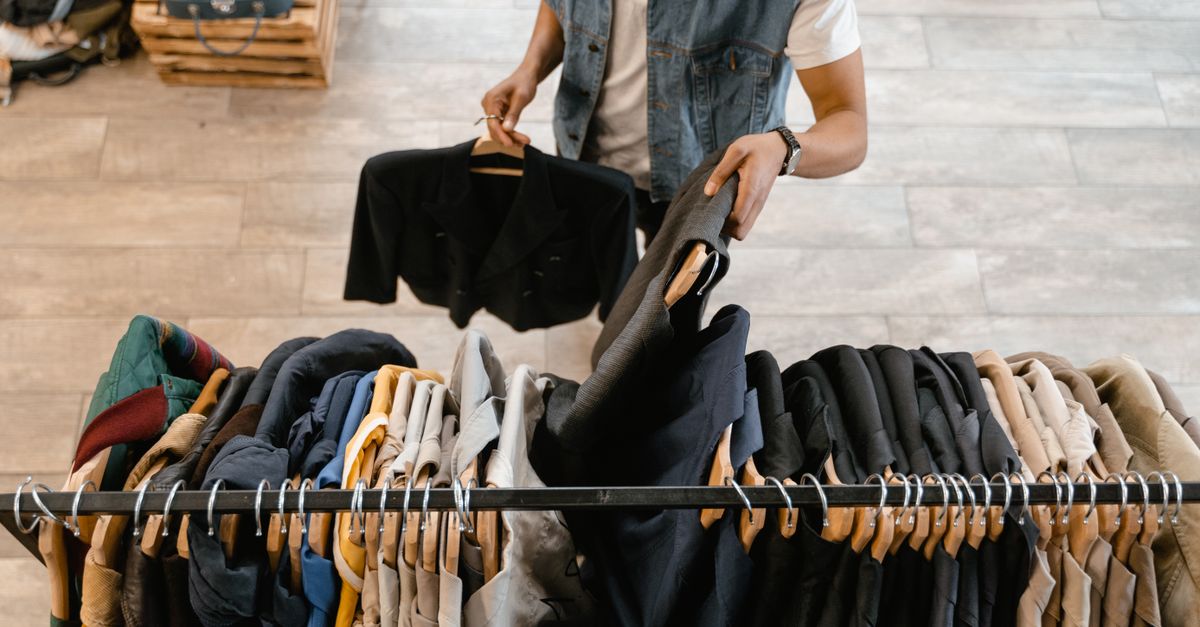
This is the part that fascinates me. In 2024, thrifting was a niche hobby. In 2025, the algorithm turned it into a sport. I’ve found that Depop, Vinted, and even Instagram’s shop tabs have become hyper-specific treasure maps. You don't just search "vintage dress" anymore. You search for "1990s Y2K mesh top with raw hem" or "deadstock 80s wool blazer with shoulder pads."
The rise of AI-powered visual search has made it terrifyingly easy to find exactly what you want second-hand. But here’s the secret: the real gold is still in the physical bins. The algorithm can't replicate the feeling of digging through a bin at a Goodwill Outlet and finding a cashmere sweater from a luxury brand for $3. That’s a high you can’t get from a checkout page.
I’ve seen people turn this into a full-time side hustle. They source, they clean, they photograph, and they sell. But the best part? They keep the best stuff for themselves. It’s the ultimate flex: wearing a piece that technically doesn't exist anymore.
The "Money Glitch" of 2025
Let’s talk about the elephant in the room: the economy. We’re in 2025, and the cost of living isn't getting any cheaper. Fast fashion is actually a bad deal now. I did the math last month. A polyester dress from a mall brand costs $45. You wash it twice, the seams pop, and you toss it. A vintage 100% wool skirt from a thrift store costs $12. It’s already survived 30 years. It will survive another 30.
People aren't stupid. They’re realizing that paying less for worse quality is actually a tax on being poor. The thrift store is the smart financial move. It’s the "money glitch" of the fashion world. You get better materials, unique designs, and a lower price tag. It’s the only place where the "buy less, buy better" mantra actually works without breaking the bank.
And let’s be real—the resale market has exploded. Brands themselves are getting in on it. You can now trade in your old Patagonia or Levi’s for store credit. The circular economy isn't a hippie dream anymore; it’s a billion-dollar industry. In 2025, owning a closet full of thrifted items isn't a sign of being broke. It’s a sign of being smart.

The Identity Crisis of Modern Fashion
Here’s where it gets psychological. Fast fashion made everyone look the same. The "clean girl" aesthetic, the "coastal grandmother" look, the "mob wife" vibe—they all came from the same factories in Bangladesh. You could buy the entire look on Amazon for $60.
Thrifting in 2025 is a rebellion against that homogenization. Your style becomes your signature. I’ve found that a thrifted wardrobe forces you to develop actual taste. You can’t just follow a trend list. You have to look at a weird floral shirt from 1987 and ask, "Can I make this work?" That’s a creative challenge. And creativity is the ultimate flex.
I had a friend who only wore thrifted items for a year. She told me something that stuck: "I stopped recognizing myself in photos because I didn’t look like anyone else." That’s powerful. In a world of deepfakes and AI clones, looking distinctly human is the new status symbol.
How to Thrive in the Thrift Economy (Without Losing Your Mind)
If you’re new to this, don’t panic. The thrift store can be overwhelming. It smells. The racks are messy. You have to dig. But here’s my playbook for 2025:
- Know your materials. Learn what cashmere, silk, and linen feel like. If it’s 100% polyester, put it back.
- Check for damage. Look at the armpits (stains), the zippers (broken), and the seams (pulled). A $5 fix is fine. A $30 fix is not.
- Go on weekdays. Monday mornings are gold. The weekend warriors have cleared the good stuff.
- Ignore the size tag. Sizing was completely different 30 years ago. A vintage "Medium" might be a modern "Small." Try it on or hold it up.
- Follow the niche. Don't just look for "clothes." Look for "vintage band tees," "1980s blazers," or "deadstock Nikes." The more specific you are, the luckier you get.
In 2025, we want our clothes to have a past. We want them to smell like cedar and mothballs. We want the thrill of the hunt. We want to wear a story that hasn't been written by a marketing algorithm.
So next time you see a pile of clothes at the bins, don't walk past. Dig. You might just find your next favorite outfit—and a reason to never buy new again.