Here’s the thing: 72% of Americans report feeling physical anxiety when they can’t find their phone. That’s not a dramatic guess from some wellness blogger — that’s actual data from a 2023 Pew Research study. And if you’re reading this on your glowing rectangle, you probably just felt your stomach clench for a second. I know I did.
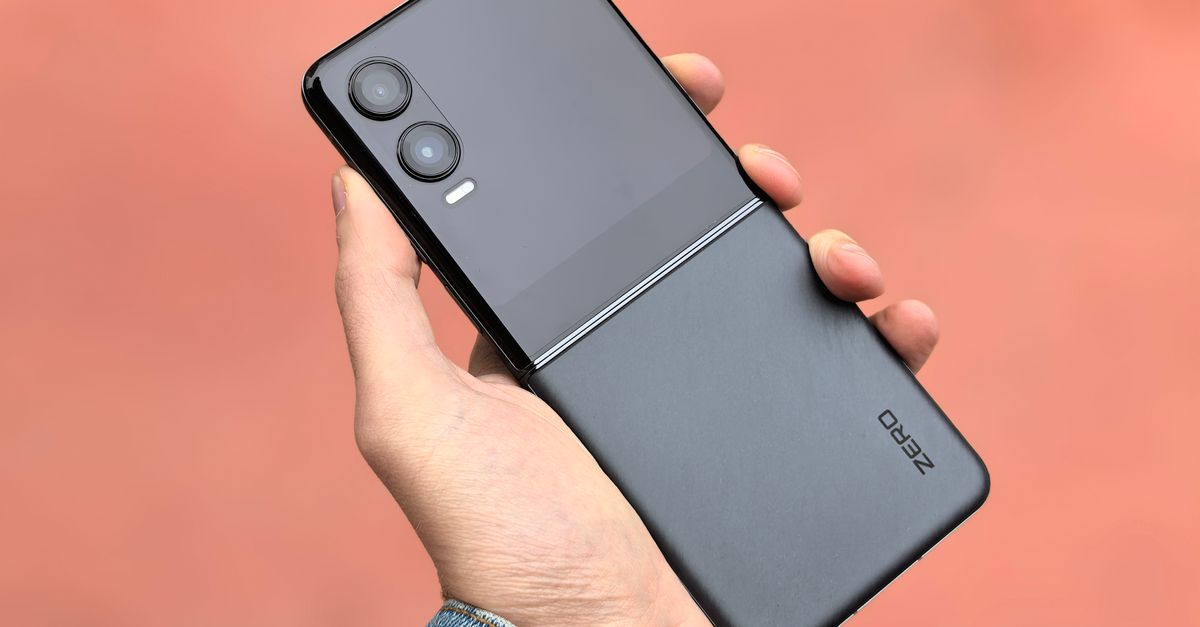
But here’s the kicker: a growing number of people aren’t just trying to put their phones down for an hour. They’re ditching smartphones entirely for “dumb phones” — those flip phones, Nokias, and minimalist devices that can only call, text, and maybe play Snake. It’s not a niche trend anymore. Sales of dumb phones jumped by over 25% in 2024 alone. And I’m not talking about some Silicon Valley tech bros with a burner phone side-hustle. I’m talking about parents, college students, and even Gen Zers who grew up on iPhones.
So, what’s the secret these people have cracked? And more importantly — how do you survive a digital detox without losing your mind, your job, or your group chat?
The Dopamine Trap You Didn’t Know You Were In
Let’s be honest: you don’t need your smartphone. You need the dopamine hit it gives you every time you refresh Instagram, see a red notification badge, or hear that little ding. Your phone was literally designed to be addictive. Tech companies employ neuroscientists, behavioral psychologists, and UX engineers whose sole job is to keep you scrolling for one more minute. One more swipe. One more video.
Here’s what most people miss: it’s not about willpower. It’s about environment. If you keep a slot machine in your pocket, you’re going to keep pulling the lever. Dumb phone users figured out something crucial — you can’t outsmart an algorithm that knows your brain better than you do. So they just… remove the machine.
I’ve found that the first 48 hours of a digital detox feel like withdrawal. And guess what? That’s exactly what it is. Your brain’s reward system has been hijacked, and when you take away the source, it throws a tantrum. But here’s the good news: the tantrum passes. And when it does, you get something back that no app can give you — boredom. Real, glorious, creative boredom. The kind that made you write stories, stare at clouds, or actually talk to the stranger next to you on the bus.
The Hidden Cost of “Convenience”
We tell ourselves we need smartphones for maps, for calendars, for payment, for communication. But let’s call it what it really is: convenience with a hidden tax. That tax is your attention. Every time you unlock your phone to check a map, you get ambushed by a news alert, a Slack message, a meme from your cousin, and a notification that someone liked your photo from 2016.
I tried a dumb phone for two weeks last year. A $30 Nokia that could only text and call. The first thing I noticed? I was always early. Without the ability to scroll while waiting, I just… waited. And then I arrived places on time because I wasn’t cramming in “one last thing” before walking out the door.
The second thing? My relationships changed. When I met a friend for coffee, I couldn’t glance at my phone to “check something.” I had to look them in the eye. It was uncomfortable at first. But by the end of the week, my conversations went deeper. We weren’t competing with a pocket-sized universe anymore.

7 Secrets to Surviving Your Digital Detach (Without Going Full Hermit)
You don’t have to throw your iPhone in the river to get the benefits. Here’s what I learned from my dumb phone experiment — and from talking to people who’ve made the switch permanently.
- Start with a “phone jail.” Buy a simple lockbox or a kitchen safe. Put your smartphone in it for 3 hours a day. No exceptions. The physical barrier is more powerful than any app blocker.
- Use a dumb phone as your primary, but keep a smartphone as a tool. Get a cheap flip phone for calls and texts. Keep your smartphone in your bag for maps, banking, and the occasional Uber. The key is friction — you can still access the tools, but you have to choose to pull out the smartphone instead of being sucked in automatically.
- Delete everything that isn’t essential. No social media. No news apps. No games. No email. Your phone should be a brick with a camera and a browser. If you need to check Instagram, do it on a computer. The barrier is the whole point.
- Replace the habit, don’t just remove it. When you feel the urge to grab your phone, have a physical alternative ready. A notebook. A book. A fidget toy. Your brain needs a new pathway, not just a blocked one. I keep a pocket-sized sketchbook and a pen in my phone pocket. Now when I’m bored, I doodle instead of doomscroll.
- Tell your people. Send a text to your close friends and family: “Hey, I’m doing a digital detox for a week. I might be slower to reply. I’m not dead.” Most people will be supportive. Some might even join you.
- Use the “gray scale” trick. Set your phone to black and white mode. Studies show that color is a huge driver of engagement. When your screen is gray, it literally looks less interesting. You’ll unlock your phone, see a boring gray grid, and put it down within seconds.
- Schedule your “dumb time.” Block out an hour each morning and an hour each evening where you are unreachable by digital means. No phone, no tablet, no laptop. Just you and the real world. This is non-negotiable.
What You Actually Get Back
I’m not going to pretend that ditching your smartphone is easy. It’s not. You’ll miss group chats. You’ll miss being able to instantly look up the answer to a random trivia question. You’ll miss the safety net of always being reachable.
But here’s the trade-off: you get your attention back. And attention is the only currency that actually matters in the modern world. You get the ability to read a book for an hour without picking up your phone. You get the ability to have a conversation where you’re actually listening, not just waiting for your turn to speak. You get the ability to sit with your own thoughts — which, for most of us, is terrifying at first, but ultimately liberating.
I’m not saying everyone needs to go full Nokia 3310. I’m saying we’ve all been sold a lie that more connectivity equals more life. It doesn’t. More connectivity often equals less life — because life happens in the spaces between notifications.

The Last Thing You’ll Read Before You Put Your Phone Down
So here’s my challenge to you: for the next 24 hours, treat your smartphone like a dumb phone. Turn off all notifications except calls and texts from your emergency contacts. Move all social media apps to a folder on the last page of your home screen. Set your screen to grayscale.
See what happens.
You might feel bored. You might feel anxious. You might feel an overwhelming urge to check your phone. That’s normal. That’s the addiction talking.
But if you can sit through that discomfort for just a few minutes, you’ll start to notice something: the world is still there. The birds are still singing. The coffee is still hot. And you — you’re still you, without the glow of a screen reflecting off your face.
And honestly? That’s a pretty good trade.