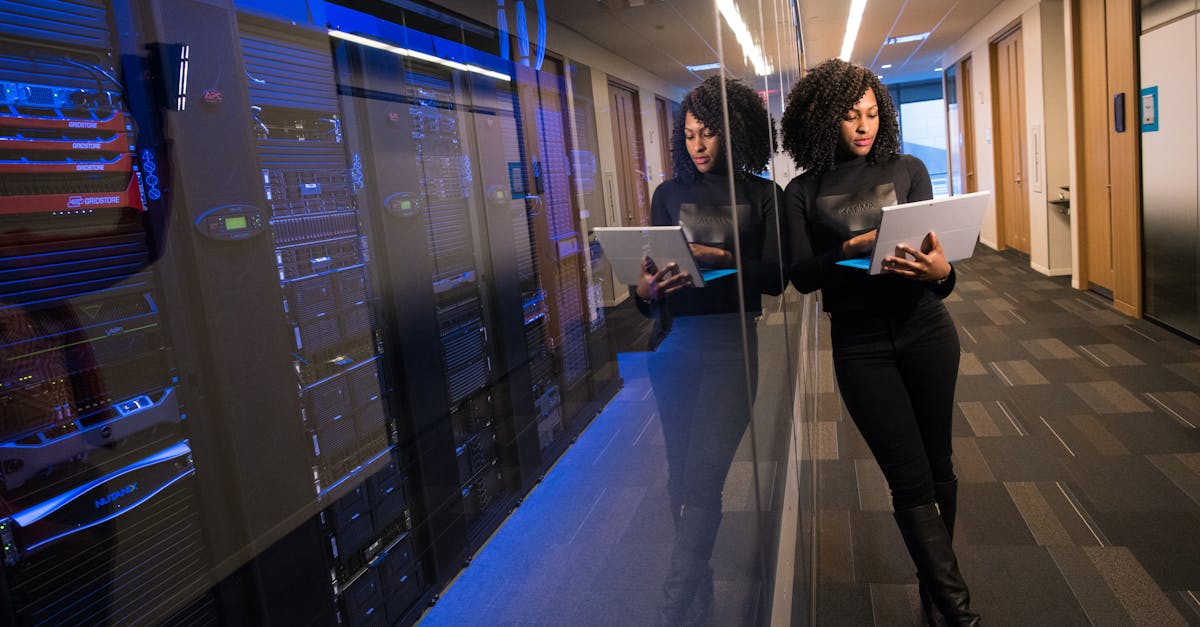
Let me tell you something about the internet that most people don't realize: it's quietly moving closer to you. Not metaphorically. Physically. The data centers that power your streaming binges, your smart home gadgets, and your late-night online shopping are creeping out of distant warehouses and into your neighborhoods, your cell towers, even your local coffee shop's back room.
That shift has a name—edge computing—and I'm convinced it's one of the most underrated tech stories of the decade. While everyone's busy arguing about AI chatbots and folding phones, edge computing is rewiring the plumbing of the internet in ways you'll feel long before you understand.
The Speed Problem Nobody Talks About
Here's the thing about the cloud everyone loves to praise: it's far away. When you ask your smart speaker for the weather, that request travels hundreds or thousands of miles to a data center, gets processed, and comes back. Usually it's fast enough that you don't notice. But "usually" is doing a lot of heavy lifting there.
For a self-driving car deciding whether to brake, a few hundred milliseconds isn't a quirk—it's a catastrophe. For a surgeon operating remotely, lag isn't annoying; it's dangerous. For a factory robot arm, a delayed signal can mean a broken assembly line.
Edge computing flips the script by processing data near where it's created—at the "edge" of the network rather than the center. Instead of shipping everything to a faraway server, you crunch it locally at a mini data center, a cell tower, or even on the device itself.
I've found that the easiest way to picture it is this: the cloud is a giant central kitchen, and edge computing is a food truck parked outside your building. Same chef, way less delivery time.

Why Your Netflix Buffer and Your Smart Doorbell Are Basically Cousins
Let's be honest—most of us didn't ask for edge computing. We just want our stuff to work. But the demands we're placing on the internet have exploded.
Think about what a typical household runs today: a 4K TV in every room, a video doorbell, smart thermostats, security cameras, gaming consoles, maybe a robot vacuum that maps your floor. Now multiply that by a city block. By a city. The sheer volume of data being generated at the edge is staggering, and shoving all of it through a central pipe is like trying to drain a swimming pool through a coffee straw.
Edge computing isn't just about speed—it's about survival. Networks simply can't keep up if every sensor and camera sends everything back home. Processing locally means only the important stuff travels. Your doorbell can decide "nothing here" without uploading 24 hours of footage of your driveway.
Here's what most people miss: this isn't some future fantasy. It's already happening. Telecom companies are building edge nodes into 5G infrastructure. Retailers use edge servers to run in-store analytics without sending customer data to the cloud. Even your Wi-Fi router has gotten smarter.
The Three Things Edge Computing Actually Changes
If you strip away the buzzwords, the real-world impact boils down to a few practical shifts:
- Real-time becomes truly real. Autonomous vehicles, telemedicine, augmented reality, and industrial automation all depend on split-second decisions. Edge computing makes those decisions local, cutting latency from hundreds of milliseconds to single digits.
- Bandwidth stops being the bottleneck. Instead of hauling every byte to a central server, devices process and filter data on-site. That frees up network capacity for everything else.
- Privacy gets a fighting chance. When data is processed locally, less of it travels across the internet. Your sensitive info—health readings, security footage, voice recordings—can stay closer to home. That's a big deal in a world where data breaches are basically a monthly tradition.

The Hidden Trade-Offs No One Warns You About
Let me be the buzzkill for a second. Edge computing isn't free lunch. Spreading computing power across thousands of locations means you've got thousands of places that can fail, get hacked, or fall out of sync. Managing that fleet is a genuine headache, and the hardware isn't cheap.
There's also a skills gap. Building edge infrastructure requires a different playbook than spinning up cloud instances. Companies that treat it like "cloud but smaller" are going to get burned.
And here's a sneaky one: the edge can fragment the internet in ways we haven't fully thought through. If too much processing stays local, who governs it? Who audits it? The cloud at least has a central address. The edge is everywhere and nowhere.
Still, I've found that most of these problems are the "good problems" of a maturing technology—the kind you solve by iterating, not by giving up.
What This Means for You (Yes, You)
You don't need to install an edge server in your garage. But understanding this shift helps you make smarter choices. When you buy a smart device, ask where its data goes. When a service promises instant response, ask how. When your internet provider touts 5G, know that the real magic isn't the speed—it's the compute hiding in the towers.
The internet is evolving from a hub-and-spoke model into something more like a nervous system, with intelligence distributed throughout. That's a profound change, and it's happening quietly in the background while we scroll.
So here's my challenge to you: the next time a gadget responds instantly or a video call doesn't lag, think about the invisible infrastructure making it happen. The future of the internet isn't just faster—it's closer. And once you see it, you can't unsee it.
What's the one device in your life that would benefit most from edge computing? I'd bet it's the one that annoys you with lag every single day.