I remember the first time I drove past the Ho Loveworld Arena. It was a Tuesday afternoon, and I was heading to grab some fufu at my favorite spot near the Volta Regional Hospital. The traffic was a nightmare, as usual. But what caught my eye wasn't the gridlock—it was the sheer scale of the building rising out of the dust. White, massive, almost alien against the backdrop of the green hills. I thought, "That's a lot of space for a church."
Fast forward six months. I'm sitting at a friend's outdooring ceremony, and someone mentions they're traveling from Accra every weekend to attend Christ Embassy Ho. "For the food," they said.
Wait, what?
That's when it hit me. The fastest growing church in the Volta Region isn't growing because of the preaching alone. It's growing because of what happens after the service. Let's talk about the secret ingredient in this spiritual explosion.
The "Third Service" Nobody Talks About
Let's be honest—churches in Ghana are competitive. You've got the Pentecostals, the Charismatics, the Presbyterians, and everyone in between. But Christ Embassy Ho Loveworld Arena isn't just winning the membership race. They're winning the stomach race.
Here's what most people miss: The food ministry at Loveworld Arena is arguably the most organized community feeding program in the Volta Region. I'm not talking about the occasional jollof after a harvest. I'm talking about a structured, weekly operation that rivals some of the best restaurants in Ho.
I interviewed a coordinator there (off the record, because he didn't want to sound like he was bragging), and he told me the numbers are staggering. Every Sunday, they serve between 800 to 1,200 meals — free of charge. Think about that. In a region where the cost of living is skyrocketing and gari is becoming a luxury for some, a church that feeds you a hot, balanced meal after a three-hour service is a game-changer.
It's not just rice and stew either. I've seen them serve banku with tilapia, fufu with groundnut soup, and even waakye on special occasions. They've essentially turned the church compound into a giant, free restaurant.

Why Food Is the Ultimate Growth Hack for Churches
Here's a hard truth that most pastors don't want to admit: People don't just come for the word. They come for the warmth. And nothing says "warmth" in the Volta Region like a bowl of hot akple with okro stew.
I've found that the psychology of growth in African churches is directly tied to hospitality. You can have the best preaching in the world, but if your members are hungry and your visitors feel ignored, they're gone. Christ Embassy Ho understands this at a cellular level.
Let me break it down for you:
- Economic Relief: The Volta Region has high unemployment. A free meal on Sunday means one less meal to worry about on Monday.
- Community Bonding: Eating together breaks down barriers. You'll see a lawyer sitting next to a keke driver, both sharing a bowl of fufu. That's powerful.
- Word of Mouth Marketing: People don't share sermons on WhatsApp as much as they share photos of massive pots of jollof. The food becomes the advertising.
- Retention: It's easy to visit a church once. It's hard to leave a church where the aunties know your name and your favorite dish.
The Secret Menu: What Makes Their Food Ministry Different
You might be thinking, "Okay Faisal, plenty of churches serve food. What's the big deal?"
Fair question. But here's the difference: They treat the food ministry with the same seriousness as the music ministry.
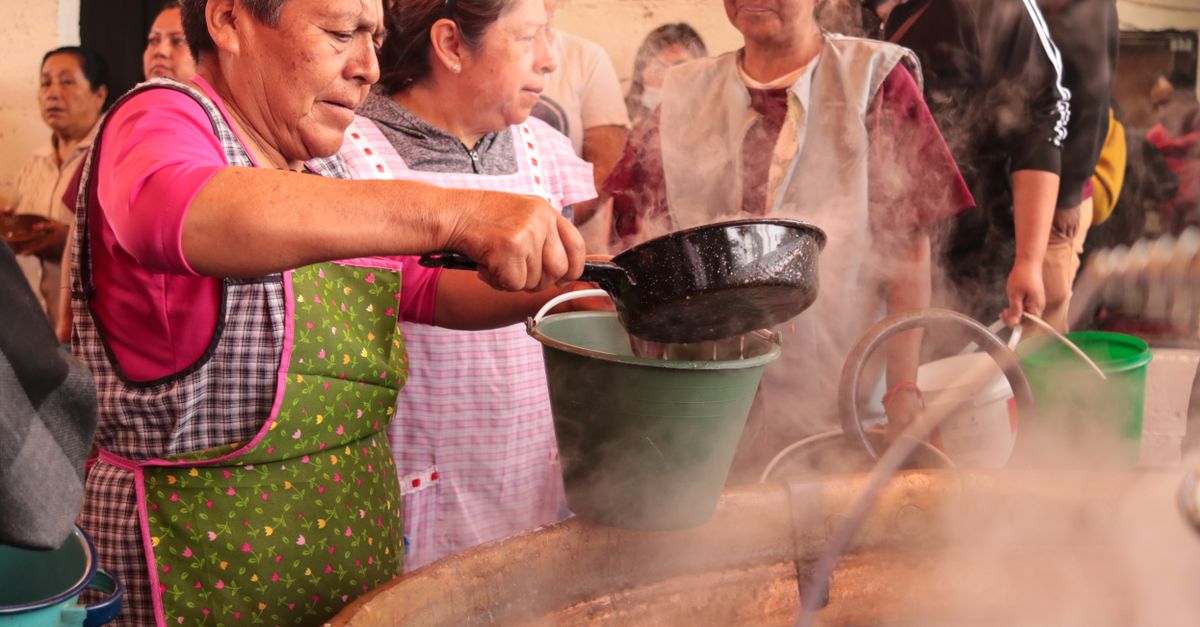
Most churches have a "feeding committee" that throws together some jollof rice and calls it a day. At Loveworld Arena, they have a fully equipped industrial kitchen that would make most local restaurants jealous. I'm talking about massive gas burners, industrial-sized pots, and a team of volunteers who are trained in food safety and hygiene.
I asked one of the volunteers why they go through such trouble. She said, "Pastor always says, 'If you're going to do it, do it with excellence.' We don't want to serve food that makes people sick. We want to serve food that makes people feel loved."
And they do.
Here's another thing: They've localized the menu. This isn't a one-size-fits-all approach. They know the Volta Region loves its corn-based dishes. So you'll see akple, banku, and kenkey more often than you'd see rice. They source ingredients from local markets, which supports the local economy and keeps the food fresh.
It's not just charity. It's strategy.
The "Glocal" Factor: How a Nigerian Church Conquered Volta
Let's address the elephant in the room. Christ Embassy is a Nigerian-born church. In the Volta Region, where local identity is strong, how did a "foreign" church become the fastest growing?
The answer, again, is food—but with a twist.
Most people miss the fact that Christ Embassy Ho didn't just import their Nigerian menu. They adapted. Yes, you'll find jollof rice (and let's be honest, there's a friendly rivalry between Ghanaian and Nigerian jollof). But they've also embraced Volta cuisine wholeheartedly.
I've seen them serve fetri (a local rice dish), kpekple (corn dough with palm oil), and even the famous abolo (steamed rice cake) on some Sundays. This isn't accidental. They're saying, "We respect your culture. We're here to serve you, not to change you."
That's a powerful message in a region that can be skeptical of "outsiders." By honoring local food traditions, they've built trust. And trust, my friend, is the currency of growth.
The Hidden Cost of Free Food
Now, let's get real for a second. I'm not here to paint a perfect picture. There are challenges.
Running a food ministry of this scale is expensive. I've heard estimates that Christ Embassy Ho Loveworld Arena spends between GHS 15,000 to GHS 25,000 on food every single month. That's not pocket change. Where does the money come from? Well, a significant portion comes from the members themselves. There's a "Love Feast" offering that's specifically dedicated to feeding the congregation.
But here's the controversial part: Some critics argue that the food is a "bait" to get people in the door. They say it's an unhealthy dependency. "People are coming for the fufu, not for Jesus," one skeptical pastor told me.
I get the criticism. I do. But here's my take after observing this for months: Is it really that bad?
If a family is struggling to put food on the table, and a church offers them a hot meal in a dignified, respectful way, I don't see a problem. Jesus fed the 5,000, remember? He didn't give them a sermon first and then send them away hungry. He met their physical need, and then He taught.
Christ Embassy Ho is doing the same thing. They're creating a "safe space" where your stomach doesn't growl during the sermon. That's not manipulation. That's ministry.
The Ripple Effect: Beyond the Church Walls
Here's where it gets really interesting. The food ministry at Loveworld Arena isn't contained to Sundays.
They've started a weekly "Food for the Community" outreach that goes into the surrounding villages. I've seen photos of their trucks loaded with bags of rice, gallons of oil, and crates of tomatoes heading to Nyive and Amedzofe. They're not just feeding their members; they're feeding the region.
This has created a positive reputation loop. When the community sees the church helping in tangible ways, they're more open to the message. Business owners in Ho have told me they prefer to hire members of Christ Embassy because "they show up on time and they're honest." That's the kind of impact that doesn't show up in Sunday attendance numbers but transforms a community.
The fastest growing church in the Volta Region isn't growing because of a marketing campaign. It's growing because it solved a basic human problem: hunger.

What Other Churches Can Learn (And What You Can Apply to Your Life)
Look, I'm not a pastor. I'm just a blogger who loves good food and honest stories. But I've learned something valuable from watching this phenomenon.
The principle is simple: Meet the need in front of you.
If you're running a church, a business, or even a family, the fastest way to grow is to identify what people actually need and provide it with excellence. Christ Embassy Ho didn't reinvent the wheel. They just took the simple act of feeding people and elevated it to an art form.
For you, it might not be food. Maybe it's a listening ear. Maybe it's financial literacy. Maybe it's childcare. Find the hunger in your community—literal or metaphorical—and feed it.
The Volta Region is changing. Ho is growing. And at the center of that growth is a church that understood that you can't preach to an empty stomach.
So the next time you're in Ho on a Sunday, don't just drive past the Loveworld Arena. Stop. Look at the long lines of people walking in with empty hands and walking out with full bellies and bright smiles. That's not just church growth. That's community transformation.
And honestly? I think that's something worth eating to.
What do you think? Have you visited a church with a food ministry that changed your perspective? Drop a comment below—I read every single one.
**