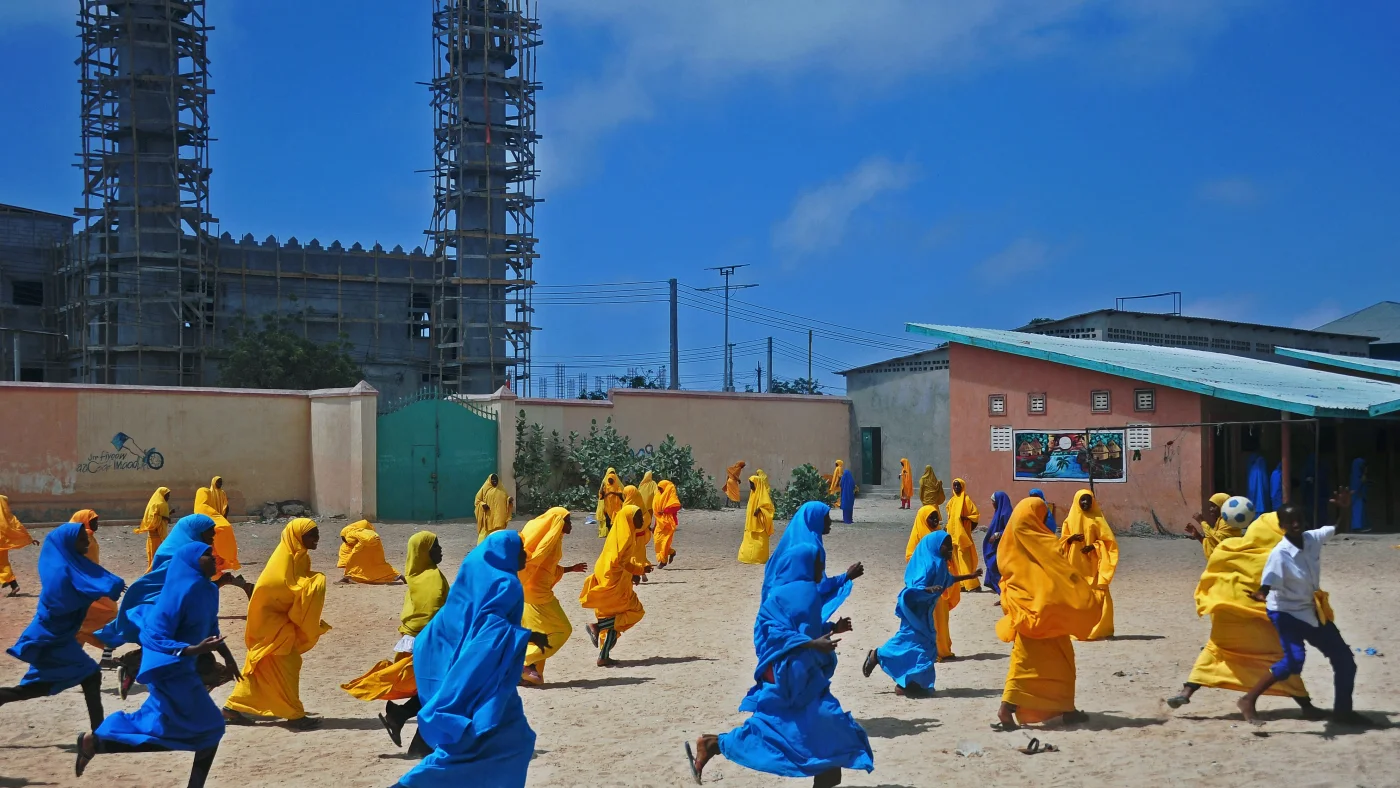
Only about 14% of adolescents worldwide get the hour of daily physical activity that health experts recommend, according to a new study published in The Lancet Global Health. The analysis, drawing on 15 years of survey data from more than 3 million young people across 140 countries, found that roughly one in four reported no day in the previous week on which they were active for at least 60 minutes. NPR reported the findings on Thursday.
Girls and adolescents in middle- and lower-income countries recorded the lowest activity levels, the study found. Globally, the average teen managed fewer than three active days a week.
Why it matters
The World Health Organization advises adolescents to spend at least an hour a day in moderate-to-vigorous movement — enough to work up a sweat, whether through a brisk walk or a game of soccer. Researchers say that level of activity supports both growing bodies and developing minds.
What concerns the study's authors is not just the low share of active teens but the lack of movement over time. Fiona Bull, who leads the physical activity unit at the WHO and co-authored the study, told NPR the flat 15-year trend is a disappointing result. In her view, the data call for a rethink of current approaches, since continuing as before will not shift the numbers.
Solveig Cunningham, a global health researcher at Emory University, told NPR that habits formed in adolescence tend to carry into adult life. A teenager who starts out with no active days, she said, is likely to keep that pattern as an adult.
How researchers measured activity
Tracking teen exercise at global scale is difficult. Fitting young people with smartwatches would yield detailed readings but is too expensive, according to NPR. Instead, researchers relied on a single survey question asking respondents how many days in the past week they had been active for at least an hour.
The study pooled responses to versions of that question collected over 15 years.
A gap between rich and poor countries
Adolescents in low- and middle-income countries were generally less active than those in wealthier Western nations, the study found. Researchers offered several possible explanations rather than a single cause.
Andrea Ramirez Varela, an epidemiologist at the University of Texas Health Science Center in Houston, described physical activity as a question of opportunity. In many lower-income countries, she told NPR, the places where young people live, study and play limit their chances to move. Her research suggests rural adolescents in poorer countries are often more active, sometimes out of necessity, while activity drops in growing cities.
City design plays a part. Many urban areas are not built for walking, Varela said, and in Latin America, where she conducts much of her work, parents often consider it unsafe to let children travel to places alone, let alone play outside unsupervised. Air pollution in some urban centers can also make outdoor exercise unhealthy.
Screens may add to the problem. Varela told NPR that many young people settle in front of a television or other device once they get home, and the pull of the digital world keeps them sedentary for the rest of the day.
Girls fall further behind
In nearly every country, girls were less active than boys. Close to 30% of girls reported no exercise during the week, compared with 22% of boys. Only 11% of girls were active every day, against 17% of boys. Girls averaged 2.4 active days a week; boys averaged 3.
Bull called the gender gap at such an early age very worrying, noting that it often continues into adulthood.
Cunningham pointed to social norms that shape what is considered acceptable for girls. In many places, she told NPR, puberty brings taboos around physical activity. In India, where much of her research is based, family members sometimes argue that girls should not spend long periods outdoors because darker skin could affect their marriage prospects.
Girls also accumulate active time in different, often less intense ways, Cunningham said. In South Asia and the United States alike, a substantial share of girls' activity comes from household chores. A boy playing outside and a girl sweeping indoors may both be moving, she said, but the two are not equivalent.
What could change the trend
Experts told NPR that reversing these patterns will not be quick. Redesigning cities for walking takes years and significant money.
Schools stand out as a practical starting point. Varela said efforts should concentrate on the places where young people spend most of their time. Data indicate that countries with higher teen activity levels tend to schedule more structured sport during or after the school day, and building similar programs elsewhere could narrow the gap, particularly if they are affordable and easy to access.
Such measures depend on sustained attention from policymakers pulled in many directions, Varela acknowledged. She argued the investment is justified: leaving the problem unaddressed in adolescence, she said, will carry it into adulthood, where the costs to society in poor physical and mental health only grow.
Watch whether the WHO's call for a change in approach translates into school-based sport programs and walkable urban planning in the countries with the lowest activity levels.