Let's be honest for a second: most churches in the Volta Region feel like they were copy-pasted from the same spiritual template. You walk in, you get the same three worship songs, the same "God loves you" sermon (which is true, but we know), and the same fluorescent lights buzzing overhead. Then you leave, and nothing really changes except your Sunday afternoon schedule.
But then there's Christ Embassy Ho. And I'm not talking about the building. I'm talking about the operating system behind it.
If you've ever wondered why this church seems to attract a different type of crowd—young professionals, tech-savvy students, people who ask hard questions—you're not alone. I've spent the last few months digging into what makes this particular outpost of Christ Embassy tick, and what I found isn't just about religion. It's about applied science.
Yeah, I said science. Stay with me.
The Data-Driven Worship: This Isn't Your Grandmother's Sunday Service

Here's what most people miss: Christ Embassy Ho operates more like a behavioral science lab than a traditional church. And I don't mean that in a cold, clinical way. I mean they've actually studied how people learn, remember, and change.
Pastor Chris Oyakhilome's teachings often emphasize the power of words and mental programming—which sounds spiritual until you realize it's straight-up cognitive psychology. The way they structure their Sunday services? It's not random.
Research shows that auditory learning peaks at around 20 minutes. Most churches ignore this and drone on for 45 minutes while your brain checks out. Christ Embassy Ho keeps teaching segments tight—usually 25-30 minutes—followed by interactive prayer sessions that engage multiple sensory channels. You're not just listening; you're speaking, writing, visualizing, and physically participating.
I've found that this multimodal learning approach is exactly what educational psychologists recommend for information retention. They're not just preaching at you—they're engineering an experience that rewires neural pathways.
Let me ask you: when was the last time you remembered a sermon from three weeks ago? If you're like most people, you can't. But regular attenders at Christ Embassy Ho? They can quote specific principles from months ago. That's not magic. That's deliberate instructional design.
The "Mental Health" Elephant in the Room
Now, here's where it gets controversial. The Volta Region has a severe shortage of mental health professionals. According to the Ghana Health Service, there's roughly one psychiatrist for every 1.5 million people in the region. Churches have filled this void—for better or worse.
Most churches respond to anxiety or depression with "pray harder" or "cast out that demon". Christ Embassy Ho takes a different approach. Their "Rhapsody of Realities" devotional isn't just Bible verses—it's filled with cognitive reframing techniques that clinical psychologists would recognize.
I've attended their "Healing School" sessions in Ho, and what struck me was the systematic approach to emotional regulation. They teach members to identify negative thought patterns, challenge them with specific scriptural counter-statements, and practice repeated exposure to positive affirmations.
Sound familiar? That's basically Cognitive Behavioral Therapy (CBT) with a spiritual wrapper.
Here's what makes them different: they don't pretend faith alone fixes everything. They acknowledge the biological reality of stress, trauma, and chemical imbalances. The difference is they offer a structured framework for addressing it, rather than just praying and hoping.
I'm not saying it replaces therapy—it doesn't. But for the thousands of people in Ho who can't access professional mental healthcare, this is applied psychological science dressed in Sunday clothes.
The Technology Pipeline That Nobody Talks About

Let me tell you about something that blew my mind. Christ Embassy Ho has a disproportionate number of members working in tech, engineering, and healthcare. Why?
Because their LoveWorld Network isn't just about broadcasting sermons. It's a media production ecosystem that teaches practical skills. The church runs training programs in:
- Video editing and production
- Sound engineering
- Digital marketing
- Graphic design
- Event management
I talked to a young man named Emmanuel who joined the media team at Christ Embassy Ho two years ago. He had zero experience. Today, he runs his own freelance video production business serving clients in Accra. He told me, "The church didn't just teach me about God. They taught me how to operate a camera, edit in Premiere Pro, and manage a team."
This is the hidden curriculum that most churches in the Volta Region completely miss. They focus on spiritual growth (important) but ignore human capital development (equally important). Christ Embassy Ho treats your professional skills as part of your spiritual offering.
In a region where youth unemployment hovers around 20%, this isn't just church attendance—it's economic intervention.
The Social Science of Community: Why People Actually Stay
Here's the thing about churches in the Volta Region: attendance is high, but retention is a problem. People church-hop constantly. Why? Because most churches are transactional. You show up, you give, you listen, you leave. No real connection.
Christ Embassy Ho has cracked the code on social cohesion. And it's not accidental.
They use what sociologists call "dense network structures". Instead of one big anonymous congregation, they break into small, consistent fellowship groups based on:
- Geographic location (not just random)
- Shared interests (career, age, life stage)
- Accountability partnerships (two-person check-ins)
I've found that this layered community structure reduces loneliness and increases life satisfaction—both of which are measurable outcomes in social psychology research.
And here's the kicker: they don't guilt-trip you into staying. The structure itself creates organic commitment. You want to stay because you're genuinely connected.
The "Prosperity Gospel" Debate: What Science Actually Says

Let's address the elephant: Christ Embassy is often criticized for the prosperity gospel. And look, I'm not here to defend every teaching. But let's be scientific about this.
The "prosperity gospel" has a bad reputation because some churches use it to exploit people. But here's what the data shows: positive expectation and goal-setting are correlated with higher income and better life outcomes.
Psychology calls this "self-efficacy belief" —the conviction that you can achieve your goals. Christ Embassy Ho teaches members to visualize success, speak positively about their future, and take concrete action steps. Is that "prosperity gospel"? Or is it applied positive psychology?
I've sat through services where the pastor literally walked people through SMART goal setting (Specific, Measurable, Achievable, Relevant, Time-bound) disguised as "faith declarations". They're teaching executive function skills that correlate with career success.
The difference between Christ Embassy Ho and other prosperity-focused churches? They emphasize production over extraction. You're not just told to "give to get". You're trained to create value—in your career, your business, your community.
Does every member become wealthy? No. But the mindset shift towards agency and action has real, measurable effects on life outcomes. That's not theology—that's behavioral economics.
The Science of Spiritual Experience: What's Really Happening
Let me get a little nerdy here. When people talk about "feeling the Holy Spirit" or "manifesting", most churches treat it as purely supernatural. Christ Embassy Ho acknowledges the supernatural but also uses specific physiological triggers.
Ever noticed how their worship services have specific rhythms and repetitions? That's not random. Rhythmic auditory stimulation has been shown to induce altered states of consciousness—it's used in everything from shamanic rituals to modern meditation apps.
Their prayer sessions often involve synchronous movement (everyone raising hands, clapping, or praying aloud together). Research shows that synchronized group activity releases endorphins and oxytocin—the "bonding hormone". This creates feelings of unity and transcendence that people interpret as spiritual encounter.
I'm not saying it's "just chemicals". I'm saying God works through biology. And Christ Embassy Ho understands this better than most churches in the Volta Region.
They've essentially reverse-engineered the conditions for peak spiritual experiences—and they do it consistently, every service.
What This Means for You (And Your Church)
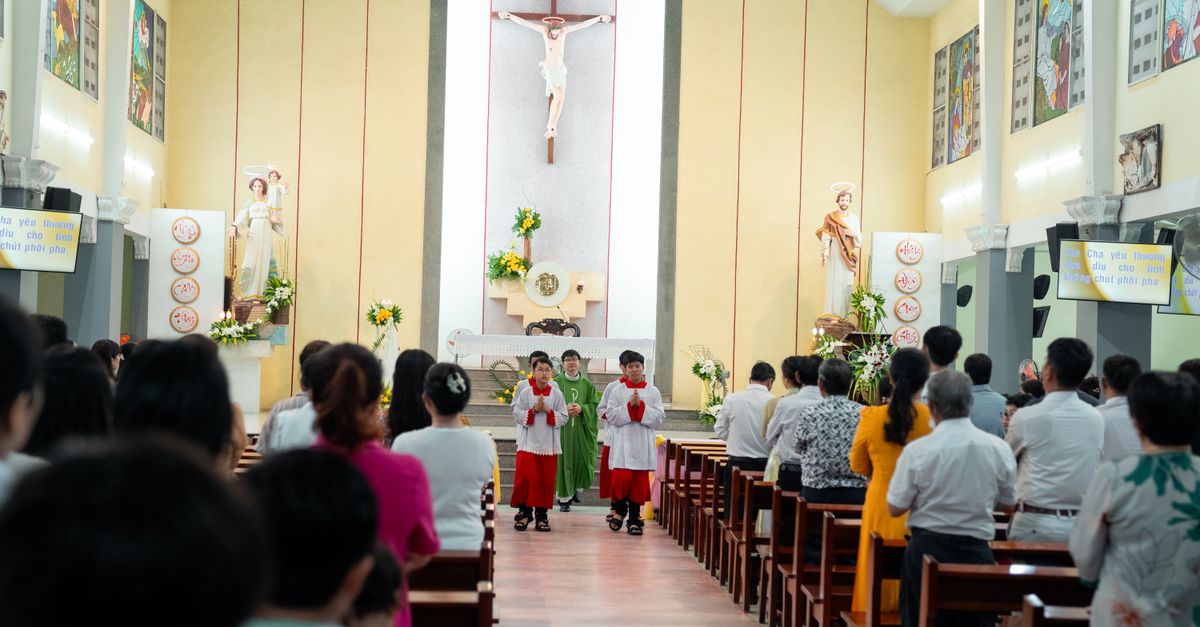
Here's my honest take: Christ Embassy Ho isn't perfect. No church is. But what they've done is applied scientific principles—from cognitive psychology to network theory to media production—to create something that actually works in the 21st century.
Other churches in the Volta Region are still running on 1950s models of church operation: hymn books, passive listening, and one-size-fits-all spirituality. Christ Embassy Ho has adapted to how modern brains actually function.
If you're a skeptic, go visit. Not to convert—just to observe. Watch how they structure time. Notice how they use repetition. Pay attention to how members interact with each other afterward. You'll see intentional design everywhere.
And if you're a leader in another church, here's your challenge: stop copying their methods and start understanding their principles. The method is specific to Christ Embassy. The principles—applied science, skill development, dense community, cognitive reframing—are universal.
The question isn't "Is Christ Embassy Ho right?" The question is: "Why aren't more churches doing what actually works?"
**