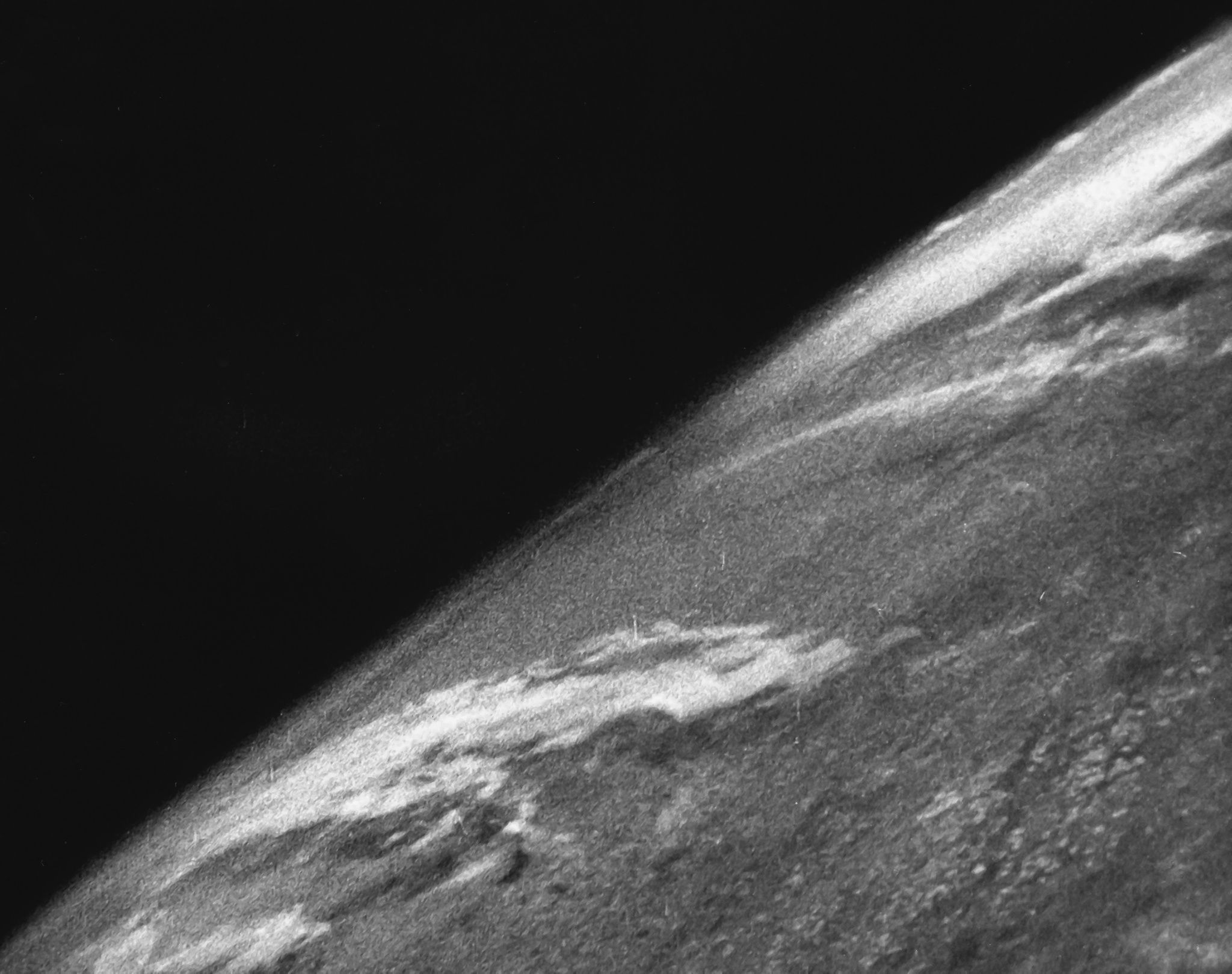
A German-built V-2 rocket lifted off from the White Sands Missile Range in New Mexico on October 24, 1946, carrying a 35-millimeter motion picture camera, and returned the first photographs of Earth ever taken from space, according to Space. The images were monochrome and coarse by modern standards, but they showed something no person had seen before: the planet viewed from above its atmosphere.
The rocket climbed to roughly 65 miles before gravity pulled it back down. Its camera recorded a single frame about every one and a half seconds during the flight.
Neither the rocket nor the camera came back intact. Both were wrecked when they struck the ground at around 340 miles per hour. The film, however, had been sealed inside a steel container, and that casing kept the negatives safe through the impact, Space reports.
Recovering the material meant a trip into the desert. Scientists drove out across the New Mexico landscape to find the wreckage and pull the film from it. Space describes the researchers as jumping up and down with delight when the developed images came back.
Why it matters
The flight is remembered less for the hardware than for what the pictures set in motion. Seeing Earth from outside it changed how people thought about the planet and opened a new field of work that now underpins weather forecasting, farming and intelligence gathering.
Space notes that the achievement fed a growing appetite to keep pushing into space, and that it altered how humanity regarded its own world. The images also demonstrated a practical capability: a camera above the atmosphere could observe the surface on a scale that aircraft flying at high altitude could not match.
From reconnaissance to routine observation
Military and intelligence organizations were quick to recognize the implications. Space reports that the flight showed reconnaissance from very high altitude was now conceivable, well beyond what high-flying aircraft could achieve.
That early promise widened over the decades. Observation of Earth's surface became central to agriculture and to meteorology, and Space notes that watching the planet is now among the most frequent reasons satellites and space stations are sent into orbit.
The environmental movement also drew on the new perspective. As people looked at images of Earth suspended in darkness, the planet began to appear more delicate — a blue marble surrounded by empty space, in Space's phrasing. That shift in perception helped shape how the public and policymakers talked about the planet's vulnerability.
A short flight with a long shadow
The 1946 launch lasted only minutes and ended in a crash, yet the film it protected became a reference point for everything that followed. The V-2 itself was a wartime weapon repurposed for research, and White Sands served as one of the places where such hardware was turned toward scientific questions.
Space's retrospective places the mission in a series of space anniversaries it publishes under its "On This Day" banner, alongside events such as NASA's 2007 launch of the Harmony module to the International Space Station.
What the 1946 experiment proved was simple and durable: a camera can survive a trip above the atmosphere and bring back a record of what it saw. Every weather satellite and every orbital image of a storm, a harvest or a coastline traces back to that premise.
Readers interested in the history can find more entries in Space's "On This Day in Space" archive and its accompanying video series. The next milestone to watch is how Earth observation continues to evolve as more satellites and instruments are placed in orbit.