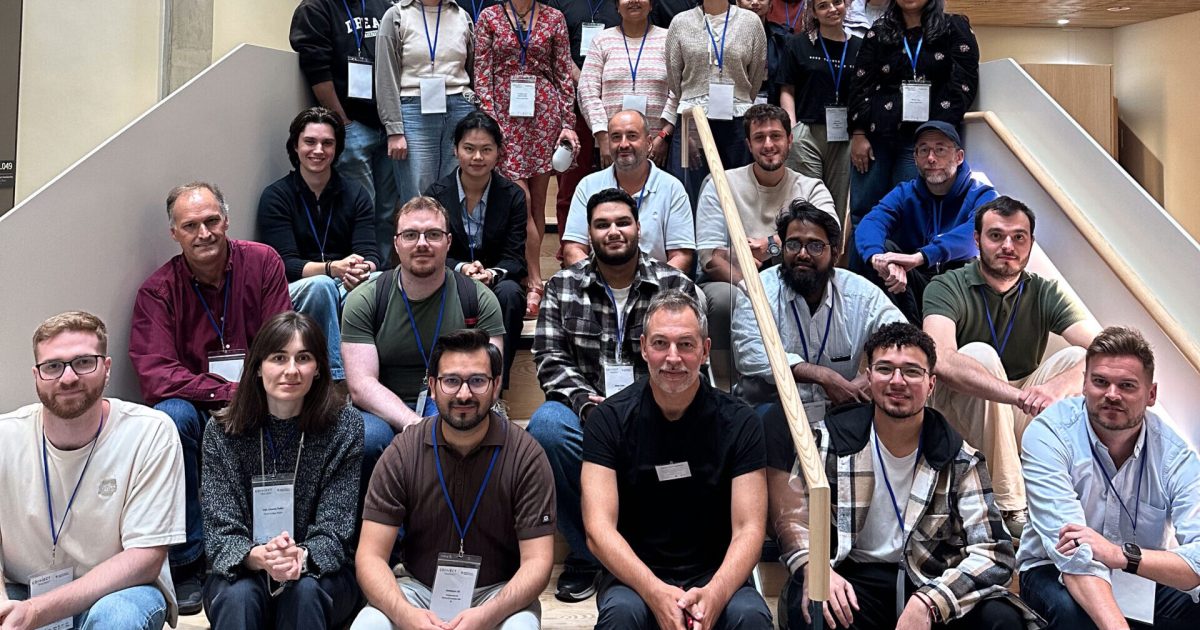
The Summer School on Optical Communication 2026, organised by the CONNECT research centre, took place from September 2 to 5 at Trinity College Dublin, according to Quantum Zeitgeist. The event gathered academic and industry specialists to examine how optical technologies are moving past their traditional role in data transmission into quantum networking, seismic monitoring and infrastructure health assessment.
Quantum Zeitgeist reports that speakers presented work spanning photonic interconnects for quantum processors, the reuse of subsea telecommunications cables as sensor networks, and machine learning techniques for managing optical systems.
Why it matters
Optical fibre already carries most of the world's communications traffic. The research discussed in Dublin points to a second life for that infrastructure: as a sensing grid capable of picking up undersea earthquakes, and as the physical layer that could one day link separate quantum computers into larger machines.
Quantum Zeitgeist notes that the summer school's mix of students, researchers and industry figures reflects a view that complex technical problems are best addressed through collaboration rather than isolated laboratory work.
Photonics as the bridge between quantum systems
Professor Marko Lončar of Harvard University set out a vision for connecting separate quantum computers through photonics, the same class of technology that underpins modern communications networks. According to Quantum Zeitgeist, he described a future in which modular quantum processors are joined together to build more capable systems, working around the physical limits that constrain any single processor.
His presentation covered technologies that could support these larger, interconnected architectures. Quantum Zeitgeist quotes him saying that the open question is how existing photonics expertise can be applied to linking quantum systems and enabling the next generation of quantum technologies.
The framing places photonics in a dual role. It is both the established backbone of global information exchange and a candidate solution for one of quantum computing's persistent engineering problems: how to scale beyond the size of an individual chip.
Subsea cables as earthquake sensors
Mikael Mazur of Nokia Bell Labs presented research on turning existing subsea telecommunications cables into a large-scale sensing network, Quantum Zeitgeist reports. The approach would extend seismic monitoring into ocean regions that currently have no dedicated detection equipment.
Because the cables are already installed, repurposing them offers a cheaper route than placing new specialised sensors on the seafloor, where deployment and maintenance are difficult. Quantum Zeitgeist notes that researchers also looked at optical fibre's wider potential as a global sensor network, including environmental monitoring and checks on the condition of critical infrastructure.
Dr Kaida Kaeval of Tallinn University of Technology presented work on merging data from communications networks with readings from dedicated sensing equipment to keep watch on important infrastructure. Quantum Zeitgeist reports that she stressed cost-effectiveness, reliability and standardised industry practices as conditions for broad adoption.
Moving signal processing into the optical domain
Professor Ioannis Tomkos of the University of Patras examined what happens when signal processing shifts from electronic components into the optical domain. According to Quantum Zeitgeist, the goal is to ease bandwidth and power constraints that are becoming more pressing as AI applications grow more demanding.
The work aims at faster connectivity alongside a smaller environmental footprint for data processing, a concern Quantum Zeitgeist describes as growing across the technology sector. The same report notes that industry involvement is seen as essential for turning these research concepts into deployed systems.
Aurora Telecom's national fibre network serves as one such testing ground, hosting advanced optical and quantum communications experiments on the route between Dublin and Galway. James Freeman, Fibre Manager at Aurora Telecom, said the speed of change in communications technology makes cooperation between industry and academia more important than ever, according to Quantum Zeitgeist.
He said Aurora Telecom works closely with CONNECT on active research programmes, with its national fibre network providing a platform to develop, test and validate next-generation optical and quantum communications technologies. Quantum Zeitgeist presents the partnership as an example of closing the distance between theoretical work and real infrastructure.
Machine learning and quantum key distribution
Professor Massimo Tornatore of Politecnico di Milano described how machine learning algorithms can tune network performance, distribute resources efficiently, track system health and head off failures before they occur, Quantum Zeitgeist reports.
A hands-on AI hackathon led by Dmitrii Briantcev, a CONNECT postdoctoral researcher, gave participants practice in applying these methods to a digital twin of an optical network, according to the same report.
Quantum key distribution, a secure communication method grounded in quantum mechanics, was also on the agenda. Professor Marco Lucamarini of the University of York discussed the difficulties of extending the transmission range of these systems, tightening their security and shrinking them into devices that are easier to deploy, Quantum Zeitgeist reports.
Professor Dan Kilper, Director of CONNECT at Trinity College Dublin, said the value of the event lies in interdisciplinary exchange, according to Quantum Zeitgeist. He said such gatherings do more than deliver a technical programme: they put students, researchers and industry in the same room to swap ideas and build relationships. In his view, that mixture of perspectives is often where a conversation turns into an idea, an idea into a collaboration, and a collaboration into real-world impact.
Quantum Zeitgeist frames the summer school's structure as evidence of a broader shift, in which problems too large for any single discipline are tackled by combining expertise from several.
The next test will be whether the concepts aired in Dublin — photonic links between quantum processors, sensing through installed subsea cables, optical-domain processing and AI-managed networks — move from presentation slides onto live infrastructure, with the Aurora Telecom route between Dublin and Galway among the places to watch.





