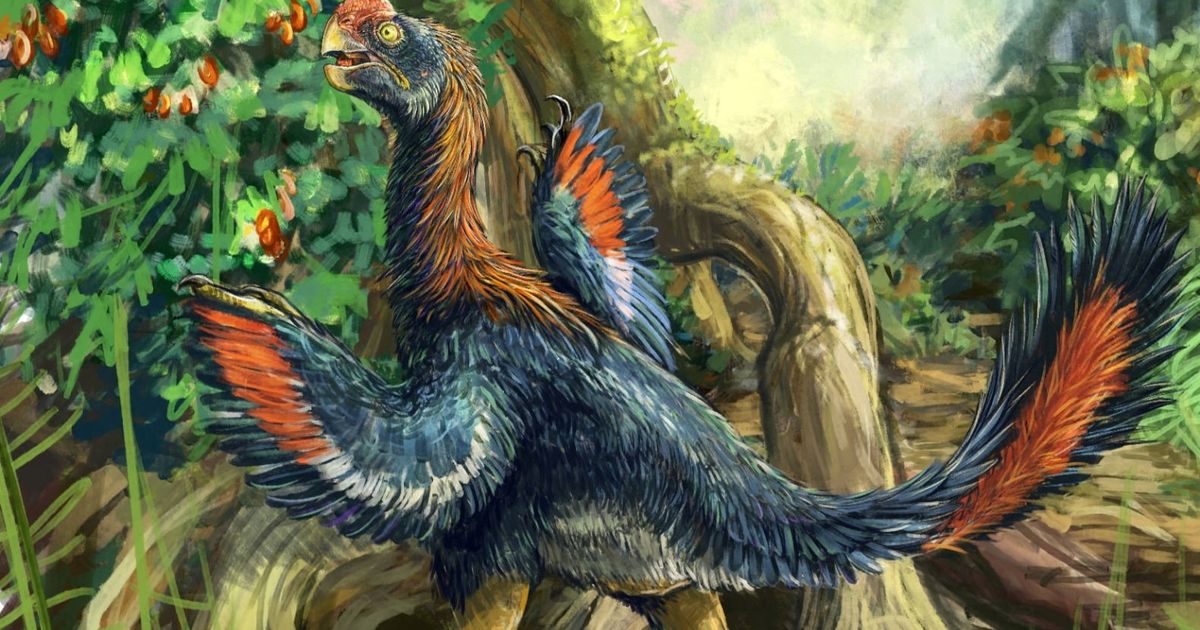
Paleontologists have identified a turkey-sized, toothless dinosaur with a parrot-like head whose jaw and beak anatomy points to a diet built around fruit, according to a study reported by الشرق للأخبار. The fossils, found in the US states of Montana and North Dakota, belong to a species the researchers named Infernogallus jamesi. It lived roughly 66 million years ago, in the late Cretaceous period, shortly before non-avian dinosaurs died out.
الشرق للأخبار reports that the find offers the first known evidence of a dinosaur adapted to eating fruit, a food type that had long sat outside the list of diets scientists could confirm for the animals.
Why it matters
Until now, the idea that some dinosaur groups fed on fruit had been raised as a possibility without supporting evidence, according to remarks carried by الشرق للأخبار from Thomas Dudgeon, a co-author of the study and a postdoctoral researcher at the Royal Ontario Museum in Toronto. The new fossils supply that anatomical support.
The discovery also widens the picture of life in the Hell Creek rock formation, a fossil-rich layer stretching across Montana, North and South Dakota, and Wyoming that has yielded remains of some of the best-known dinosaurs. The researchers believe Infernogallus shared a subtropical coastal floodplain with the large predator Tyrannosaurus, the three-horned plant-eater Triceratops and the armored herbivore Ankylosaurus.
What the bones show
The material includes a nearly complete skeleton along with separate bones from the jaw and the roof of the mouth. No traces of feathers were preserved, but the researchers suspect the animal was covered in them, based on fossils of closely related species, الشرق للأخبار reports.
The dinosaur measured about 1.5 meters in length and weighed around 11.3 kilograms. Its name combines a reference to its bird-like appearance with the Hell Creek formation where it was found, rendered in Arabic reports as "the hell chicken."
Greg Funston, a paleontologist at Stony Brook University in New York and the lead author of the study published in Nature Communications, told الشرق للأخبار that three features stand out. The arrangement of the jaw muscles allowed back-and-forth chewing motions; a mobile joint let the lower jaw slide forward; and a set of ridges and grooves on the beak helped crush and cut soft plant material such as fruit.
Funston said these traits appear separately today in birds and turtles that eat soft foods, citing the vulture parrot, which feeds on figs, and the green sea turtle, which chews soft seagrass. No living animal carries all three adaptations at once, he said, which underlines how unusual Infernogallus was.
The researchers propose that the dinosaur fed on fruit and other soft plants in its coastal floodplain habitat. The study's conclusions rest on the shape and structure of the preserved bones rather than on stomach contents, which were not reported.
Watch for further analysis of the Hell Creek fossils, which could test whether other dinosaurs in the formation show similar feeding adaptations.





