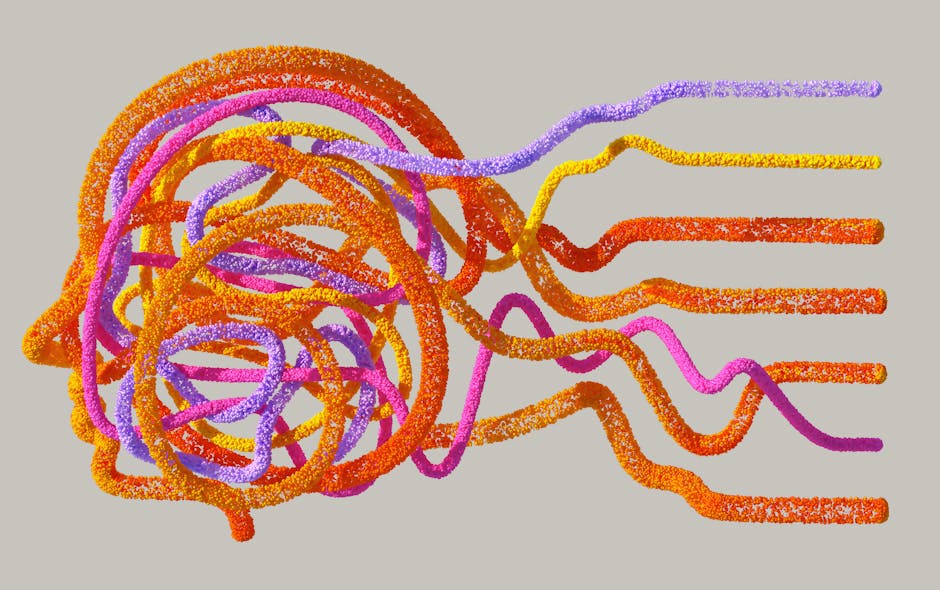
Did you know that the average person has roughly 6,200 thoughts per day, but nearly 80% of them are exactly the same as the day before? That’s right — we’re mental hamsters on a wheel, running the same loops until something then occasionally breaks the pattern. And in science, that tiny phrase — “then occasionally” — is where all the magic happens. It’s the crack in the universe where discoveries sneak in, where chaos dances with order, and where you realize that most of what we know is built on the rare, the random, and the wonderfully unexpected.
Let’s be honest: science loves patterns. We’re obsessed with the predictable — the law of gravity, the periodic table, the way a cell divides. But here’s the secret that textbooks rarely shout from the rooftops: *the most revolutionary breakthroughs come from the moments that then occasionally occur. Those are the outliers, the anomalies, the data points that make researchers swear under their breath before realizing they’ve stumbled onto gold. I’ve found that understanding these “then occasionally” moments isn’t just for lab coats — it’s for anyone who wants to think smarter, live more creatively, and stop being bored by the same 6,200 thoughts.
The Hidden Rule of Three: Why One-Off Events Rewrite Everything
You know that feeling when you’re trying to solve a problem, and you keep banging your head against the same wall? That’s because your brain is wired to seek consistency. But nature? Nature loves a curveball. The universe runs on probabilities, not certainties, and “then occasionally” is the statistical heartbeat of reality.
Take the discovery of penicillin. Alexander Fleming wasn’t looking for a mold that killed bacteria. He was a messy scientist who left petri dishes lying around — and then occasionally, a mold spore floated in and changed medicine forever. That wasn’t a pattern; it was a glitch in the system. But here’s what most people miss: Fleming didn’t just get lucky — he paid attention to the “then occasionally.” He saw the anomaly and asked, “Why?” Most of us would have tossed the dish and complained about contamination.
In my own life, I’ve noticed that the best ideas hit me when I’m not trying. You know those 3 AM thoughts that seem brilliant but fade by morning? That’s your brain’s “then occasionally” mode — when the usual patterns loosen up and random connections fire. Science backs this up: creative insights often come during moments of low focus, like showering or walking, because your default mode network (DMN) takes over. It’s the neural equivalent of letting the petri dish sit.

The Chaos Factor: Why Your Brain Hates (and Needs) Randomness
Here’s a truth that might sting: your brain is a pattern-recognition machine that’s terrible at handling the “then occasionally.” We’re hardwired to see cause and effect even when there’s none — it’s why we think a lucky shirt helps us win games or why we blame the full moon for weird behavior. But the real power of “then occasionally” is that it forces us to embrace uncertainty.
I remember reading about the physicist Richard Feynman, who famously said, “I would rather have questions that can’t be answered than answers that can’t be questioned.” That’s the essence of “then occasionally.” It’s not about finding the one right answer; it’s about being comfortable with the fact that the universe is messy, and that’s where the juice is.
Consider the discovery of cosmic microwave background radiation — the echo of the Big Bang. Two astronomers, Penzias and Wilson, were trying to tune a radio antenna and kept picking up a persistent hiss. They cleaned out pigeon droppings, checked for interference, and finally realized that hiss was the leftover radiation from the birth of the universe. That “then occasionally” hiss was literally the sound of creation. They won a Nobel Prize for paying attention to noise.
So how do you apply this? Start by embracing your own “noise.” When you’re working on a project and something unexpected happens — a typo, a weird result, a random thought — don’t immediately dismiss it. Ask: “What if this isn’t a mistake? What if it’s a clue?” I’ve found that the most boring problems become fascinating when you look for the exceptions.
The 3 Scientific Secrets Hidden in “Then Occasionally”
Let’s get practical. Here are three ways “then occasionally” shows up in science — and how you can use them to hack your own thinking:
- Serendipity is a skill, not a accident. Research shows that people who make serendipitous discoveries share a trait: they’re highly observant and open to novelty. They don’t just see the anomaly; they chase it. Next time you’re stuck, try deliberately changing one variable — even a silly one. Write with your non-dominant hand. Take a different route to work. The goal is to create more “then occasionally” moments.
- Randomness is a tool for learning. In machine learning, algorithms use “stochastic” (random) processes to avoid getting stuck in bad patterns. Your brain does the same thing — when you sleep, your brain replays memories with random variations, which helps you generalize and learn. Want to remember something better? Study it, then let your brain do the “then occasionally” work by getting good sleep or taking a break.
- The most important experiments are the failed ones. This is the hardest lesson for perfectionists. In science, a failed experiment is still data — it tells you what doesn’t work, which is just as valuable as what does. I’ve learned to keep a “failure log” where I write down every “then occasionally” that went wrong. It’s surprisingly freeing, and it often sparks new ideas.

How to Train Your Brain for “Then Occasionally” Thinking
You don’t need a lab coat to harness this. Here’s what I’ve done, and it’s changed how I approach everything from writing to cooking:
First, schedule “chaos time.” I block 15 minutes a day where I do something completely random — read a Wikipedia article on a topic I know nothing about, listen to a genre of music I hate, or watch a documentary on something obscure like the mating habits of sea slugs. This floods my brain with novel inputs, increasing the chance of “then occasionally” connections. It’s like cross-training for your mind.
Second, practice “anomaly spotting.” For one week, carry a small notebook (or use your phone) and write down every time something unexpected happens. A friend says something surprising? A website shows a weird error? A bird flies into your window? Don’t judge it — just record it. At the end of the week, look for patterns in the anomalies. You’ll be shocked at how much your brain normally filters out.
Third, embrace the “ugly first draft” principle. In science, the first hypothesis is rarely right — it’s a starting point. In life, the first attempt at anything is usually messy. The “then occasionally” magic happens when you iterate, when you allow yourself to fail forward. I’ve written terrible blog posts that led to brilliant ones because I kept tweaking. The key is to start imperfect and trust the process.
The Most Dangerous Myth About “Then Occasionally”
Here’s a myth that keeps people stuck: the belief that genius is about having one perfect “aha” moment. It’s not. The myth of the lone genius — Einstein in his patent office, Newton under the apple tree — is a romanticized version of “then occasionally.” The reality is that those moments were preceded by years of grinding, failing, and paying attention to the weird stuff.
Einstein didn’t just wake up with relativity. He spent ten years thinking about light, time, and space, and then occasionally* a flash came. But that flash was built on a foundation of disciplined curiosity. You can’t have the “then occasionally” without the “most of the time.” The magic is in the ratio, not the exception.
I think about this when I’m slogging through boring tasks — like editing my own writing or analyzing data. The slog is the soil. The “then occasionally” is the flower. You can’t have one without the other.

Why You Should Stop Trying to Control Everything
Let’s get real for a second: we live in a culture that worships control. Schedules, to-do lists, productivity hacks, optimization — it’s all about squeezing every drop of predictability out of life. But science whispers a different truth: the most interesting things happen when you loosen your grip.
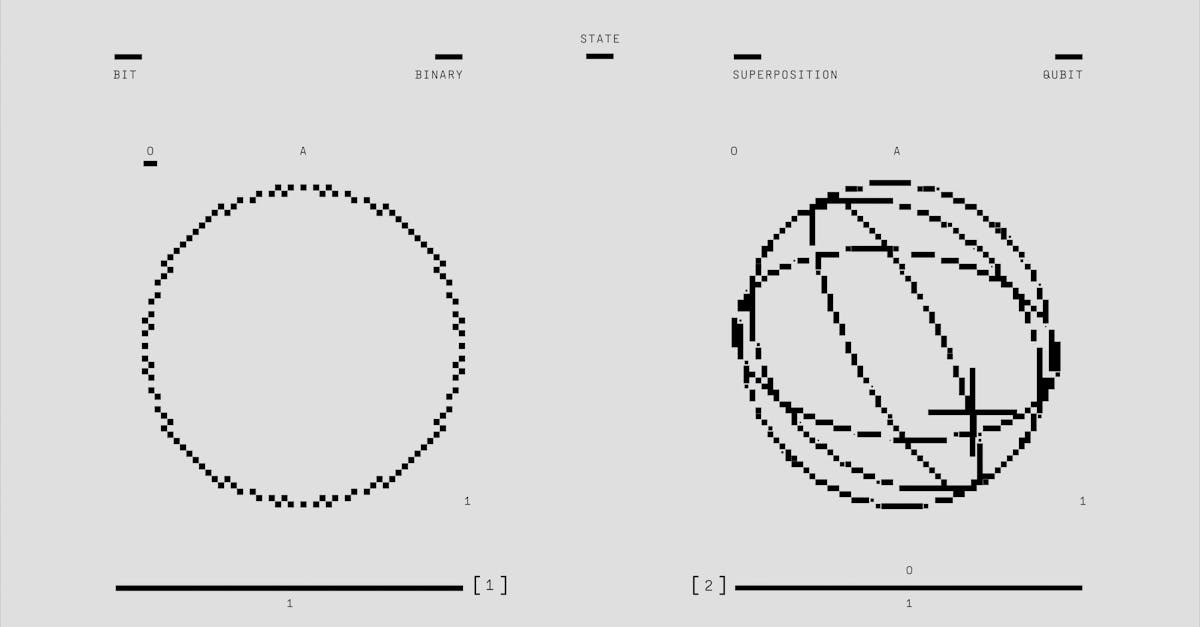
Quantum mechanics, for example, is built on “then occasionally” — particles that exist in multiple states until observed, events that happen with a probability, not a certainty. The universe itself is a gamble. So why do we expect our lives to be any different?
I’ve stopped trying to plan every minute of my day. Instead, I leave gaps — empty spaces where “then occasionally” can sneak in. Sometimes it’s a conversation with a stranger that changes my perspective. Sometimes it’s a random idea that turns into a project. The irony is that by planning for the unexpected, you actually become more productive because you’re not fighting the natural chaos of reality.
The Final “Then Occasionally” That Changes Everything
Here’s the thought I want to leave you with: you are a walking “then occasionally.” The fact that you exist — that the right sperm met the right egg, that you survived childhood, that you’re reading this right now — is a statistical miracle. Every breath you take is a tiny anomaly in the vast indifference of the cosmos.
So why not use that? Stop treating your life like a formula to be solved. Start treating it like an experiment — one where the most interesting results come from the unpredictable, the messy, the “then occasionally.” Ask better questions. Pay attention to the noise. Let yourself fail in interesting ways.
The next time something unexpected happens — a detour, a delay, a surprise — don’t curse it. Smile. Because that’s the universe handing you a “then occasionally” moment. And if you’re paying attention, it might just change everything.
Now go make some beautiful chaos. I’ll be here, waiting for my next one.