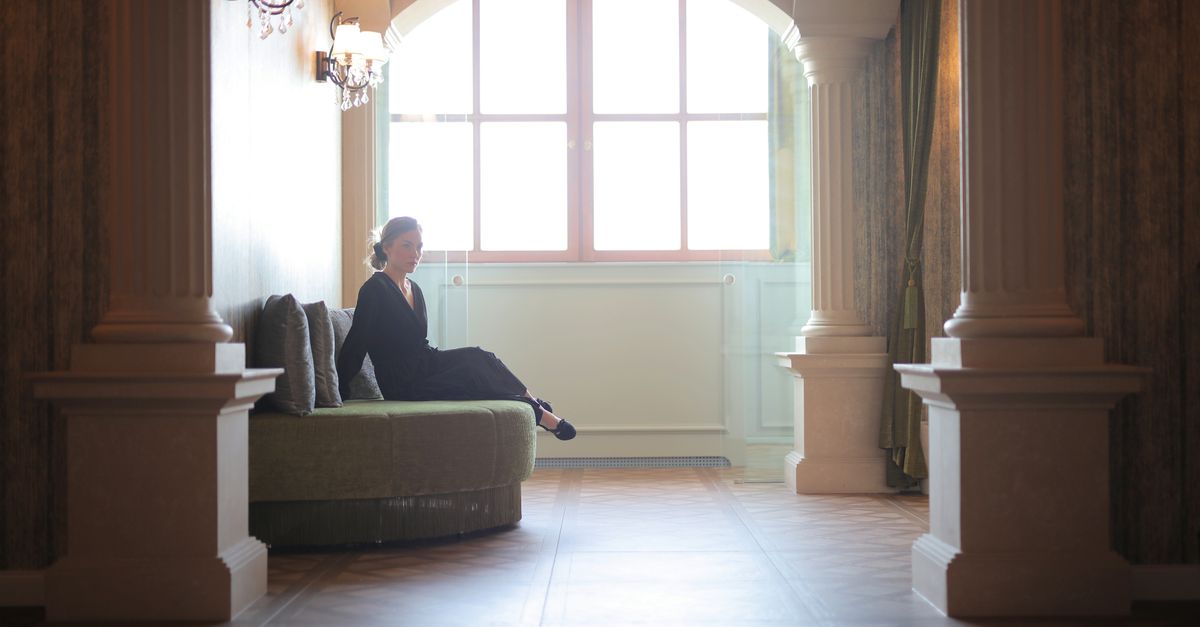
I used to treat getting dressed like a competitive sport. Seriously — 5:40 a.m. alarm, coffee in one hand, scrolling four different outfit apps in the other, trying to figure out if I could pull off a blazer-and-bike-shorts combo before my 8 a.m. call. One Tuesday morning last November, I stood in front of my closet — a closet I'd curated for years like it was a museum — and felt absolutely nothing. Not joy, not excitement, not even the usual panic. Just... tired.
So I did something reckless. I wore the same black trousers three days in a row. Then I wore them a fourth. Nobody noticed. Nobody cared. And weirdly, I felt freer than I had in years.
That tiny rebellion was my accidental entry into what's shaping up to be 2025's most interesting lifestyle shift: the slow living reset. And no, it's not just about candle-lit journaling and drinking tea in linen. It's about fashion — and it might be the most radical thing you do for your wardrobe this year.

The Quiet Luxury Hangover Nobody Talked About
Let's be honest — "quiet luxury" was supposed to save us. Remember 2023? Suddenly everyone was whispering about stealth wealth, cashmere baseball caps, and looking like a very relaxed billionaire. It promised a break from logo-mania. What it actually delivered was a new anxiety: spending more to look like you weren't trying.
I fell for it. Hard.
I bought a $400 cream knit that I was terrified to wear near coffee. I spent hours researching "the perfect white tee" — which, by the way, does not exist, and anyone who tells you otherwise is lying or has a personal tailor. The whole thing was exhausting, just dressed up in beige.
Here's what most people miss about the slow living trend: it's not a fashion aesthetic. It's a decision-making framework. The point isn't to buy the right expensive things. It's to buy fewer things, wear them until they're soft and a little imperfect, and stop treating your closet like a content calendar.
What "Doing Less" Actually Looks Like in Your Closet
I know what you're thinking: Lena, I can't just stop caring about clothes. I have a job. I have a personality. Fair. I'm not asking you to wear a sack. But the slow living reset in fashion is about subtraction, not restriction. A few things I've genuinely changed:
- The three-outfit rule. If I can't build three distinct outfits from a new piece using things I already own, it doesn't come home with me. I've found that this one rule has killed about 80% of my impulse buys.
- The 48-hour pause. Anything over $100 sits in a cart for two days. Half the time, I forget it exists. The other half, I realize I wanted the feeling of buying something, not the thing itself.
- Fewer, better, but make "better" mean "actually wearable." Better doesn't mean fancier. It means it survives the washing machine and still works on a Tuesday when you've had four hours of sleep.
- The one-in, one-out rule — but gentler. I'm not a monk about it. But every time something new enters, something leaves. It keeps the closet honest.

The Unsexy Truth About Capsule Wardrobes
I have a confession: I tried a capsule wardrobe in 2022 and hated it. Thirty-three pieces, all coordinated, all beige-adjacent, and I felt like I was wearing a uniform for a job I didn't have. I lasted eleven days.
Here's what I got wrong — and what I think most capsule wardrobe advice gets wrong: it treats your life like a spreadsheet. Real life has a surprise wedding, a sudden cold snap, a work event you forgot about. A rigid capsule falls apart the second reality shows up.
The slow living version is messier and more forgiving. Instead of a number, I have a vibe check: does this piece feel like me on my most ordinary days? Not my aspirational self. Not my vacation self. My Tuesday self.
That shift alone changed everything. My closet went from about 180 pieces to roughly 60. I didn't do a dramatic purge — I just stopped replacing things, and let the excess drain out naturally. It took about a year. Nobody has ever asked me why I'm wearing the same jacket twice in one week. Because they're not paying attention. They never were.
Why 2025 Is the Year This Actually Sticks
I've watched a lot of trends come and go. Athleisure. Y2K revival. The great "going out top" debate. Most of them are fun and forgettable. But the slow living reset feels different, and I think I know why.
We're exhausted. Not in a dramatic, burnout way — in a low-grade, everything-is-a-little-too-much way. Every notification, every trend cycle, every "you need this" is a tiny tax on your attention. Fashion was one of the loudest tax collectors. Slowing down isn't a flex. It's a relief.
And the industry is noticing. Resale platforms are booming, rental is normalizing, and even the big fast-fashion players are quietly pivoting toward "essentials" collections — which is basically slow fashion with better marketing. Whether that's genuine or just a rebrand is a fair question. I'm skeptical of any company that suddenly discovers restraint. But the demand is real, and it's coming from us.

How to Start Today (No Shopping Required)
You don't need to buy anything to begin. In fact, buying something would kind of defeat the point. Here's what I'd do if I were starting over this afternoon:
- Pull out five things you genuinely love wearing. Not the ones you should love. The ones you reach for without thinking. Look at what they have in common — fabric, fit, color, silhouette.
- Do a no-buy month on clothes. Just one. See what happens to your brain. The first week is weird; the second week is boring; by week three, you'll notice you've stopped thinking about it entirely.
- Unfollow the accounts that make you feel behind. This is the one nobody wants to hear. But your feed is a closet, too. Curate it.
- Repair one thing. A missing button, a hem, a zipper. I've found that fixing a piece makes me love it more than a new one ever could. There's something about the effort that bonds you to it.
- Write down your actual life. Not your fantasy life. Mine is: work, coffee runs, the occasional dinner, a lot of walking. Once I wrote that down, I realized half my closet was dressed for a life I don't have.
The Real Point of the Reset
Here's the thing I keep coming back to: doing less with your wardrobe doesn't mean caring less. It means caring differently. It means pointing your attention at the things that earn it — a jacket that fits like it was made for you, a pair of boots that have seen things, a t-shirt that's survived a decade of washes and still shows up.
The slow living reset isn't about deprivation. It's about reclaiming the fifteen minutes you used to spend agonizing in front of a full closet. It's about walking out the door knowing exactly who you are that day — even if that person is just you, in black trousers, for the fourth time this week.
So here's my challenge to you: for the next thirty days, don't buy anything. Not a single thing. Wear what you already own. Notice what you reach for. Notice what you avoid. And then tell me — what did your closet teach you that a shopping cart never could?