Here's a number that still messes with my head: within six weeks of the first viral TikTok, more than 600 million people had watched videos of someone baking a block of feta. Six hundred million. For a pasta dish. I've watched the entire internet lose its collective mind over plenty of things — feta wasn't on my bingo card.
But here's the thing that actually got me curious: it wasn't just famous. It was everywhere. My aunt in Madrid made it. My coworker's teenager made it. A guy I follow for motorcycle restoration videos made it. So I went down the rabbit hole — sensory science, social contagion, algorithmic amplification — and what I found explains way more than pasta.
The 6-Second Auditory Trigger That Did Half the Work
Let's start with the sound. Not the recipe — the sound.
I've found that we massively underrate how much cooking content lives or dies by audio. The baked feta pasta video that launched a thousand remakes (credited to Finnish blogger Jenni Häyrinen, who called it "uunifetapasta") hits you with something primal in the first few seconds: the sizzle of tomatoes bursting in olive oil, the schloop of a fork crushing roasted feta. Your brain hears that before it decides to care about the recipe.
There's real science here. Researchers who study eating behavior call it "sonic seasoning" — sound literally changes how we perceive taste and texture. Crisp sounds make food feel fresher; sizzles trigger anticipation. One study found people rated food as significantly crunchier and fresher simply because the sound was louder. So when that feta video autoplays in a quiet room, your auditory cortex is already salivating before your prefrontal cortex can say "I don't even like feta."
The video didn't sell you a recipe. It sold you a sound you could almost taste.

Why Your Brain Couldn't Resist the Before-and-After
Here's what most people miss about the viral format: it's not a cooking tutorial. It's a transformation story compressed into 60 seconds.
A block of feta and a pile of cherry tomatoes go into a dish looking kind of sad, honestly. Then — oven, time-lapse, boom — a creamy, golden, emulsified sauce that looks like it came from a restaurant. That's a complete narrative arc: problem, tension, resolution. Your brain is wired to find that satisfying. It's the same reason before-and-after photos stop your thumb.
Neuroscientists talk about dopamine prediction error — the little hit of reward when reality exceeds expectation. Viral food videos are basically engineered to deliver that hit on repeat. And because the format is dead simple (dump, bake, mash, toss), your brain files it under "I could absolutely do this." Low barrier, high payoff. That combination is stupidly rare in cooking content, which usually demands either skill or patience.
This recipe demanded neither. That's not an accident. That's the whole trick.
The Algorithm Didn't Discover the Pasta — It Weaponized It
Let's be honest: plenty of good recipes never leave their corner of the internet. What made this one different was the feedback loop.
TikTok's recommendation system doesn't just show you what you like — it shows you what people like you are engaging with, and it rewards content that generates remakes. And baked feta pasta was a remake machine. Every person who filmed their own version created a new entry point. Different kitchens, different faces, same sizzle. Suddenly the recipe wasn't one video — it was a format, like a meme, infinitely copyable.
Compare that to a written recipe. One blog post, one author, maybe a few shares. The feta pasta got hundreds of thousands of variations, each one feeding the algorithm fresh data. That's the secret sauce nobody puts in the recipe card:
- Low production cost — anyone with a phone and an oven could make it
- High repeat value — short, satisfying, rewatchable
- Identity signaling — "I'm the kind of person who cooks this"
- Zero gatekeeping — no chef, no paywall, no intimidating technique
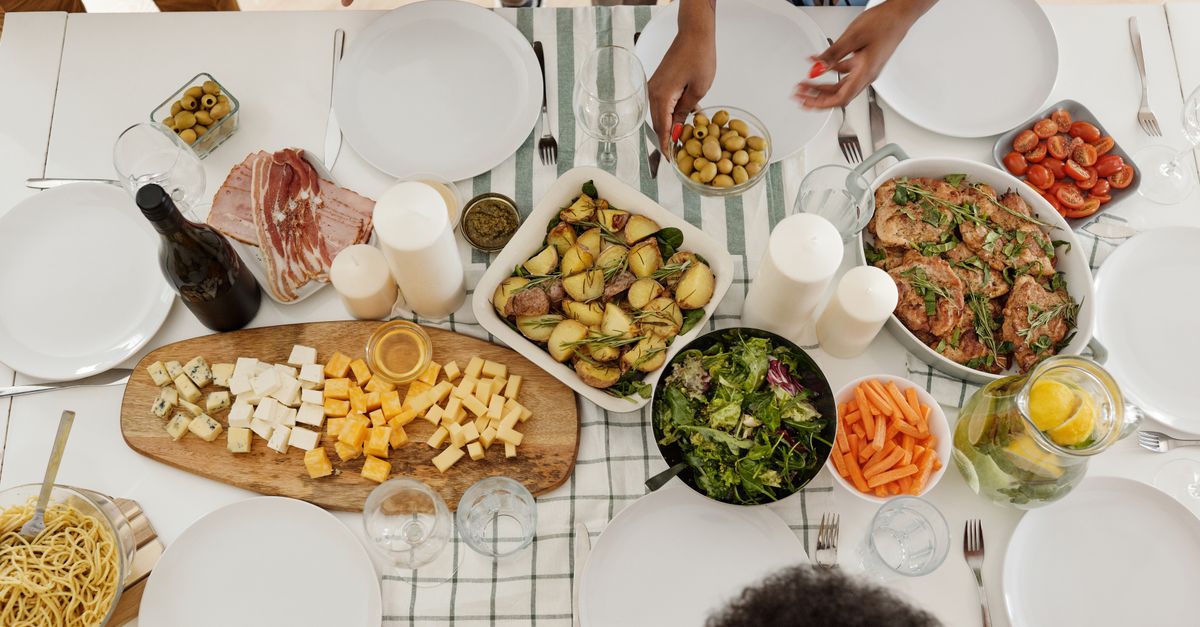
The Grocery Store Aisle Told the Real Story
My favorite part of this whole saga isn't the views. It's what happened in supermarkets.
Within months, feta sales in Finland reportedly jumped so sharply that some stores struggled to keep it stocked, and grocery chains in the US and UK reported similar spikes. That's when I knew this wasn't just internet noise. When a viral recipe moves product on a national scale, it's crossed from "trend" into behavioral shift.
And the science of why is honestly delightful: humans are social learners. We copy what our group does, especially when the cost of copying is low and the reward is visible. Psychologists call it social proof, but in food it's older than language — eating what others eat is one of the oldest safety mechanisms we have. TikTok just compressed a decade of word-of-mouth into a weekend.
What This Actually Teaches Us About Virality
So no, there's no secret lab that engineered the feta pasta. But there is a formula hiding in plain sight: primal sensory trigger + satisfying transformation + zero-skill barrier + algorithmic remixability. Miss any one of those and you get a nice recipe that 4,000 people save and nobody makes.
Here's my challenge to you. Next time something goes viral — a recipe, a gadget, a dance — don't just scroll past it. Ask yourself which of those four boxes it checks. You'll start seeing the machine underneath the magic. And the next time you're standing in the dairy aisle wondering why there are only two blocks of feta left, at least you'll know exactly who to blame.
Probably me. I've made it four times.