Let's be honest: for the better part of a decade, we treated the physical world like a laggy server we were trying to log out of. We optimized our lives for the digital realm—ordering food so we didn't have to talk to a cashier, streaming movies so we didn't have to sit next to a stranger, and "connecting" via DMs so we never had to risk an awkward silence in person.
I thought the pandemic would be the final nail in the coffin for the physical hangout. I was wrong.
The most surprising scientific trend of the last two years isn't a new AI model or a crypto breakthrough—it's that Gen Z is dragging us all back to the library.
And not just to study. They're going there to exist.
The "Third Place" Theory and Why Your Brain Is Starving for It
Sociologist Ray Oldenburg coined the term "third place" back in the 1980s. The concept is simple: you have your first place (home) and your second place (work/school). A third place is a neutral ground where you can just be without spending money or fulfilling an obligation.
Think diners, coffee shops, barber shops, community centers, and yes, libraries.
For decades, these spaces were dying. Malls became ghost towns. Diners got replaced by delivery apps. We decided that efficiency was more important than community. But here's what most people miss: the human nervous system hasn't evolved to handle the isolation of the digital age.
We are social creatures biologically wired to co-regulate. When you sit in a room with other humans who are calm and focused, your vagus nerve actually responds. Your heart rate slows down. You feel safer.
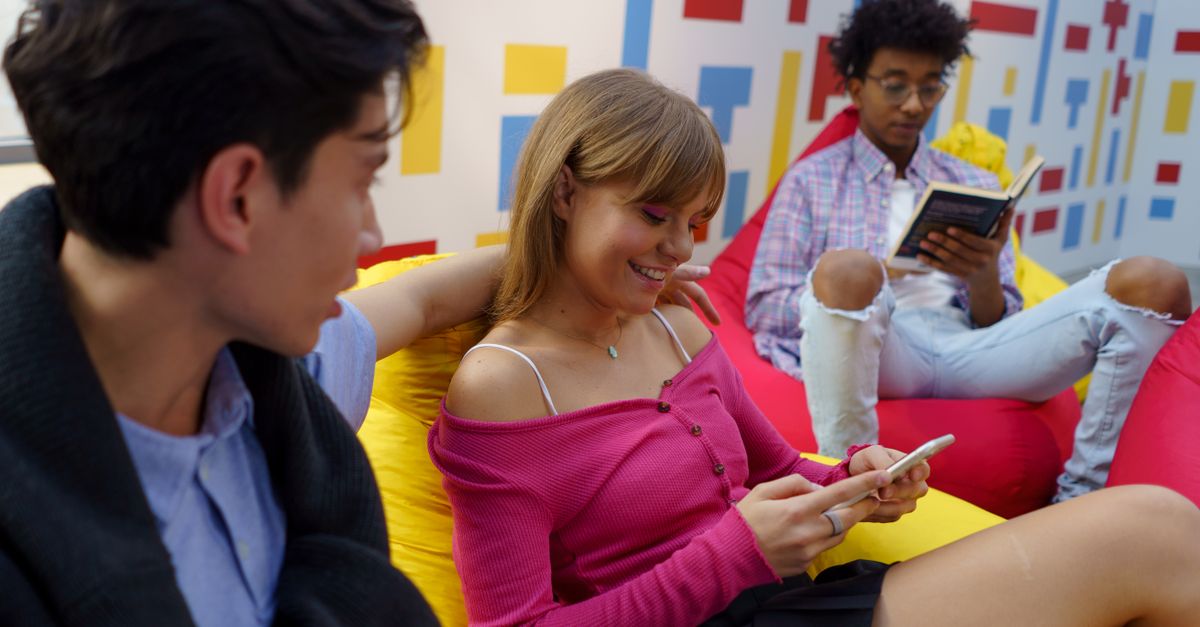
I've found that the rise of the "third place" isn't just a nostalgic trend. It's a biological correction. We are starving for low-stakes social interaction. We don't want a party. We don't want a networking event. We want to sit near other people and read a book in silence. That is a radically new concept for a generation raised on hyper-stimulation.
Why the Library Is the New Nightclub (No, Seriously)
If you want to see the future of socializing, go to a public library on a Tuesday afternoon. You'll see something shocking: teenagers.
According to recent data from the American Library Association, physical visits to libraries have surged among the 18-24 demographic. Why? Because the library is the last bastion of non-transactional space.
You don't have to buy a $7 latte to sit there. You don't have to shout over a DJ. You don't have to look cool.
Here's what makes libraries the perfect third place for Gen Z:
- They are free (mostly). In an economy where everything costs money, the library offers climate-controlled comfort and Wi-Fi for the price of existing.
- They offer "parallel play." You can be alone, but together. You can scroll your phone or read a book, and you're still part of a collective.
- They provide a "vibe." Let's be real—the aesthetics of a library are unmatched. The lighting, the silence, the smell of old paper. It's a sensory reset from the chaos of the internet.
The Diner Effect: Why We Crave the 2 AM Booth
It's not just libraries. The classic American diner is having a moment, too. But the reason isn't the food—it's the booth.
The diner represents a specific kind of democracy of space. It doesn't matter if you're a construction worker or a tech founder; you get the same greasy eggs and the same booth. In a world that is increasingly stratified by algorithms and income brackets, the diner is a level playing field.
The rise of the diner is a rebellion against the "curated" life.
We spend all day curating our Instagram feeds, our LinkedIn profiles, and our Spotify playlists. We are constantly performing. The diner, with its sticky menus and fluorescent lights, is the one place where you don't have to perform. You can show up in sweatpants, order a coffee, and sit for three hours.

I've found that these community spaces are vital for what psychologists call "weak ties." These are the casual relationships we have with the barista, the librarian, or the guy who always sits in the corner. They aren't our best friends, but they are crucial for our mental health. They make us feel like we belong to a neighborhood, not just a zip code.
The Science of Sanity: What Happens When We Share Space
So, what is actually happening in our brains when we frequent these third places?
It comes down to serendipity. The internet is designed to give you exactly what you want. It's an echo chamber of your own preferences. Third places are chaotic. They are unpredictable. You might overhear a conversation that changes your mind. You might see a flyer for a local band. You might meet someone who doesn't share your exact worldview.
This friction is good for your brain.
Studies in neuroscience suggest that novelty and environmental complexity stimulate neuroplasticity. When you go to a new diner or a different library branch, your brain has to process new information. It stays sharp. The digital world is a flat line of dopamine hits. The physical world is a jagged, messy, beautiful landscape.
Let's be honest: we are lonely. The Surgeon General has declared loneliness an epidemic. We tried to solve it with Zoom calls and Discord servers. It didn't work. You can't hug a Discord server.
The revival of the third place is a collective admission that we need physicality. We need to smell the coffee. We need to feel the weight of a book. We need to hear the hum of a dishwasher in the background.
How to Find Your Third Place (and Why You Should)
If you don't have a third place, you are missing out on a fundamental part of the human experience. You are living in a two-dimensional world.
Finding one isn't hard, but it requires a mindset shift. You have to stop treating everything as a transaction.
- Stop optimizing. Don't look for the "best" coffee shop. Look for the one that is closest to you. Proximity breeds habit.
- Go alone. You don't need a crew. In fact, going alone is better. It makes you approachable. It forces you to sit with yourself.
- Be a regular. The magic of the third place comes from repetition. You have to go enough times that the staff knows your order. That's when the space transforms from a business into a community.
We want to sit in a sticky booth. We want to whisper in a library. We want to be human.
So, here's my challenge to you: this week, find a third place. Go there. Leave your phone in your pocket. Just sit. Watch the world happen around you. You might be surprised by what you find.





