I stumbled on a stat last month that stopped me mid-scroll: Americans now spend roughly 15% less time socializing face-to-face than they did just two decades ago. Read that again. We didn't just get busier — we quietly amputated the casual, unplanned, "hey, you're here too?" parts of our social lives.
And yet, every time I walk into my neighborhood café at 10 a.m. on a Tuesday, the place is packed. Not with people buying $7 lattes to post on Instagram — with people working, reading, arguing about football, and just existing in the same room. Something's happening here, and it's got more financial teeth than most people realize.

The Weird Economics of Just Showing Up
Let me define the term, because "third place" sounds like something a sociologist invented after three glasses of wine. (He did — Ray Oldenburg, in his 1989 book The Great Good Place.) A third place is anywhere that isn't home (first place) or work (second place) — a neutral ground where you go without a formal agenda, and where the only cost of entry is being present.
Here's what most people miss: third places are economic infrastructure disguised as leisure. Oldenburg argued that healthy democracies and healthy local economies both depend on these informal gathering spots. He wasn't being romantic. He was being practical.
Think about your own spending. Where did you last have a conversation that changed your mind about something? A conference? Probably not. For me, it was a library reading room in Chicago, where a retired accountant explained why my entire understanding of inflation was upside down. Cost of that education: zero dollars.
The financial case for third places is simple: they're the cheapest form of social capital we have. And social capital — trust, weak ties, favors owed — is the raw material of every business deal that gets done on a handshake.
Why Your Local Library Is the Best ROI in Your City
I've found that libraries are the most underrated line item in any city budget. People treat them as charity. They're not. They're subsidized co-working space, job-training center, and community living room rolled into one.
The numbers back this up. Studies on library return-on-investment routinely find that for every dollar a community spends on its library, it gets back several dollars in measurable value — job search assistance, internet access, early literacy, small business research. You want a stimulus package that actually works? Fund the building with the free Wi-Fi and the nice retirees.
And here's the part that genuinely surprised me: libraries have quietly become small-business incubators. I know at least three people who launched side hustles using nothing but library meeting rooms, free databases, and the reference librarian who knows every grant program in the county. Try getting that from a $200/month co-working membership.
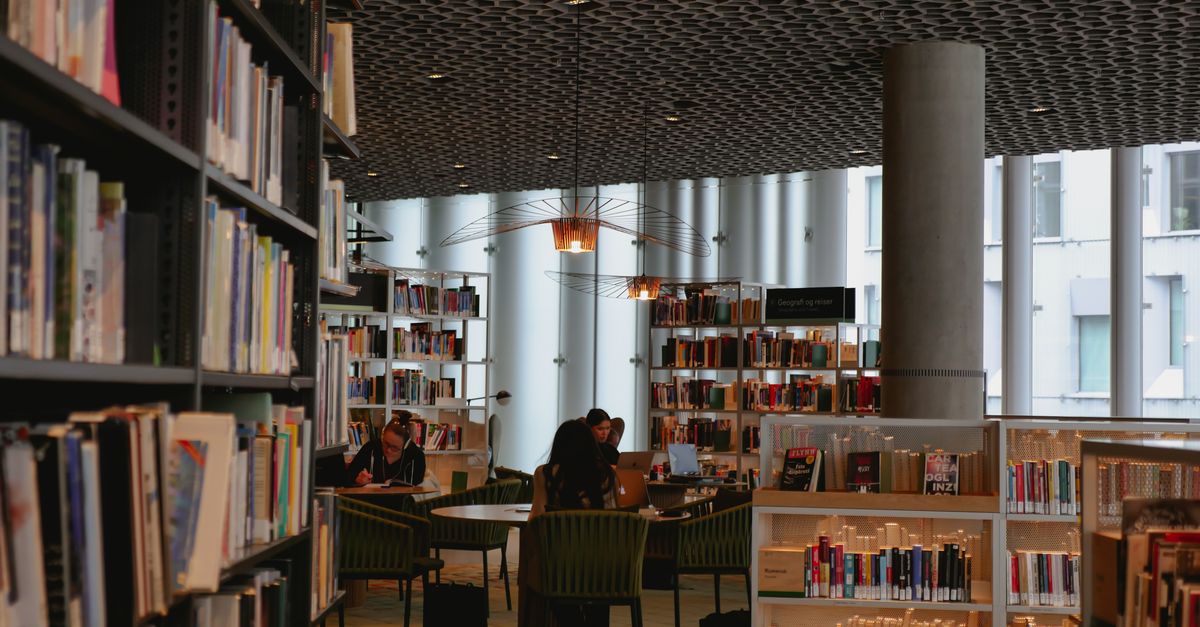
Let's be honest — the café gets all the aesthetic credit, but the library does the heavy lifting.
The Café as Financial Therapy (Seriously)
Now, the café. I'm not going to pretend that spending $6 on a flat white is a sound financial decision in isolation. It isn't. But framing a café visit purely as a product purchase misses the point entirely.
A café does something no home office can: it gives you ambient accountability. I've found that I do my sharpest thinking when strangers are around. There's research on this — the "social facilitation" effect — but you don't need a study to know it's true. You've felt it. The mild pressure of being perceived keeps you off your phone and on your work.
Financially, that $6 buys you:
- A three-hour office without a lease or utilities
- Weak-tie networking — the barista who knows a guy, the regular who's hiring
- A reason to leave the apartment, which is its own mental health subsidy
- Serendipity, the one asset you can't budget for
The Hidden Business Case Nobody Talks About
Here's where this crosses from lifestyle writing into cold, hard finance. Third places reduce the cost of trust.
In a world where everyone works remotely and hires through screens, the ability to verify that a person is normal — that they show up, that they're not a maniac, that they treat the staff well — has become wildly valuable. Where do you do that verification now? LinkedIn? Good luck.
I've watched small businesses get started because two regulars at the same coffee shop realized they had complementary skills. I've seen freelance gigs land in library study rooms. The informal economy runs on proximity, and proximity is exactly what we've been starving.
The companies that understand this are quietly investing in it. WeWork figured out the real estate play years ago, but the smarter move is the neighborhood version: the café with good tables and no time limit, the library with a maker space. They're not selling coffee or books. They're selling the chance to be around other humans without a meeting invite.

The Real Risk Isn't Coffee Prices — It's the Death of the "Regular"
Let me end with the uncomfortable part. Third places only work if they're accessible, and accessibility is a financial policy question, not a lifestyle preference. When rents spike, the café closes. When budgets tighten, library hours shrink. When zoning favors parking lots over plazas, we lose the benches where strangers become acquaintances.
So what do you do about it? Simple:
- Pick one third place and become a regular. Frequency is the currency.
- Pay for presence, not perfection. The slightly scuffed café beats the perfect one you visit once.
- Defend the boring stuff. Show up to the library board meeting. Vote for the sidewalk. It's not glamorous, but it's the highest-yield investment in your community's social capital.
The best financial move you'll make this month might cost you $4.50 and an hour of your time. Show up. Someone's already there.