
I'm going to say something that might get me roasted in the comments: the Apple Vision Pro is not the future of computing. It's the beautifully overpriced prototype of it.
And I mean that as a compliment. Sort of.
Here's the thing. When Apple dropped the Vision Pro in early 2024, the internet split into two camps faster than you can say "spatial computing." Camp one screamed "this changes everything." Camp two screamed "three and a half grand for a heavy ski goggle?" Both camps are right, and both camps are missing the actual story.
Let me explain why.
The $3,500 Elephant Sitting on Your Face
Let's be honest about the hardware first. The Vision Pro is genuinely astonishing engineering. The eye tracking is so precise it feels like it's reading your mind. The passthrough video is good enough that you forget you're looking at cameras most of the time. The spatial audio makes you flinch when someone "walks up" behind you.
I tried one at a mall demo in Los Angeles last spring. Forty minutes later I walked out genuinely disoriented — not because the tech was bad, but because it was so good that re-entering regular reality felt like a downgrade. That's a first.
But here's what most people miss: Apple didn't build the Vision Pro to sell ten million units in year one. They built it to claim the spatial computing category before anyone else could define it. Mark Zuckerberg's Meta has been grinding on this for a decade with Quest headsets, and Apple still managed to walk in and own the conversation in a single keynote.
That's not a product launch. That's a land grab.
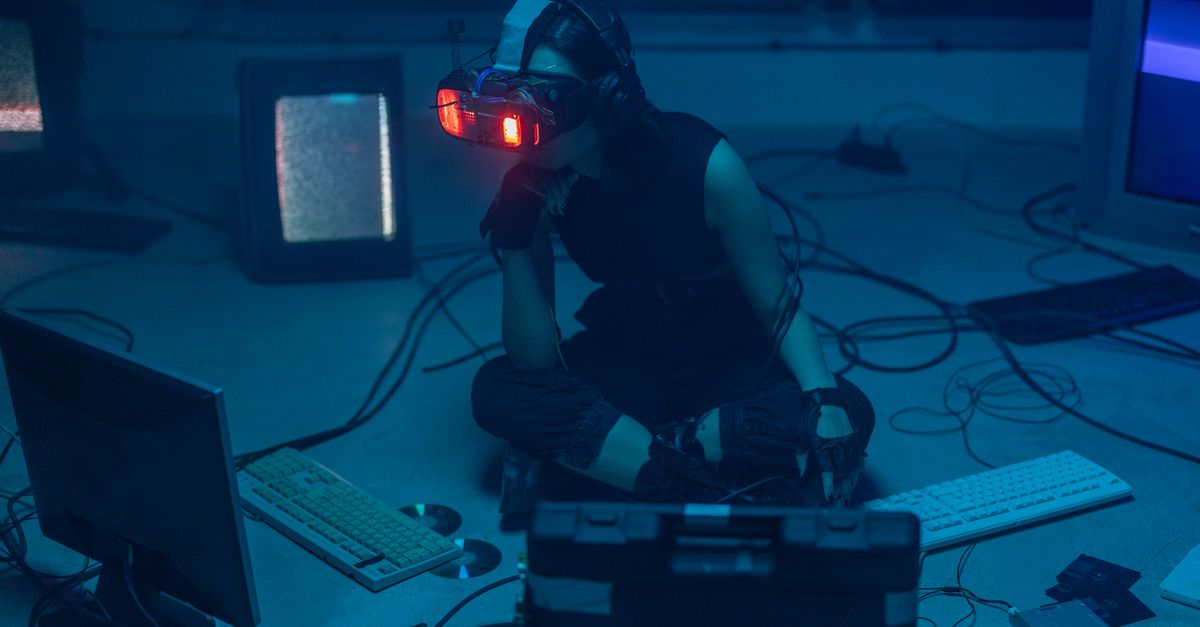
Why Everyone Keeps Saying "Spatial Computing" Like It Means Something
Quick history lesson, because it matters. Remember "the cloud"? In 2008 that phrase was meaningless buzzword soup. Now it's the invisible plumbing behind basically everything you do online. "Spatial computing" is on that same trajectory — annoying now, obvious in a decade.
The term just means computers that understand and interact with three-dimensional space the way your brain does. Instead of tapping a flat rectangle, you point, pinch, glance, and gesture in the room around you. Sounds gimmicky until you realize your phone has been doing a baby version of this for years — Face ID, AR measuring apps, those cursed Pokémon Go summers.
Here's what's actually driving the rise:
- Sensor costs have collapsed. What cost $50,000 in 2015 costs $200 today.
- On-device AI finally caught up. Real-time hand tracking needs serious compute, and Apple's M-series chips made it possible without a data center.
- Remote work broke our screens. People are desperate for something that feels less like a Zoom grid of tired faces.
- Big Tech needs a new platform. Phones are plateauing. Everyone knows it. Nobody says it.
The Uncomfortable Truth About Wearing a Computer
I've found that the people most excited about the Vision Pro are almost never the people who've used one for more than a week. There's a reason for that.
It's heavy. Not "oh, slightly heavy" heavy — neck fatigue by hour two heavy. The battery is a separate puck you clip to your pocket, which is a solution so inelegant it feels like a joke Apple forgot to land. And the isolation problem is real: you're wearing a screen that hides your eyes from everyone in the room, which Apple tried to fix with that creepy digital-eye feature on the front glass.
Let's be honest — nobody wants to see a rendering of your eyes. We want to see your actual eyes.
So we've got a device that's incredible for two specific things: watching movies on a virtual 100-foot screen, and doing focused spatial work like 3D modeling or surgical training. For everything else, it's a $3,500 answer to a question most of us haven't asked yet.

The Hype Cycle Is Lying to You (In Both Directions)
Here's my spicy take: the people calling Vision Pro a flop are just as wrong as the people calling it revolutionary. Both groups are judging a first-generation device by the standards of a mature one.
Think about the original iPhone in 2007. No App Store. No front camera. No copy-paste. Slow network. Reviewers literally called it "overhyped." The hardware wasn't the revolution — the platform was. It took three generations and a developer ecosystem before the magic showed up.
Spatial computing is on that same curve, except the curve is steeper and the stakes are higher. Meta's Quest 3 sells for $500 and does 80% of what most people actually want. Apple's playing a longer, more premium game. And quietly, the real money is moving into enterprise — Boeing using headsets for aircraft design, hospitals using them for training, architects walking clients through buildings that don't exist yet.
That's where the rise of spatial computing becomes undeniable. Not on your couch. In the workplace.
So What Do You Actually Do With This Information?
If you're a regular person: don't buy a Vision Pro yet. Wait for gen two. Wait for the price to drop. Wait for the apps to justify it. You're not missing anything except a very expensive neck workout.
If you're a developer, designer, or founder: start learning spatial design now. The skills gap is enormous and the demand is coming whether you're ready or not.
If you're just curious: go do a demo. Seriously. Even if you never buy one, feeling spatial computing in person rewires something in your brain about what interfaces can be. It's the closest thing to time travel I've experienced in a mall.

The Question Nobody's Asking Out Loud
We keep debating whether the Vision Pro is the future. Wrong question.
The right question is: what happens when the hardware becomes invisible? When the goggles weigh nothing, cost $400, and last all day on a charge — do we still call it "spatial computing," or do we just call it "computing" and forget the headset was ever a big deal?
My bet? By 2032 we'll look back at the Vision Pro the way we look at the 2007 iPhone. Clunky. Limited. Kind of adorable. And absolutely essential to everything that came after.
The future rarely arrives fully formed. It usually shows up heavy, expensive, and a little bit embarrassing — and then it quietly becomes the thing you can't live without.
So here's my challenge to you: go try one. Then come back and tell me I'm wrong. I'll be here, waiting, with my neck intact.





