
It was 7:43 AM on a Tuesday, and I was having my weekly "negotiation" with my seven-year-old. The terms? Whether she really needed to wear the unicorn costume to school, or if her regular clothes were acceptable. I lost. As I drove her to school, passing the line of minivans idling at the drop-off zone, I had a thought that felt almost heretical: There has to be a better way than this.
I’m not talking about the unicorn costume. I’m talking about the system.
That morning, my daughter wasn't excited to learn. She was excited to see her friends. She wasn't asking questions about the world; she was asking if we had snack money. It wasn't a failure of her teachers—it was a failure of the format. One teacher, thirty kids, a bell schedule that treats children like factory workers punching a clock.
Then I started noticing a quiet rebellion happening in my neighborhood. A neighbor’s kid was suddenly reading at a 6th-grade level in 1st grade. Another family suddenly had way more time for extracurriculars. They weren't doing expensive private school. They weren't doing the scary "homeschooling" thing where the kids never see other humans.
They had joined a micro-school.
If you haven't heard of this yet, you're about to see it everywhere. And honestly? It might be the biggest shift in education since the printing press. Let me break down why parents (myself included) are starting to look at the old red brick schoolhouse and say, "Thanks, but no thanks."
The Coffee Shop Classroom (And Why It Works)
Here’s what most people miss: Micro-schools aren't just "smaller classrooms." They are a completely different operating system for learning.
I visited one last month in a converted garage. It was chaotic in the best way. There were kids aged 6 to 12 sitting on couches, some with laptops, some with clay, one kid was literally lying upside down on the floor reading a book about sharks. There was no "front of the room." There wasn't a chalkboard with the word "WELCOME" in perfect cursive.
Instead, there was a guide—not a "teacher" in the traditional sense—facilitating. She asked questions. She didn't lecture.
Think of a micro-school like a Spotify playlist instead of a radio station. In a traditional class, everyone listens to the same song at the same volume, whether they like it or not. In a micro-school, the playlist is curated for the individual learner. If you hate pop music (fractions), you switch to jazz (geometry) for a bit. The goal is mastery, not just "sitting for 45 minutes."
I've found that the magic isn't just the curriculum; it's the agency. When kids have a say in how they learn, they stop fighting the clock.
The Hidden Cost of "Free" Public School
Let's be honest about the elephant in the room: money. Public school is "free" (we pay taxes, but you know what I mean). Micro-schools often come with a price tag. But here's the kicker that the critics ignore—the hidden costs of traditional schooling are astronomical.
I'm not just talking about the PTA bake sales or the $100 for school supplies. I'm talking about the opportunity cost.
- The Stress Tax: The homework battles at 6 PM. The crying over spelling tests. The anxiety about standardized tests that don't measure anything real.
- The Health Tax: The constant germ exchange. The flu that takes out your entire family for two weeks because little Johnny "toughs it out" in class.
- The Time Tax: The 8-hour day that leaves kids exhausted, leaving no time for deep play or hobbies.
Most parents I talk to aren't rich. They are just desperate for sanity. They are sacrificing brunches and vacations to pay for a learning environment that doesn't crush their child's spirit.
The "3 C's" That Are Killing the Traditional Model
We can point fingers at teachers (we shouldn't—they're overworked), or at the curriculum, but the real problem is structural. The current model is hitting a brick wall because of what I call the 3 C's:
- Class Size: You cannot differentiate learning for 30 kids with one adult. It's physically impossible. You end up teaching to the middle, which means the gifted kids are bored and the struggling kids are lost.
- Compliance: The system rewards kids who sit still and shut up. But the world rewards kids who ask questions and can't sit still because they're too busy building things.
- Curriculum: We are teaching kids content that is freely available on the internet. The skill of the future isn't memorizing the capital of Montana; it's knowing how to find the capital and apply it to a problem.
Why "Homeschooling" Failed (But Micro-Schools Won't)
If you're a parent, you've probably considered homeschooling. I tried it for two weeks during the pandemic. I quit because I nearly lost my mind.
The problem with traditional homeschooling is the isolation. It puts the entire burden of teaching on the parent, who—surprise—isn't trained to be a teacher and also has to cook dinner.
Micro-schools fix this. They are the "best of both worlds."
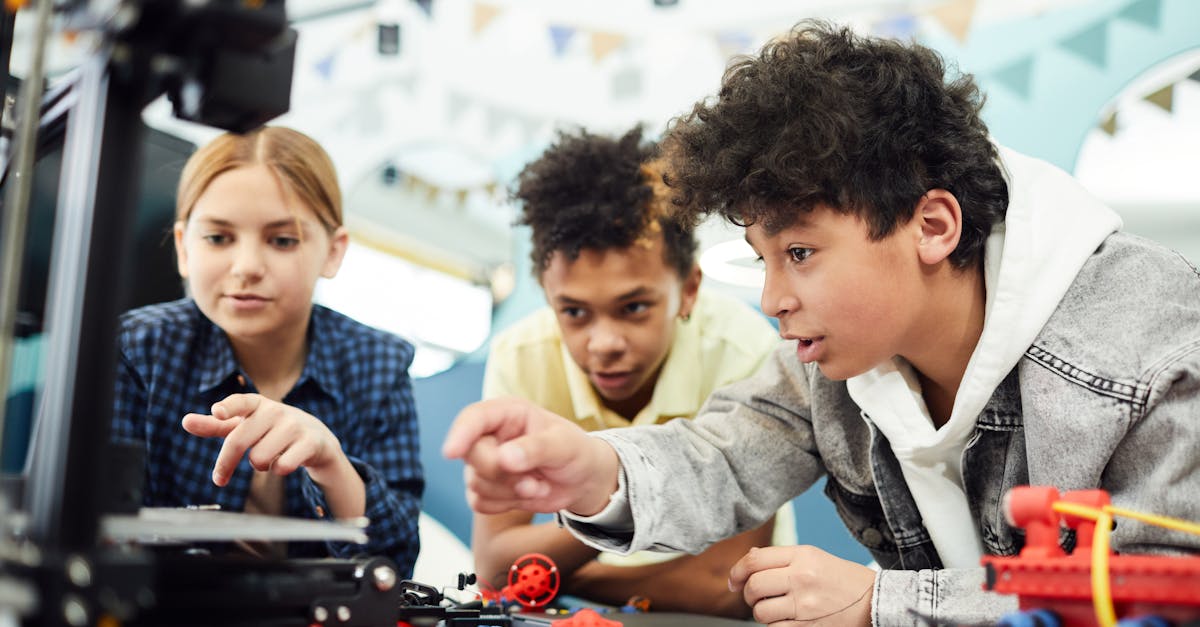
Think of it like a co-op. Parents pool their resources (money and time) to hire a facilitator. The kids get the social interaction they need (and the parents get a break). The learning is personalized, but it happens in a group setting. It's not a kid staring at a screen alone at the kitchen table. It's a kid collaborating with peers on a project about weather systems, with a guide there to help when they get stuck.
The Tech Factor: AI Tutors and the "Khan" Effect
We can't talk about the rise of micro-schools without talking about the elephant in the room: AI and EdTech.
Ten years ago, if you wanted to start a school, you needed a building, a principal, and a district superintendent. Now? You need a good Wi-Fi connection and a subscription to a couple of learning platforms.
Micro-schools are leaning heavily into tech. They use tools like Khan Academy or AI tutors to handle the "drill and kill" (the repetitive practice), which frees up the human facilitators to do what they do best: mentor, inspire, and challenge.
I've seen kids in these settings who are bored out of their minds in regular school absolutely fly through math concepts on an adaptive app. Because the app adjusts the difficulty in real-time, the kids never feel dumb, and they never feel bored. They are in a state of "flow." It’s a beautiful thing to watch.
Is This the Future or Just a Fad?
Critics will say this is just a trend for the elite. And they have a point, to a degree. We need to be careful that this doesn't become a "walled garden" for the wealthy, leaving the public school system even more underfunded.
But I see a different future. I see micro-schools as the R&D department for education.
Public schools are too big to pivot quickly. They are like giant cruise ships—it takes miles to turn them around. Micro-schools are like jet skis. They can try new things, fail fast, and iterate.

The parents leaving the system aren't doing it to destroy public education. They are doing it because they are tired of waiting for the cruise ship to turn. They are building their own boats.
And honestly, the freedom is intoxicating. The idea that my kid isn't defined by her age group, but by her actual ability level? That's a game-changer.
The Question You Need to Ask Yourself
So, what do we do with all this? I'm not here to tell you to yank your kids out of school tomorrow. That would be irresponsible. Public schools still do a vital job for millions of families.
But I am here to tell you that you have options. You are not trapped.
Action Step: This weekend, instead of scrolling through Instagram, Google "micro-schools near me" or "learning pods in [your city]." Just look. See what's out there. Even if you just find one and talk to the founder, you'll start to see a different way of doing things.
The old model of education was built for the Industrial Revolution. We are living in the Information Age. It's time our kids' classrooms caught up.
The question isn't whether your kid is "good enough" for the school. The question is whether the school is good enough for your kid. And for a growing number of us, the answer is a resounding "no."
So, are you ready to look under the hood of a system we've just accepted for 100 years? Or are you going to keep waiting for the bell to ring?





