Picture this: you're scrolling through Spotify, and a track stops you cold. The hook is infectious, the production is immaculate, the vocalist has this raw, aching tone that feels impossibly human. You dig into the credits. And that's when you see it — the artist didn't record this alone. An AI co-producer sat in on the session. And honestly? The song slaps anyway.
The Ghost in the Studio Isn't the Villain You Think
I've been following this space closely, and I keep landing on the same conclusion. AI music tools like Suno, Udio, and the production suites baked into Logic and Ableton aren't replacing the artist's voice. They're replacing the tedious middlemen — the endless takes, the demo sessions that go nowhere, the beat you hear in your head but can't quite build at 2 a.m.
Think about how your favorite records actually get made. Nobody sits down and wills a masterpiece into existence in one pass. It's iteration. It's 40 versions of a chorus. It's humiliating yourself in front of a producer until something clicks.
AI just compressed that loop. It's a tireless session player who never gets tired of your half-formed ideas.

Artists Who Are Actually Doing This (And Doing It Well)
The real story is quieter and way more interesting. Producers are feeding AI their own old demos to generate variations they'd never have thought of. Singer-songwriters are using vocal models trained on their own voice to lay down scratch tracks before a real session. Grimes literally invited fans to clone her voice and split the royalties — a move that felt like chaos but was actually a blueprint.
Here's what most people miss: the artists leaning into AI are the ones with enough confidence in their identity to let a machine play in their sandbox. If you know who you are sonically, a tool can't steal that from you. It can only riff on it.
The Secret Sauce Is Still Human (Sorry, Robots)
I've found that the AI music that actually connects has one thing in common — a human making the final call. The machine can generate 500 hooks. It can't tell you which one makes your chest ache. It doesn't know your ex's name, or why that specific chord change reminds you of your dad's old truck.
That editorial instinct? That's the whole game.
Three things AI still can't fake, no matter how good the model gets:
- Lived context — the grief, humor, and mess that makes a lyric land
- Risk — the artist's willingness to make something that might flop
- The moment — a song that captures a cultural second in time

Why "Losing Your Sound" Is a Choice, Not a Consequence
The fear is real, so let's not pretend it isn't. Feed enough AI into your process and you can drift into generic territory. I've heard tracks that sound like they were made by committee — because in a sense, they were. The algorithm optimized the soul right out.
But that's not an AI problem. That's a taste problem dressed up as a tech problem.
The artists who keep their sound do one thing consistently: they use AI as a starting point, never the finish line. They train models on their own catalog. They treat outputs as raw material, not final product. They stay in the room for the decisions that matter.
Compare that to the folks uploading prompts and calling it a day. One group is expanding their palette. The other is outsourcing their identity. Same tool, opposite outcomes.
The Industry Is Already Rewriting the Rules
Streaming platforms are scrambling. Labels are drafting AI clauses into contracts. Copyright offices are trying to figure out who owns what when a machine co-writes the hook. It's messy, and it's going to stay messy for a while.
But here's the thing I keep coming back to — every major music technology sparked the same panic. Drum machines were going to kill real drummers. Sampling was going to kill originality. Autotune was going to kill actual singing. And yet here we are, with more music, more artists, and more weird, wonderful sounds than ever.
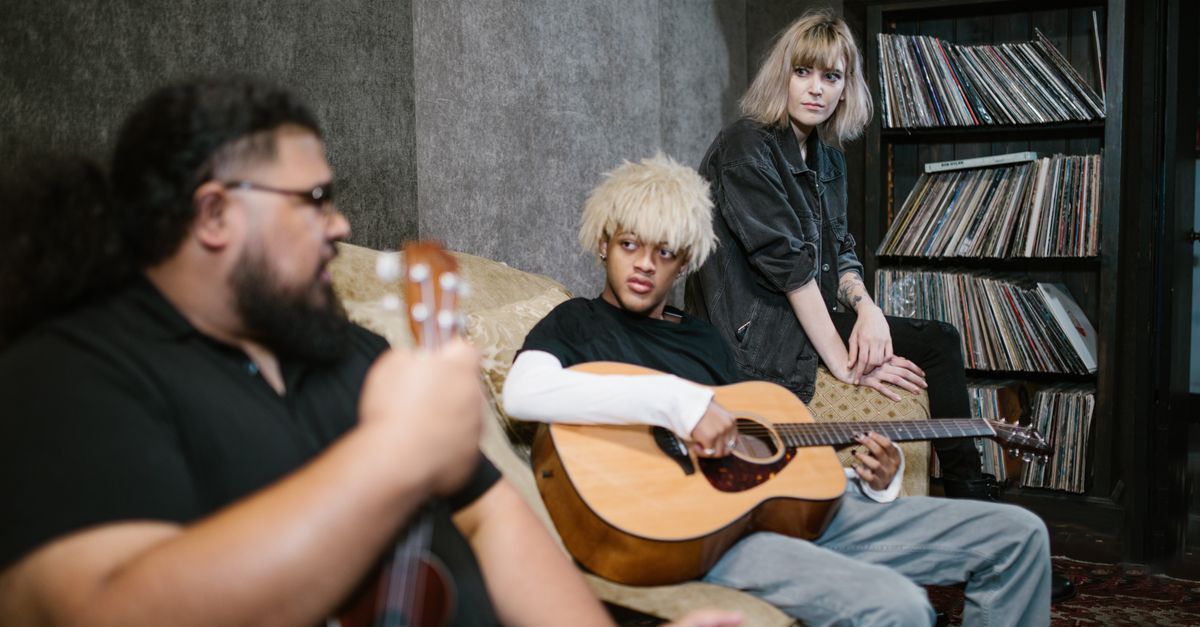
So here's my challenge to every artist reading this: stop asking whether AI will replace you and start asking what it can unlock that you couldn't reach alone. Train it on your own sound. Break it on purpose. Use it to get to the version of the song you were too scared to attempt.
The robots can generate the notes. They just can't feel them. That part's still yours — and it always will be.


