Let me tell you something that sounds like it was ripped straight from a sci-fi novel: scientists have created a time crystal, and it actually breaks the laws of physics as we know them.
I know, I know. "Time crystal" sounds like something you’d find in a Marvel movie or a bad 90s video game. But it's real. And it's arguably one of the most mind-bending discoveries in modern physics. When I first read about this, I had to sit down. Not because I'm dramatic, but because the implications are so wild that even seasoned physicists are scratching their heads.
Here's the deal: a time crystal is a new phase of matter — like solid, liquid, gas, or plasma — but with a terrifying twist. It moves without using energy. It oscillates, or "ticks," in a perpetual loop, never settling into a static state. And it does this without ever breaking the laws of thermodynamics? Well, sort of. Let's dig into the mess.
The "Perpetual Motion Machine" That Isn't
Let’s be honest: the first thing that pops into your head is a perpetual motion machine, right? The holy grail of free energy that every crackpot inventor has chased for centuries. But here's what most people miss: time crystals don't produce energy. They just... keep moving.
Think of a normal crystal — like a diamond or a snowflake. The atoms are arranged in a repeating pattern in space. A time crystal does the same thing, but in time. The atoms flip, spin, or change state in a repeating pattern, forever, without any external push.
I’ve found that the easiest way to visualize this is with a pendulum. A normal pendulum swings until friction stops it. A time crystal is like a pendulum that swings back and forth, never slowing down, but also never giving you any energy to power your toaster. It's not outputting work — it's just existing in a state of constant, low-energy motion.
This breaks the second law of thermodynamics — the one that says entropy (disorder) always increases. In a time crystal, the system is stuck in a low-entropy loop, essentially saying "Nope, I'm not decaying." It's a loophole in reality.
How Do You Even Make Something Like This?
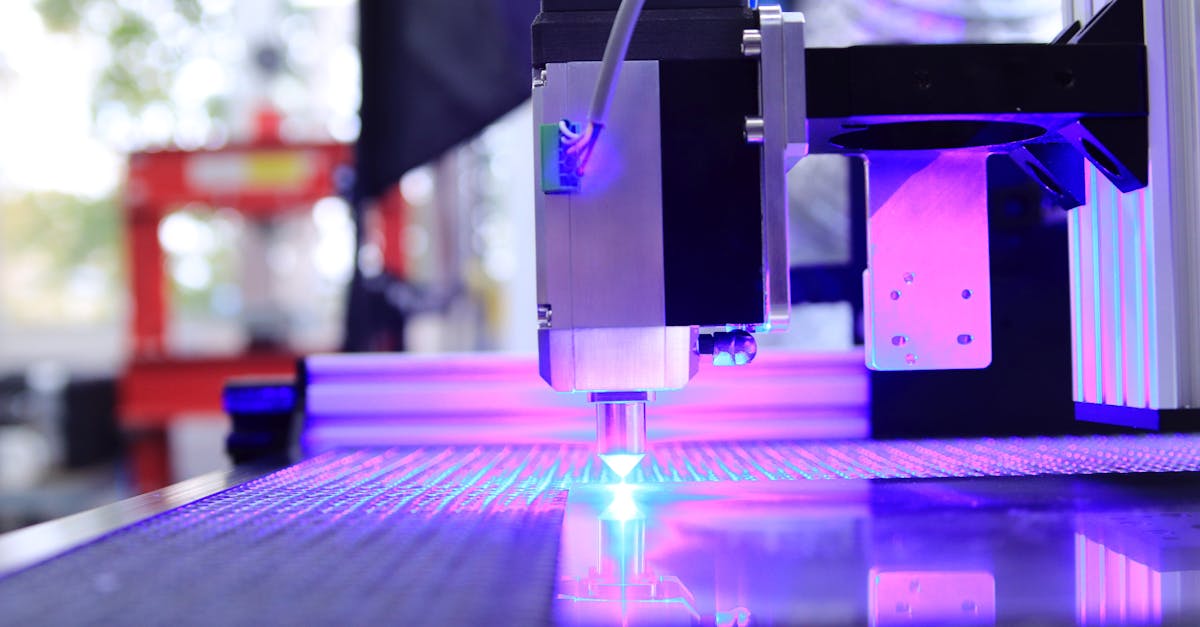
Here's the part that blew my mind: you can't just go to the store and buy a time crystal. They are built in quantum systems using lasers and a whole lot of cryogenic cooling. The first real evidence came in 2016, but recent experiments in 2024 have pushed the boundaries further.
The secret sauce is quantum entanglement and a phenomenon called "discrete time translation symmetry breaking." I know, that's a mouthful. Let me simplify it.
In normal physics, the laws of time are symmetrical — if you run the clock forward or backward, the same rules apply. A time crystal breaks this symmetry. It ticks at a different frequency than the laser pulse that's driving it. Imagine you're pushing a swing once every second, but the swing decides to move once every two seconds. That's not supposed to happen. But in the quantum world, it does.
The physicists at Google's Quantum AI lab and other research groups have created these crystals in qubit arrays. They "pump" the system with energy, and instead of heating up or settling, the system enters a stable, oscillating state that defies thermal equilibrium.
It's like a quantum clock that doesn't need winding. And it might be the key to unlocking the next era of technology.
Why Should You Care? (Spoiler: It's Not Free Energy)
I get it — you're probably thinking, "Cool, but what does this do for me?" And you're right to ask. We're not going to be powering our iPhones with time crystals anytime soon. But the implications are massive.
Here’s what excites me most:
- Quantum Computing Stability: The biggest problem in quantum computing is decoherence — qubits lose their quantum state in microseconds. Time crystals are inherently stable over time. If we can use them as memory or logic elements, we might get error-corrected quantum computers that actually work outside a lab.
- Extremely Precise Sensors: A time crystal ticks at a fixed frequency. That means it could be used as a sensor for magnetic fields, gravity, or even dark matter. Imagine a GPS that works underground or a medical scanner that detects single cells.
- Fundamental Physics Breakthroughs: We are literally poking at the fabric of spacetime. Understanding time crystals could help us reconcile quantum mechanics with general relativity — the holy grail of physics. That's research that could reshape our understanding of reality itself.
- New Materials Science: If we can stabilize time crystals at room temperature (we're not there yet, but research is ongoing), we could create materials that never age. No more rust, no more decay. That's a long shot, but it's a possibility.
The "So What?" Factor

Here's what I think most science blogs miss: we are living through a revolution that feels slow because the results aren't on store shelves yet. But look at history. When scientists first discovered superconductors, people said "So what?" Now they power MRI machines and particle accelerators.
When we first built lasers, they were called "a solution looking for a problem." Now they're in your phone, your internet, and your eye surgery.
Time crystals are in that awkward phase right now. We know they exist. We know they break the rules. But we don't fully know what to do with them yet. And that's the most exciting part.
I've found that the best way to think about this is: time crystals are the first glimpse of a new kind of clockwork universe. Instead of gears and springs, we have quantum spins and entanglement. Instead of winding down, they keep ticking forever.
The Real Truth: We're Playing with Fire (and Ice)
Look, I'm not going to pretend I understand all the math behind this. I'm a blogger, not a Nobel laureate. But I know a paradigm shift when I see one. We are at the very beginning of understanding a new state of matter that exists outside the normal rules of time.
The next decade is going to be wild. We might see time crystals used to build quantum routers, ultra-secure communication networks, or even devices that probe the nature of time itself.
So here's my challenge to you: Don't sleep on this. The next time someone tells you "physics is boring," tell them about the thing that moves forever without breaking a sweat. Tell them about the crystal that dances to its own clock.
Because the universe is weirder than we ever imagined. And we're just getting started.