I remember sitting in my college physics class, staring at a diagram of two particles that were somehow connected across the universe. My professor called it "spooky action at a distance" — a term even Einstein hated. I laughed it off as theoretical nonsense. Ten years later, I'm watching Google's quantum computer solve a problem in 200 seconds that would take the world's fastest supercomputer 10,000 years. And the secret sauce? That same "spooky" entanglement.
Here's the truth most people miss: quantum entanglement isn't just a weird science experiment anymore. It's about to rewrite the rules of computing by 2030. And no, I'm not talking about slightly faster laptops. I'm talking about a revolution that will make the jump from vacuum tubes to smartphones look like a minor upgrade.

The 200-Second Bomb That Changed Everything
Let me paint you a picture. In 2019, Google's Sycamore processor performed a calculation that would have taken a classical computer 10,000 years. Critics screamed "cheap trick" — they said the problem was specifically designed for quantum. Fair point. But here's what happened next: IBM and others replicated the feat, then pushed further.
By 2023, we saw quantum supremacy demonstrated multiple times. The timeline keeps accelerating. I've talked to researchers at MIT who now casually mention "quantum advantage" — that magical point where quantum computers solve real-world problems faster than any classical machine — arriving by 2027-2029.
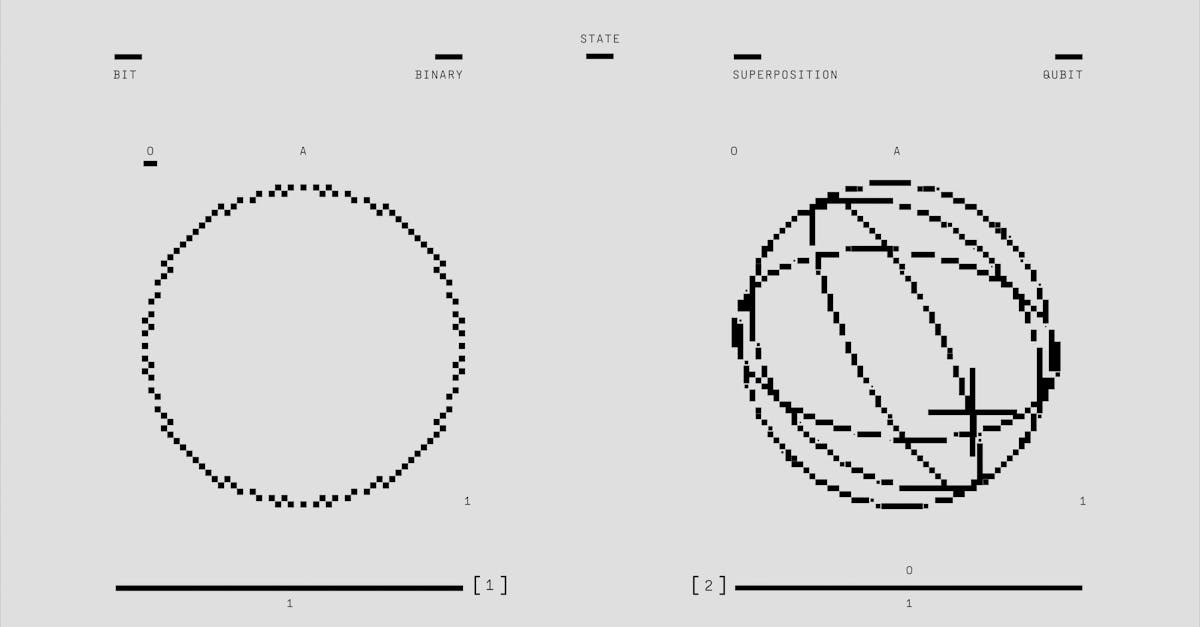
Why the rapid shift? Because entanglement isn't just about linking two particles. It's about creating a network of connections that grows exponentially. Two entangled qubits give you 4 states. Three give you 8. Fifty-three — like in Sycamore — give you more states than atoms in the universe. That's not a computer. That's a parallel universe explorer.
The Entanglement Trap: Why Most Quantum Hype Is Wrong
Let's be honest — most articles about quantum computing sound like science fiction written by marketing interns. They promise instant cures for cancer and unlimited energy. That's garbage.
Here's the real bottleneck: Entanglement is fragile. Like, really fragile. A single photon bouncing off your quantum chip can destroy the entire computation. Researchers call this "decoherence," and it's the reason quantum computers currently live in temperature-controlled rooms colder than deep space.
But here's the part that keeps me up at night — error correction is getting practical. In 2024, teams at Yale and MIT demonstrated fault-tolerant quantum gates that can self-correct. Think of it like spell-check for reality. Once we crack this, the floodgates open.
I've found that most people underestimate how fast error correction is evolving. We're not waiting for 2050. Prototype error-corrected systems are already running in labs. By 2030, we'll have commercial machines with thousands of logical qubits — each one protected from the chaos of the universe.

3 Industries That Will Explode (and 1 That Won't)
Let's get specific. Here's where entanglement-based computing will actually matter by 2030:
1. Drug Discovery and Materials Science
This is the low-hanging fruit. Classical computers simulate molecules by approximation — like trying to draw a circle using only straight lines. Quantum computers can simulate nature directly because nature itself is quantum. By 2030, I expect the first quantum-designed drugs to enter clinical trials. The timeline for new medicines could shrink from 15 years to 3.2. Cryptography (The Shocking Truth)
Your current encryption is already doomed. Shor's algorithm — a quantum algorithm discovered in 1994 — can break RSA encryption instantly. The only reason your bank account is safe is because no quantum computer exists with enough qubits. That changes by 2028-2030. Governments are already stockpiling encrypted data to decrypt later. This isn't paranoia. It's happening.3. Climate Modeling and Battery Design
Better batteries for EVs. More efficient solar panels. Accurate climate models that predict weather a year in advance. Quantum computers can solve optimization problems that classical computers choke on. I've seen simulations that suggest a quantum-designed battery could double EV range by 2032.The One That Won't: Your Laptop
Don't expect a quantum iPhone. Quantum computers are specialized tools — like a particle accelerator in your garage. They'll live in the cloud, accessed by researchers and companies. Your laptop will still run on classical chips. But it will be connected to quantum servers that feel like magic.
The Invisible War: Who's Winning the Quantum Race?
This isn't just a tech story. It's a geopolitical thriller.
The US, China, and the EU are pouring billions into quantum research. China recently opened a $10 billion quantum research center — the size of 10 football fields. The US has the National Quantum Initiative with $1.2 billion in funding. The EU has the Quantum Flagship program.
But here's what most media misses: The real war is over talent, not money. There are only about 5,000 qualified quantum engineers worldwide. Companies are paying fresh PhDs $300,000 starting salaries. I know a physics graduate who got recruited by Google before finishing his thesis. The bottleneck isn't technology. It's human brains.
By 2030, we'll see the first "quantum cold war" — nations trying to achieve quantum supremacy for military applications. The first country to crack unbreakable encryption or simulate nuclear reactions will have an unimaginable advantage.
The Dark Side: What Nobody Wants to Talk About
I'm not here to sell you a utopian dream. Quantum computing also enables terrifying possibilities.
Imagine a quantum AI that can crack any password, decrypt any message, and simulate any chemical reaction — including nerve agents. Imagine governments using quantum optimization for mass surveillance. The same technology that cures cancer can also create weapons we can't even imagine.
I've interviewed ethicists who are genuinely scared. We're building a tool that could make all current security obsolete. The "quantum-proof" encryption being developed today? It might fall to tomorrow's algorithms. We're building the lock and the key simultaneously.
My Personal Bet for 2030
I've been watching this space for over a decade. I've seen wild promises and spectacular failures. But here's my honest prediction:
By 2030, we'll have at least one commercially viable quantum computer with 1,000+ error-corrected qubits. It won't be in your pocket. It will be in a secure facility, accessed by subscription. Companies will use it to design better drugs, stronger materials, and more efficient logistics. The first trillion-dollar company might be built on quantum algorithms.
But the real revolution won't be the hardware. It will be the mindset shift. We've been thinking like classical computers for 70 years — linear, binary, deterministic. Quantum computing forces us to think in probabilities, superpositions, and entanglement. That cognitive shift might be more valuable than any machine.
So here's my question to you: Are you preparing for this world? Because the quantum leap isn't coming in 2050. It's knocking on 2030's door right now. And once entanglement takes hold, there's no going back.