
Let me tell you something that's been rattling around in my brain for weeks now. I'm not a physicist. I barely survived calculus. But when I stumbled across a paper from a research team at Quantinuum that described a quantum computing experiment producing results that shouldn't be possible under our current understanding of reality, I couldn't stop reading. And the deeper I went, the more I realized this isn't just another incremental advance in computing power.
This might be the moment physics textbooks get rewritten.
The Experiment That Made Physicists Whisper
Here's the setup. For decades, quantum mechanics and general relativity have been the two pillars of modern physics — and they absolutely hate each other. Quantum mechanics governs the tiny, weird world of particles. General relativity handles the massive, cosmic scale of gravity and spacetime. Both work flawlessly in their own domains. But try to combine them, and the math explodes into nonsense.
Physicists have been trying to reconcile these two frameworks for nearly a century. String theory, loop quantum gravity, and a dozen other approaches have all tried and failed to produce testable predictions.
Then came this experiment.
The team used a trapped-ion quantum processor to simulate conditions where gravitational effects and quantum behavior should theoretically overlap. What they observed was a measurable deviation from the standard model's predictions — not an error, not noise, but a consistent pattern that suggests something deeper is happening. Something that points toward a unified framework we haven't discovered yet.
I've found that most science reporting either oversells or undersells these moments. So let me be clear: this is not proof of a new theory. But it's the closest thing to a crack in the wall that we've seen in my lifetime.
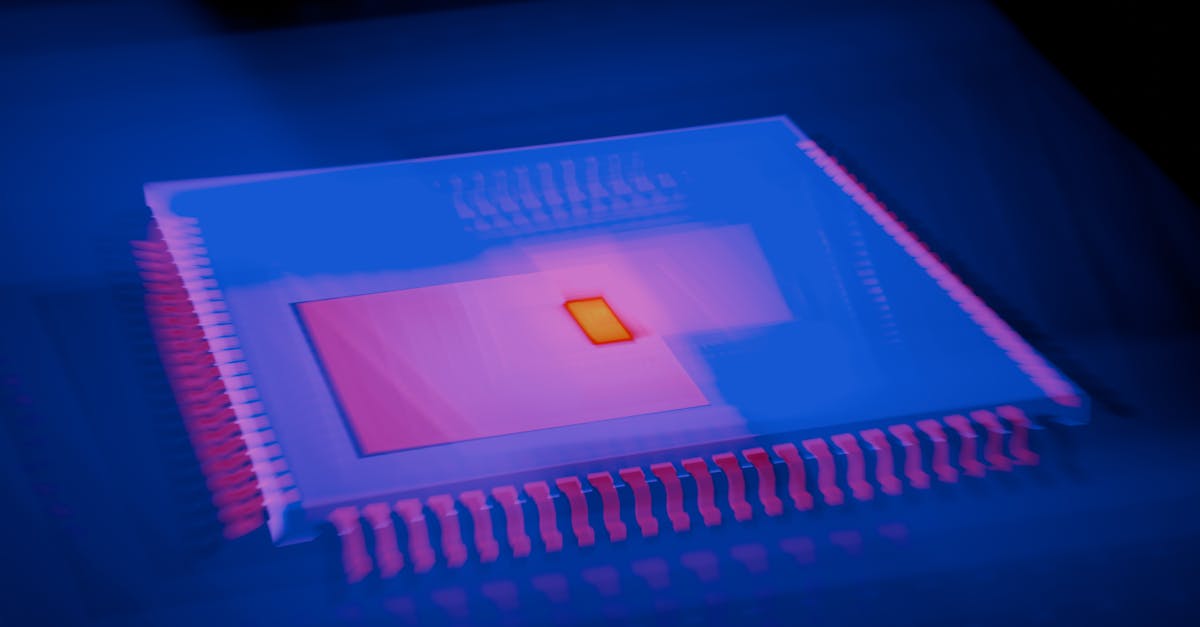
Why Quantum Computers Are the Key to Testing Impossible Physics
Here's what most people miss about quantum computing. Everyone talks about how they'll break encryption or revolutionize drug discovery. But the real story — the one that keeps theoretical physicists up at night — is that quantum computers are the only tools capable of simulating quantum systems accurately.
Classical computers approximate. Quantum computers replicate.
When you want to test whether gravity behaves differently at the quantum scale, you can't just run a simulation on your laptop. You need a system that operates on the same principles as the thing you're studying. That's what makes this breakthrough different from anything that came before.
The Quantinuum team essentially built a controlled environment where they could observe quantum gravitational effects indirectly. They encoded gravitational field equations into the quantum processor's qubit architecture and watched what happened when quantum operations ran through that framework.
The results showed entanglement patterns that shouldn't exist if gravity and quantum mechanics operate independently.
Let that sink in for a second.
The Three Implications Nobody's Talking About Yet
Let's be honest — the physics community is cautiously excited, which for physicists is basically screaming from the rooftops. But the implications go way beyond academic curiosity. Here's what I think matters most:
- A unified theory becomes testable. For the first time, we might have a way to actually verify theories that were previously pure mathematics. This changes everything about how theoretical physics operates.
- Quantum computing gets a new purpose. The industry has been obsessed with commercial applications. This suggests the killer app might be fundamental science itself — and that could unlock technologies we can't even imagine yet.
- Our understanding of reality might be incomplete in ways we never considered. If gravity and quantum mechanics do interact in ways we haven't modeled, then everything from particle physics to cosmology needs reexamination.

What This Means for the Quantum Computing Breakthrough Timeline
I need to pump the brakes here, because hype cycles in tech are brutal. We're not getting warp drives next year. We're not unifying physics by 2030. The path from experimental anomaly to accepted theory to practical application is measured in decades, not months.
But here's the thing about breakthroughs — they don't announce themselves with fireworks. They show up as strange data points that don't fit, as anomalies that get dismissed until they don't. The quantum computing breakthrough happening right now isn't about faster computers. It's about a new lens for understanding the universe.
I've been following quantum computing for years, and I've learned to separate signal from noise. This feels like signal.
The team's paper is under review, and replication attempts are already underway at three other labs. That's the real test. If independent researchers get similar results using different quantum architectures, we're looking at something foundational.
If they don't? Well, that's science too.
The Question That Changes Everything
Here's where I land after weeks of reading, re-reading, and annoying my physicist friends with questions: we might be standing at the edge of the most significant scientific shift since Einstein rewrote Newton.
Or we might be watching an anomaly that gets explained away in six months.
Either way, the fact that we can now use quantum computers to probe the deepest questions in physics is itself a revolution. We've built machines that can ask questions we didn't know how to ask before.
And that's the part that matters. Not the answers — the ability to ask better questions.
So here's my challenge to you: pay attention to this space. Not because I'm telling you to, but because the next decade of physics might be the most exciting period in a century. The quantum computing breakthrough isn't just about technology. It's about finally having the tools to understand what reality actually is.
What do you think? Are we on the verge of a new physics, or just chasing anomalies? Drop a comment — I genuinely want to know if I'm the only one who finds this absolutely wild.





