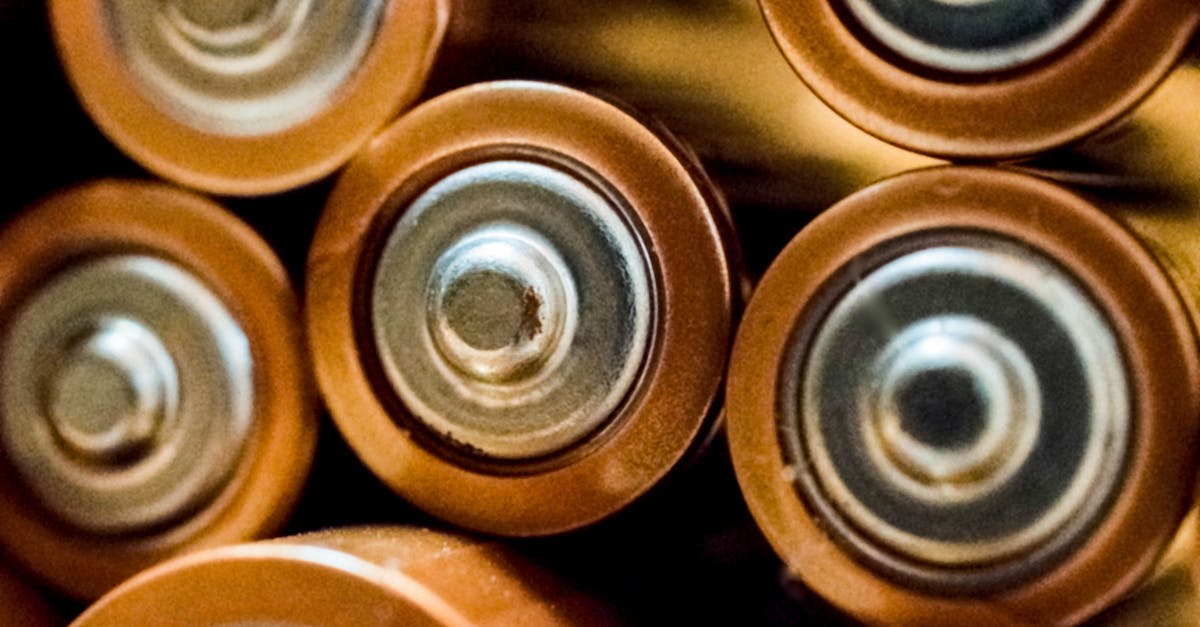
Did you know that the average smartphone battery loses about 20% of its capacity after just 400 charge cycles? That means your shiny new phone is basically a ticking time bomb, destined to die a slow, frustrating death in about two years. But what if I told you there’s a technology brewing in labs that could make your phone last a decade on a single charge? No, I’m not talking about a bigger power bank or a solar panel glued to your back. I’m talking about a quantum battery — a device that sounds like it was ripped straight from a Marvel movie. Let’s dig in and separate the science from the sci-fi.
The Battery Problem We All Pretend Doesn’t Exist
Let’s be honest: we’ve all been there. You’re at 8% battery, the Uber is five minutes away, and you’re praying to the tech gods for one more text. It’s a modern-day tragedy. The lithium-ion batteries powering our lives are, frankly, outdated. They’re heavy, they degrade, and they’re a fire hazard if you sneeze on them wrong. I’ve found that most people just accept this as “how things are,” but here’s the truth: we’re overdue for a revolution.
Enter the quantum battery. The idea is deceptively simple: instead of storing energy chemically (like a lithium-ion battery), you store it in the quantum states of particles. Think of it like trapping energy in a tiny, invisible box that doesn’t leak. And the best part? It could theoretically charge in seconds and last for decades. But as you might guess, the devil is in the details — or, in this case, in the quantum mechanics.
How a Quantum Battery Actually Works (No PhD Required)
Here’s what most people miss: quantum batteries don’t rely on chemical reactions. Instead, they exploit a phenomenon called superabsorption — a fancy term for how groups of quantum particles can absorb energy collectively, much faster than they would individually. Imagine a crowd of people trying to catch a ball. If they all work together, they catch it instantly. That’s superabsorption.
A team at the University of Adelaide recently demonstrated this in a lab using organic molecules. They showed that as you increase the number of these molecules, the charging time decreases — counterintuitive, right? Normally, bigger batteries take longer to charge. But in the quantum world, more is faster. Theoretically, a quantum battery could charge your phone in a few seconds flat. And because the energy is stored in a quantum state rather than a chemical one, there’s no degradation over time. No swelling, no capacity loss, no “battery health” anxiety.
But here’s the kicker: this is still in the experimental phase. We’re talking about batteries that exist in highly controlled lab environments, often at near-absolute-zero temperatures. You’re not going to find one in the Apple Store next week. Still, the progress is real, and it’s moving faster than most people realize.
The 3 Biggest Hurdles That Keep This from Your Pocket
Let’s not sugarcoat it — quantum batteries are a long shot right now. Here are the three main problems scientists are wrestling with:
- Temperature sensitivity: Most quantum effects only work at cryogenic temperatures. Your phone would need to be as cold as outer space to function. Not exactly pocket-friendly.
- Scalability: Making one quantum battery is hard. Making millions? That’s a whole different beast. The materials and manufacturing processes don’t exist yet at scale.
- Stability: Quantum states are fragile. A stray magnetic field or a bump could cause the battery to discharge instantly. Imagine your phone dying because you dropped it off the couch.

Why This Matters More Than Just Your Phone
You might be thinking, “Great, a phone that lasts a decade. Cool, but I upgrade every two years anyway.” Fair point. But the real impact of quantum batteries goes way beyond your Instagram scrolling habits. Think about electric vehicles. A quantum battery could charge an EV in under a minute and last the lifetime of the car. No more range anxiety, no more battery degradation. Or consider medical implants — pacemakers, insulin pumps, neural stimulators. A quantum battery could power them for years without replacement surgery. That’s not just convenient; that’s life-changing.
Here’s the part that gets me excited: energy storage is the bottleneck for almost every green technology. Solar and wind are great, but they’re intermittent. If we could store massive amounts of energy cheaply and efficiently, we could decarbonize the grid. Quantum batteries could be that missing piece. They’re not just a gadget upgrade; they’re a paradigm shift.
The Sci-Fi Factor: Is This Just Hype?
Let’s be real for a second. The term “quantum” gets thrown around a lot these days — quantum computing, quantum internet, quantum coffee (okay, I made that last one up). It’s easy to dismiss quantum batteries as another overhyped buzzword. And yeah, some of the claims are wild. I’ve seen articles promising “infinite battery life” and “zero charging time.” That’s not science; that’s marketing.
But here’s the thing: the underlying physics is solid. Superabsorption has been demonstrated. The math works. The question isn’t if quantum batteries will work, but when and how we’ll make them practical. It’s like asking if fusion energy is real — yes, it’s real, we just haven’t built a reactor that produces more energy than it consumes yet. Same deal here.
I’ll leave you with this: the first quantum battery prototype might be clunky, expensive, and useless for everyday life. But so was the first transistor. So was the first lithium-ion battery. Progress is messy. But when it comes, it changes everything.
So, Are We Gonna Get a Decade-Long Phone Charge?
Honestly? Probably not anytime soon. But that’s not the point. The point is that we’re finally asking the right questions about energy storage. For decades, we’ve been refining a technology that’s fundamentally limited. Quantum batteries represent a clean break — a new way of thinking about how we capture and use energy. And that’s worth getting excited about, even if you’re still charging your phone every night.
So next time you plug in your phone before bed, take a moment to appreciate the science. And maybe, just maybe, imagine a world where you never have to do that again. It’s not science fiction. It’s science — with a long runway.
What do you think? Would you trade your current phone for a quantum battery prototype that charges in seconds but lasts a decade? Drop your thoughts in the comments — I’m genuinely curious.