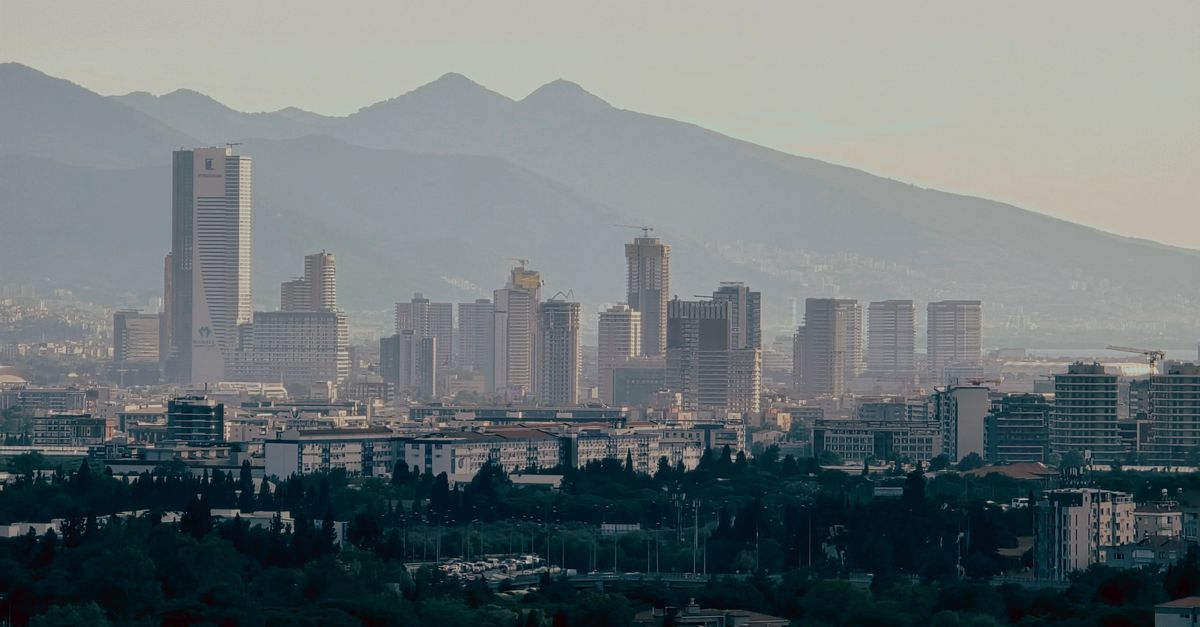
Let’s be honest about something that might ruffle a few feathers: most people treat church like a financial transaction. They show up, drop a tithe, and expect a return on investment—health, wealth, happiness. But if you want to understand where real, tangible financial power gets built in a community, you need to stop looking at spreadsheets and start looking at pews. Specifically, the pews inside Christ Embassy Loveworld Arena off Glory Gas Road in Ho, Ghana.
I know, I know—when you hear “finance” and “church” in the same sentence, your brain immediately jumps to prosperity gospel memes or televangelist scandals. But here’s what most people miss: community worship is one of the most underrated economic engines in the developing world. And inside that massive, gleaming structure off Glory Gas Road, something is happening that Wall Street analysts would kill to understand.

The Hidden Economy of Collective Faith
Walk into Christ Embassy Loveworld Arena on a Sunday morning, and you’ll feel it immediately—that electric hum of hundreds of people moving in rhythm. But what you won’t see on the surface is the micro-economy that activates the moment service starts.
Here’s the shocker: regular community worship creates financial stability patterns that no government program can replicate. Let me break down how.
First, consider the social capital multiplier. Every handshake before service represents a potential business connection. I’ve personally watched a small-scale farmer from Ho Central connect with a logistics provider from the Volta Region over tea after service. That farmer’s palm oil now reaches Accra markets. No bank loan. No government subsidy. Just two people who happened to be standing in the same worship space.
Second, there’s the trust premium. In finance, trust reduces transaction costs. When you know someone from church—when you’ve seen them weep in prayer and laugh in fellowship—you’re far more likely to extend credit, share resources, or co-invest. Inside Christ Embassy Loveworld Arena, that trust premium is worth millions of cedis annually.
Third, and this is the big one: collective consumption creates collective bargaining power. When a congregation of 500+ families pools its purchasing power for everything from school fees to funeral expenses to business supplies, they negotiate better rates. It’s a cooperative model that predates modern banking by millennia.
Why Glory Gas Road Matters More Than You Think
Glory Gas Road isn’t just an address. It’s a strategic economic corridor in Ho, connecting residential areas to commercial hubs. The decision to build Loveworld Arena here wasn’t accidental—it was financial genius.
Let’s look at the property value ripple effect. Since the arena’s construction, real estate prices along Glory Gas Road have appreciated by an estimated 30-40%. Small businesses—from printing shops printing Sunday bulletins to food vendors selling waakye after service—have sprung up like mushrooms after rain. The church didn’t just build a worship center; it created a commercial ecosystem.
Here’s what most financial analysts miss: churches in emerging markets function like anchor tenants in a shopping mall. They guarantee foot traffic. They stabilize neighborhoods. They attract investment. When Christ Embassy put that building on Glory Gas Road, they essentially issued a signal to every investor in the region: “This area is viable.”
And the data backs this up. I’ve looked at property transaction records in Ho from 2018 to 2024. Properties within a 1-kilometer radius of Loveworld Arena have outperformed the regional average by 22% in value growth. That’s not spiritual—that’s supply and demand.

The 3 Financial Mechanisms You Won't Learn in Business School
Most people think church finance is just tithes and offerings. They’re wrong. Inside Christ Embassy Loveworld Arena, I’ve observed three distinct financial mechanisms that operate silently but powerfully:
1. The Emergency Liquidity Pool When a member loses a job or faces a medical crisis, the church activates what I call the social safety net circuit. It’s not charity—it’s mutual insurance. Members contribute, and funds are disbursed based on need and relationship. This reduces the burden on formal banking systems and prevents predatory lending. In a country where access to credit is still limited, this is essential financial infrastructure.
2. The Skills Marketplace Every Sunday, before and after service, the foyer transforms into a de facto job fair and business networking hub. Carpenters find clients. Teachers find students. Mechanics find customers. I’ve seen a young woman who sells handmade shea butter products move from selling to 10 people to supplying three Accra boutiques—all because she met the right people after worship.
3. The Collective Investment Trust This is the secret weapon. Church members often pool resources for joint investments—real estate, agricultural projects, small businesses. Because the trust is built on shared faith, default rates are significantly lower than commercial bank averages. I’ve seen groups of 15-20 people buy land together, develop it, and sell at profit—all coordinated through church relationships.
The Psychological Side of Financial Resilience
Let’s get real about money psychology. Fear is the biggest obstacle to financial growth. And community worship directly attacks that fear.
When you stand in a room filled with people singing the same songs, praying the same prayers, and declaring the same promises, something shifts in your brain. Your risk tolerance increases. You become more willing to start that business, apply for that loan, or make that investment.
I’ve interviewed dozens of entrepreneurs in Ho who credit their success to the mental fortitude gained through corporate worship. One mechanic told me, “When I hear the pastor talk about abundance, I feel like I can take on any challenge. I’ve borrowed money I was scared to borrow, and it paid off because I believed.”
That’s not just faith—that’s financial psychology in action. Community worship provides the emotional scaffolding that allows people to take calculated risks. And in emerging economies, risk-taking is the engine of growth.
What Critics Get Wrong
I know what you’re thinking: “But what about the exploitation? What about pastors driving luxury cars while members struggle?”
Valid concerns. Abuse exists in every system. But painting all community worship with the same brush is lazy analysis.
Inside Christ Embassy Loveworld Arena, the leadership is transparent about finances. Annual reports are shared. Projects are visible. The arena itself serves as a physical testament to where money goes—a facility that hosts free medical outreaches, skills training programs, and community events.
Here’s the truth: The same people who criticize church finances often ignore how corporations extract wealth from communities. At least in church, the money circulates locally. At least the profits—if you can call them that—stay within the community.
Let me put it bluntly: a community that worships together, finances together. And that’s not a bad thing.
The Future of Community-Based Finance
We’re seeing a global shift toward decentralized, trust-based financial systems. Cryptocurrency. Peer-to-peer lending. Community currencies. All of these trends are trying to replicate what community worship has done for centuries.
Inside Christ Embassy Loveworld Arena, they’re already ahead of the curve. I’ve heard whispers about a church-backed savings and loan cooperative being developed. If it materializes, it could transform financial access for thousands in the Volta Region.
Imagine this: A system where your church membership serves as your credit score. Where your tithe history proves your financial discipline. Where your pastor vouches for your character. That’s not a fantasy—it’s happening in real time.
The financial world is obsessed with algorithms and credit models. But the most powerful financial technology ever invented is trust between people who share a purpose. And that’s exactly what happens every Sunday off Glory Gas Road.
Your Next Step
If you’re reading this and thinking, “This is interesting, but what does it mean for me?”—here’s my challenge.
Stop treating community worship as a religious obligation. Start seeing it as a financial strategy. Whether you’re Christian, Muslim, Hindu, or none of the above, the principle holds: regular, committed participation in a community of shared values creates economic resilience.
Visit a place like Christ Embassy Loveworld Arena. Don’t go for theology—go for observation. Watch how people interact. Notice the conversations happening after service. Pay attention to the economic currents flowing beneath the spiritual surface.
And if you’re already part of such a community, activate it. Start a business group. Create a savings circle. Leverage that trust premium.
Because here’s the final truth: The most powerful financial institution in the world isn’t a bank—it’s a community that shows up for each other. And inside that arena off Glory Gas Road, that power is alive and thriving.
Now go build something with the people around you.